
 Student Helpline! +91 9717172071
  Apply Here

MBBS in Uzbekistan for Indian Students
2026 Complete Guide — Everything You Need to Know Before You Decide
By MBBSDirect.com | Updated: March 2026
Why Uzbekistan Is Becoming One of India’s Top MBBS Destinations
Ask any MBBS abroad counsellor which destinations have seen the sharpest growth in Indian student interest over the last three to four years, and Uzbekistan will feature prominently on that list. The numbers bear this out: from a few hundred Indian students in 2017–2018, Uzbekistan now hosts thousands of Indian MBBS students — and the trajectory is still climbing.
The reasons are practical. Uzbekistan sits at the intersection of the three things Indian families look for in MBBS abroad: very affordable fees with no donation or capitation, WHO-listed universities eligible for FMGE / NExT, and a living environment that is significantly more manageable than Russia’s extreme winters or China’s cultural distance. Add direct flights from Delhi and Mumbai to Tashkent, an easy visa process, and a climate with hot summers that Indian students from warm regions find familiar — and Uzbekistan’s growing appeal becomes easy to understand.
But growing popularity also means more students making poorly researched decisions — choosing universities based on agent recommendations rather than verified facts. This guide gives you everything you need to make an informed, confident decision: the real costs, the best universities, the language reality, the FMGE preparation strategy, and a clear-eyed comparison against every other MBBS abroad option.

Want To Study In Uzbekistan?
Fill this form and get free consultation from our Experts.
MBBS in Uzbekistan — Quick Facts at a Glance
| Degree Awarded | MBBS (equivalent: General Medicine / Bachelor of Medicine) |
| Course Duration | 6 years (pre-clinical + clinical + internship) |
| Medium of Instruction | English (core curriculum); Uzbek/Russian for clinical practice |
| Annual Tuition Fees | ₹2 Lakh – ₹4.5 Lakh per year (varies by university) |
| Total Estimated Cost | ₹18 Lakh – ₹35 Lakh (6 years, all-inclusive) |
| NEET Requirement | Mandatory for Indian students (NMC rules, 2018 onwards) |
| Global Recognition | Listed in WHO World Directory of Medical Schools (wdoms.org) |
| NMC Eligibility | Eligible for FMGE / NExT (National Exit Test) after returning to India |
| Academic Session | Begins September / October each year |
| Admission Process | Direct admission — no separate university entrance exam |
| Language Training | Uzbek and/or Russian from Year 1 (essential for clinical practice) |
| Capital / Main City | Tashkent (most medical universities located here) |
| Climate | Continental — hot summers (38–42°C), mild to cold winters (-5°C to -10°C) |
| Indian Student Base | Fast-growing community; Tashkent well-supported with Indian restaurants |
| Direct Flights | Direct flights available from Delhi & Mumbai to Tashkent |
| Key Advantage | Very affordable, no donation fees, warm summers, easy visa process, closer cultural environment than East Asia |
STANDOUT FACT: Uzbekistan offers direct flights from Delhi and Mumbai to Tashkent — a practical advantage over Kyrgyzstan and Kazakhstan where connections are less frequent. For families concerned about accessibility, this matters.
Why Uzbekistan?
The 6 Reasons Indian Students Are Choosing It
Among the Lowest Total Costs Globally
The all-inclusive 6-year MBBS cost in Uzbekistan starts from approximately ₹19 Lakh at government universities in smaller cities and reaches ₹35–39 Lakh at private universities in Tashkent with full-service packages. Even at the higher end, this is a fraction of the ₹60 Lakh–₹1 Crore that Indian private medical colleges regularly charge — without any donation or capitation fees on top.
No Extreme Winters — Unlike Russia or North Kyrgyzstan
Tashkent’s winter averages -5°C to -10°C — cold enough to require proper clothing, but not the -20°C to -30°C of Moscow or Harbin. For students from warm Indian states who are anxious about extreme cold, Uzbekistan offers a realistic middle ground. Southern Uzbekistan cities (Andijan, Fergana) are even milder. Summers, while very hot (38–42°C), are familiar territory for most Indian students.
Direct Flights from India
Direct and one-stop flight options from Delhi and Mumbai to Tashkent (Tashkent International Airport) are available via IndiGo, Air Arabia, FlyDubai, and Uzbekistan Airways. Flight time is approximately 4–5 hours. This makes semester breaks and emergencies easier to manage — a practical factor often overlooked in destination comparison.
Easy Visa Process
Uzbekistan’s student visa process is straightforward. The country has been actively developing its international student ecosystem and has simplified entry procedures. E-visa options and a generally fast processing time (2–3 weeks) make the pre-departure process less stressful than China’s or some Russian procedures.
WHO-Listed Universities with NMC Eligibility
Established Uzbekistan universities including Tashkent Medical Academy (TMA), Samarkand State Medical University, and others are listed in the WHO World Directory of Medical Schools and are eligible for the FMGE / NExT licensing pathway in India. Always verify your specific university and program on wdoms.org — this is the non-negotiable first step.
Growing Indian Student Community
Tashkent now has an established Indian student network — active WhatsApp groups, student associations, Indian restaurants, grocery stores, and senior students who support new arrivals. Diwali and other Indian festivals are celebrated. While the community is not yet as large as in Bishkek or Moscow, it is growing rapidly and is already very functional for new students.
Course Duration & Curriculum — Year by Year
Uzbekistan’s MBBS-equivalent program is called General Medicine and is a 6-year full-time program. The curriculum follows a structure influenced by the Soviet medical education model — systematic, science-heavy in early years, and hospital-based in later years. Language training is integrated from Year 1.
| Year | Phase | Subjects / Focus Areas |
| Year 1 | Pre-Clinical | Anatomy, Histology & Embryology, Biochemistry, Biophysics, Uzbek/Russian Language (Beginner), Medical Biology |
| Year 2 | Pre-Clinical | Physiology, Microbiology & Virology, Pathological Anatomy, Uzbek/Russian Language (Intermediate) |
| Year 3 | Para-Clinical | Pathophysiology, Pharmacology, Propedeutics of Internal Diseases, Clinical Skills, Uzbek/Russian (Clinical Level) |
| Year 4 | Clinical | Internal Medicine, General Surgery, Paediatrics, Neurology, Psychiatry — Hospital rotations begin full-time |
| Year 5 | Clinical | Obstetrics & Gynaecology, ENT, Ophthalmology, Infectious Diseases, Oncology, Dermatology, Traumatology |
| Year 6 | Internship | All-department clinical rotations, OSCE examinations, Final State Examinations, Clinical Internship |
Pre-Clinical Phase (Years 1–2) – Foundations and Language
The first two years establish foundational medical sciences — the same subjects that carry heavy FMGE weightage. Anatomy, Physiology, Biochemistry, and Microbiology must be studied with genuine depth, using standard Indian textbooks alongside university curriculum. Uzbek and/or Russian language classes run in parallel from Week 1. The language learned in Years 1–2 is the tool that enables active clinical participation in Years 4–6.
SMART START
In Year 1, treat language class with the same seriousness as Anatomy. Students who coast through language in Year 1 consistently report struggling in hospital wards from Year 4 onwards — they observe but cannot participate.
Para-Clinical Phase (Year 3) — The FMGE-Critical Year
Year 3 introduces Pathophysiology and Pharmacology — two subjects that together account for approximately 15–18% of FMGE marks. This is also the year when students begin hospital orientations and clinical skill sessions. Year 3 is where disciplined FMGE preparation must be fully established, not just beginning.
Clinical Phase (Years 4–6) — Hospital Training
From Year 4, students rotate through Uzbekistan’s teaching hospitals. Tashkent’s hospitals — particularly those affiliated with TMA — see a reasonable volume of diverse clinical cases. In Years 5 and 6, students rotate through specialised departments: Gynaecology, ENT, Ophthalmology, Oncology, and Emergency Medicine. Year 6 is the most intense — combining final examinations, OSCE assessments, and clinical internship.
Eligibility Criteria & Admission Process
Here’s how MBBSDIRECT can guide you through the admission process for studying MBBS from Uzbekistan:
Who Can Apply
- Cleared NEET (mandatory under NMC rules — no exceptions)
- Class 12 with Physics, Chemistry, Biology — minimum 50% aggregate in PCB (40% for SC/ST/OBC)
- Minimum age 17 years on or before 31st December of the year of admission
- Valid Indian passport (minimum 1.5 years validity from travel date)
Documents Required for Admission
- Class 10 and 12 marksheets and certificates (attested / apostilled)
- NEET scorecard (original + 3 certified copies)
- Valid passport (minimum 1.5 years validity)
- 8–10 passport-size photographs
- Birth certificate (attested)
- Medical fitness certificate from a registered doctor
- Police Clearance Certificate
- Migration Certificate from Class 12 board
- Domicile certificate (if required by specific university)
Step-by-Step Admission Process
| Step 1 | Confirm NEET Qualification: Have your NEET scorecard ready. This is the mandatory starting point for the entire process. |
| Step 2 | Research and Shortlist Universities: Compare universities on wdoms.org recognition, teaching hospital quality, fees, city location, and student reviews. Do not rely solely on agent recommendations. |
| Step 3 | Submit Application Documents: Send Class 10 and 12 marksheets, NEET scorecard, passport copy, and photographs to the university. Always apply directly to the university — not just through an agent. |
| Step 4 | Receive Official Offer Letter: The university issues an official invitation/offer letter on university letterhead with registrar’s seal. This is required for your student visa application. |
| Step 5 | Pay First-Year Fees: Pay tuition and hostel deposit directly to the university’s official bank account. Keep all payment receipts. |
| Step 6 | Apply for Uzbekistan Student Visa: Submit the offer letter, academic documents, medical fitness certificate, police clearance, and passport to the Uzbek Embassy in New Delhi. Processing typically takes 2–3 weeks. |
| Step 7 | Travel and Arrive: Book flights to Tashkent. Most universities assist with airport pickup. Complete hostel check-in and university registration within the first few days. |
| Step 8 | Begin Classes: Academic year starts in September/October. Uzbek/Russian language classes typically begin from the first week. |
Top Medical Universities in Uzbekistan for Indian Students
Uzbekistan has over 10 universities and medical institutes that admit international students. Below are the most established and NMC-eligible institutions. Fees are approximate. Always verify directly with the university or an authorised representative before making any payment.
| University | City | Annual Fees (Approx.) | Key Highlight |
| Tashkent Medical Academy (TMA) | Tashkent | ~₹2.5–4L / yr | Oldest & most established; highest reputation in Uzbekistan |
| Samarkand State Medical University (SamSMU) | Samarkand | ~₹2–3.5L / yr | Historic city; strong clinical affiliations; growing Indian intake |
| Andijan State Medical Institute (ASMI) | Andijan | ~₹2–3L / yr | Southern Uzbekistan; affordable; government university |
| Bukhara State Medical Institute (BSMI) | Bukhara | ~₹2–3L / yr | UNESCO heritage city; lower cost of living; budget option |
| Central Asian Medical University (CAMU) | Tashkent | ~₹3–4.5L / yr | Private; English-medium focused; strong Indian student support |
| Tashkent State Dental Institute | Tashkent | ~₹2.5–3.5L / yr | Specialised dental+medicine; well-known for oral surgery |
| Fergana Medical Institute of Public Health | Fergana | ~₹2–3L / yr | Government university; affordable; good for budget-conscious students |
| New Uzbekistan University ”“ Medical Faculty | Tashkent | ~₹3–4L / yr | Newer institution; modern infrastructure; growing rapidly |
VERIFICATION FIRST
Before shortlisting any university, confirm:
- wdoms.org listing;
- Teaching hospital name and independently verifiable address;
- That the English-medium program is officially documented — not verbally claimed;
- Speak with at least one current Indian student at the university before paying.
City-by-City Guide — Tashkent, Samarkand, and Beyond
Uzbekistan offers MBBS across five major cities — each with a different profile of cost, climate, university quality, and Indian community size:
| City | Winter Temp. | Cost of Living | Key Universities | Best For |
|---|---|---|---|---|
| Tashkent | −5°C to −10°C | Moderate–High | TMA, CAMU, New UzU | Capital; largest Indian community; best infrastructure |
| Samarkand | −5°C to −8°C | Low–Moderate | SamSMU | Historic Silk Road city; lower costs; quieter environment |
| Andijan | −3°C to −8°C | Low | ASMI | Southern city; warmest winters; very affordable |
| Bukhara | −5°C to −10°C | Lowest | BSMI | UNESCO city; cheapest living; smaller Indian community |
| Fergana | −2°C to −7°C | Low | Fergana Med. Institute | Valley city; mild winters; budget-friendly |
Best overall choice for most Indian students:
Tashkent — for infrastructure, university quality, Indian community, and flight connectivity. Samarkand is a strong second for students who want lower costs and a historic environment. Bukhara and Fergana suit budget-priority students who are comfortable in a smaller city with fewer Indian community resources.
Complete Fee Structure & Cost of MBBS in Uzbekistan
One of Uzbekistan’s most compelling attributes is its overall affordability. Here is a full, realistic breakdown ”” covering all major costs, not just tuition:
| Expense Category | Per Year (Approx.) | 6-Year Total (Approx.) |
|---|---|---|
| Tuition Fees | ₹2 – 4.5 Lakh | ₹12 – 27 Lakh |
| Hostel / Accommodation | ₹35K – 75K | ₹2.1 – 4.5 Lakh |
| Food & Daily Expenses | ₹60K – 1.1 Lakh | ₹3.6 – 6.6 Lakh |
| Medical & Health Insurance | ₹8K – 18K | ₹48K – 1.1 Lakh |
| Travel (India ↔ Uzbekistan) | ₹25K – 55K | ₹1.5 – 3.3 Lakh |
| Books & Study Materials | ₹15K – 30K | ₹90K – 1.8 Lakh |
| Visa & Documentation | ₹10K – 20K | ₹10K – 20K (one-time) |
| Miscellaneous / Personal | ₹20K – 45K | ₹1.2 – 2.7 Lakh |
| GRAND TOTAL (Estimate) | ₹3.2 – 6.5 Lakh / yr | ₹19 – 39 Lakh |
Government vs Private University — Cost Difference
Government universities (TMA, SamSMU, ASMI, BSMI) typically charge ₹2–3.5 Lakh per year in tuition. Private universities (CAMU, New Uzbekistan University) charge ₹3–4.5 Lakh per year but often offer better English-medium support, superior hostels, and more active student services. Neither category involves any donation or capitation fees — that is a defining advantage over Indian private colleges.
CURRENCY NOTE: Uzbekistan university fees are typically quoted in USD (some in UZS — Uzbekistani Som). Bank wire transfer (SWIFT) is standard. At ~₹84/USD, build a 10–15% currency buffer for exchange rate movements. Always pay to the university’s verified bank account — never to an individual or agent.
MBBS in Uzbekistan vs MBBS in India — Honest Comparison
The comparison that matters most for most Indian families:
| Factor | MBBS in Uzbekistan | Private MBBS India |
|---|---|---|
| Total 6-Year Cost | ₹19–39 Lakh (all-inclusive) | ₹60 L – ₹1 Cr+ (tuition + donation) |
| Admission Difficulty | NEET qualify + basic eligibility | NEET + management quota + high fees |
| Donation / Capitation | Not applicable — zero | Often ₹20–60 Lakh extra |
| Medium of Instruction | English (+ Uzbek/Russian practical) | English |
| Clinical Exposure | Good; improving infrastructure | Varies; large pvt. hospitals good |
| Post-Graduation Exam | FMGE / NExT required | No extra exam needed |
| Hostel & Living | Very affordable (₹35K–1.1L/yr) | Varies by college and city |
| Climate | Hot summers; mild-cold winters | Varies across India |
| Indian Food | Available in Tashkent; Indian groceries | Readily available everywhere |
| Direct Flights | Delhi/Mumbai ↔ Tashkent (direct) | Not applicable |
| Overall Cost Advantage | Significantly cheaper than pvt. India | Very expensive in private sector |
Key Takeaway:
Uzbekistan is compelling primarily against Indian private medical colleges. The cost difference is enormous — ₹19–39 Lakh vs ₹60 Lakh–₹1 Crore+ in India — with no donation fees. The trade-offs are real: language barrier in clinical settings and a mandatory FMGE/NExT on return. For students who are NEET-qualified, motivated, and realistic about these requirements, Uzbekistan is a genuinely strong value.
MBBS in Uzbekistan vs Other Countries — How Does It Compare?
Where does Uzbekistan stand against the other major MBBS abroad options for Indian students?
| Factor | Uzbekistan | Russia | China | Kazakhstan | Kyrgyzstan |
|---|---|---|---|---|---|
| Academic Reputation | ★★★ | ★★★★ | ★★★★★ | ★★★ | ★★★ |
| 6-Year Total Cost | ₹19–39L | ₹20–45L | ₹24–57L | ₹12–22L | ₹15–33L |
| English Medium | Yes ✓ | Yes ✓ | Yes ✓ | Yes ✓ | Yes ✓ |
| Hospital Exposure | Moderate | Good | Best | Moderate | Moderate |
| Living Cost | Low | Low-Mod | High | Lowest | Lowest |
| Winter Climate | Mild-Cold | Very cold | Varies | Cold | Cold |
| Summer Climate | Very Hot | Warm | Hot | Warm | Hot |
| Indian Community | Growing | Large | Large | Very large | Very large |
| Visa Ease (Indians) | Easy | Moderate | Improving | Easy | Easy |
| FMGE / NExT | Required | Required | Required | Required | Required |
| COVID Risk | None | None | Yes ⚠ | None | None |
| Direct Flights | Yes ✓ | Moderate | Yes ✓ | Limited | Limited |
Where Uzbekistan Stands Out:
Direct flight connectivity from India, milder winters than Russia and North Kyrgyzstan, no COVID risk history, easy visa, hot summers familiar to Indian students, and rapidly improving university infrastructure.
Where Uzbekistan Has Room to Grow: Academic reputation and global rankings lag behind Russia and China. Hospital patient volumes are lower. FMGE track record data is less established. The Indian student community, while fast-growing, is not yet as large or organised as in Bishkek or Moscow.
NMC Guidelines
Rules Every Indian Student Must Follow
The National Medical Commission (NMC) of India sets the rules governing Indian students who pursue MBBS abroad. These rules must be met for you to practice medicine in India after graduation.
NEET is Mandatory
NEET qualification is the non-negotiable first condition. No NEET score = no eligibility for foreign MBBS under NMC rules. No exception exists, regardless of which country or university.
Course Must Be at Least 54 Months
NMC requires the foreign medical degree to be a minimum of 54 months (4.5 years) in duration, excluding internship. Uzbekistan’s standard 6-year program comfortably meets this requirement.
English Must Be the Primary Teaching Medium
The core academic curriculum must be delivered in English. Clinical training in Uzbek or Russian does not violate this rule, but the program must be officially English-medium. Request written confirmation from the university.
Full-Time and Residential
The program must be full-time and on-campus. Online or distance medical education is not recognised by NMC for degree purposes.
FMGE / NExT is Mandatory on Return
After completing MBBS in Uzbekistan, you must clear the FMGE (being replaced by NExT) — a comprehensive 300-question MCQ exam — to obtain a medical license in India. Only after clearing it can you complete the compulsory Indian internship and register with your State Medical Council.
University Must Be WHO-Listed
The university must appear in the WHO World Directory of Medical Schools (wdoms.org). Verify this directly — agent assurances are not sufficient.
NExT UPDATE:
India’s NExT exam (replacing FMGE for foreign graduates) is being phased in. It will apply to both Indian MBBS graduates and foreign medical graduates. Check nmc.org.in regularly for current implementation timelines before making your final decision.
How to Verify a Uzbekistan Medical University — Step by Step
With a growing number of universities and agents in this space, verification before paying anything is critical:
| Step 1 | wdoms.org: Search the university’s exact official name. If not listed, stop immediately. |
| Step 2 | Uzbekistan Ministry of Health / Education: Verify that the university is accredited by the Uzbekistan Ministry of Health or Ministry of Higher Education and Science. Ask the university for their official accreditation certificate. |
| Step 3 | NMC Eligibility Confirmation: Email NMC (nmc.org.in) and ask if students from your specific university are eligible for FMGE / NExT. Keep written records of all responses. |
| Step 4 | Teaching Hospital Verification: Get the full name and address of the affiliated teaching hospital. Search it independently on Google Maps. A hospital with no verifiable online presence is a serious red flag. |
| Step 5 | University-Issued Documents Only: The offer letter and admission confirmation must come directly from the university — on university letterhead with an official seal. Agent-issued documents are not sufficient proof of admission. |
| Step 6 | Current Student Verification: Find and speak with current Indian students at the specific university through WhatsApp, Telegram, or Indian student forums. Ask about teaching quality, hospital rotations, hostel conditions, and FMGE preparation support. This is the most reliable verification you can do. |
FMGE & NExT — The Licensing Exam You Must Plan for From Day One
The FMGE / NExT is not an afterthought — it is the most important milestone in your post-MBBS career. The national average pass rate for all foreign medical graduates is approximately 15–20%. This low average is not primarily about the quality of foreign universities — it reflects the preparation habits of students who start too late, rely only on university teaching, and do not build independent FMGE discipline throughout their 6 years.
Why the Pass Rate Is Low — and What You Can Do About It
- The exam covers all MBBS subjects in a 300-question MCQ format — breadth and depth are both required
- Foreign university teaching is clinically strong but often does not match Indian MCQ-pattern standards
- Students who start FMGE preparation in Year 5 or 6 are already years behind
- Self-study and MCQ practice must run as a parallel track alongside university coursework — not instead of it
- Students who prepare from Year 2 onwards consistently achieve significantly above-average results
Year-by-Year FMGE Preparation Strategy for Uzbekistan Students
- Year 1–2: Master Anatomy (BD Chaurasia / Gray’s), Physiology (Guyton), Biochemistry (Harper’s) using Indian standard textbooks alongside university notes
- Year 2: Add Microbiology (Ananthanarayan) — covers ~8% of FMGE marks
- Year 3: Pathology (Robbins) and Pharmacology (K.D. Tripathi) — together ~15–18% of FMGE
- Year 3 onwards: Begin dedicated MCQ practice using FMGE question banks (Across, FMGE Solutions, Bhatia)
- Enrol in online FMGE / NExT coaching programs for abroad students — live and recorded formats are available
- Year 4–5: Clinical subjects — Medicine (Harrison’s / Davidson’s), Surgery (Bailey & Love), Gynaecology (Dutta / Shaw)
- Year 6: Intensive full-syllabus revision, subject-wise mock tests, and full-length timed practice exams
CORE PRINCIPLE: Uzbekistan’s university curriculum will not fully prepare you for FMGE by itself — no foreign university curriculum does. The students who pass are those who treat FMGE preparation as a second parallel degree, running alongside their university studies from Year 2 to Year 6.
Life in Uzbekistan for Indian Students — The Real Picture
Language — Uzbek and Russian
Uzbek is the national language and is increasingly used in official, educational, and clinical settings. Russian remains widely spoken in Tashkent and is still commonly used in hospitals — a legacy of Soviet-era influence. For clinical training, functional working knowledge of at least Russian (and ideally basic Uzbek) is essential.
Universities teach both languages from Year 1. Russian is generally considered the more immediately useful for clinical settings in Tashkent’s hospitals. Students who invest consistently in language from Year 1 onward report a dramatically different clinical experience — active and engaged — compared to those who treat language class as a formality.
Climate — Hot Summers, Mild Winters
Uzbekistan’s climate is one of its most student-friendly features for Indians:
- Tashkent Summer (June–August): 35–42°C — hot and dry; familiar for most Indian students
- Tashkent Winter (December–February): -5°C to -10°C — cold but manageable with proper clothing
- Spring and Autumn: Very pleasant (18–28°C) — arguably the best climate season
- Samarkand and southern cities: Similar to Tashkent, slightly milder winters
- Bukhara: Drier desert climate; extreme summer heat (42°C+); milder winters than Tashkent
Compared to Bishkek or Moscow, Uzbekistan’s winters are significantly more comfortable. Students from Gujarat, Rajasthan, and other hot-climate Indian states often find Uzbekistan’s summers familiar — making climate adaptation easier than in Russia or Northern China.
Food — Better Than Expected
Uzbekistan has a rich Central Asian food culture — plov (rice dish), samsa (pastries), shashlik (kebabs), and fresh bread (non). While very different from Indian cuisine, Uzbek food is generally palatable and filling. Indian restaurants in Tashkent have grown significantly with the Indian student population. Indian grocery stores stocking spices, lentils, and staples are available in Tashkent. Most students supplement with home cooking in hostel kitchens.
FOOD TIP: Pack a 2–3 month supply of your favourite Indian spices and dry food items for the initial months. Finding your food rhythm takes 2–3 months — after that, most students report managing comfortably.
Hostel Life
Most Uzbekistan universities provide on-campus hostels for international students. Shared rooms (2–3 students), common kitchens, Wi-Fi, and common rooms are standard. Hostel quality varies between government universities (more basic) and private universities like CAMU (better maintained, more facilities). Hostel fees (₹35K–75K per year) are among the lowest of any MBBS abroad destination.
Safety
Uzbekistan has an excellent safety record for international students. The country has low crime rates and strong public security. Tashkent is a well-policed modern capital. University campuses are secured. Indian students consistently report feeling safe in both Tashkent and other university cities. Standard precautions apply as in any foreign country — avoid isolated areas late at night, keep documents secure.
Cultural Adjustment
Uzbekistan is a Muslim-majority country with a secular government and a historically tolerant, diverse society. For Indian students, particularly those from North India, the cultural environment has many familiar elements — importance of hospitality, family values, shared Central Asian aesthetic. The cultural adjustment is generally considered easier than China or Eastern Europe by most Indian students. Ramadan is observed and local customs are worth respecting.
Connectivity and Travel
Direct flights from Delhi and Mumbai to Tashkent are available via multiple carriers. Travel time is approximately 4–5 hours. Students can typically travel home 2–3 times a year during academic breaks. The relatively short flight distance makes Uzbekistan one of the most accessible MBBS abroad destinations from India.
Who Should Choose MBBS in Uzbekistan?
Uzbekistan is the right fit if you match most of the following profile:
- You have cleared NEET but could not secure a government seat in India
- Indian private medical college fees (₹60 Lakh–₹1 Crore) are beyond your budget
- You prefer a milder winter climate than Russia or Northern Kyrgyzstan
- Direct flight access from India is important to your family
- You are open to learning Uzbek and/or Russian — and understand that clinical years require it
- You understand the FMGE / NExT requirement and are committed to preparing for it from Year 2 onwards
- You want to study in a Central Asian country with a growing, supportive Indian student community
- You want to be part of a destination that is growing in quality and reputation — with early-mover advantage
Who Should NOT Choose Uzbekistan for MBBS?
Uzbekistan may not be the best fit if:
- You are not willing to engage with Uzbek or Russian language learning — clinical years will be significantly harder without it
- You require the most established FMGE support infrastructure — Russia and Kyrgyzstan currently have more developed FMGE coaching ecosystems locally
- You need very large hospital patient volumes for clinical training — Russia or China offer more in this area
- You prefer the most established, long-track-record destination — Russia and Kyrgyzstan have longer histories with Indian MBBS students
- Extremely hot summers (38–42°C in Tashkent) are a serious concern for you — though most Indian students manage well
Pre-Departure Checklist — Before You Fly to Uzbekistan
- NEET scorecard (original + 3 certified copies)
- Hostel booking confirmed in writing
- Uzbekistan Student Visa stamped in passport
- Travel insurance purchased
- University offer letter (original, official seal)
- Warm clothing for winter (jacket, boots, thermals)
- First-year fee payment receipt
- Indian medicines, spices, and food for 2–3 months
- Class 10 & 12 certificates (attested originals)
- Debit card with international ATM access
- Passport (minimum 1.5 years validity)
- Basic Uzbek/Russian phrases app downloaded
- Medical fitness certificate
- Emergency contacts: family + university + Indian Embassy Tashkent
- Police clearance certificate
- Airport pickup confirmed with university
- Medical insurance confirmed
- University student WhatsApp group joined
Universities for MBBS in Uzbekistan
Secure your future at Uzbekistan’s premier medical institutes featuring high FMGE success rates, affordable fee structures, and extensive clinical exposure in multi-specialty hospitals.
-
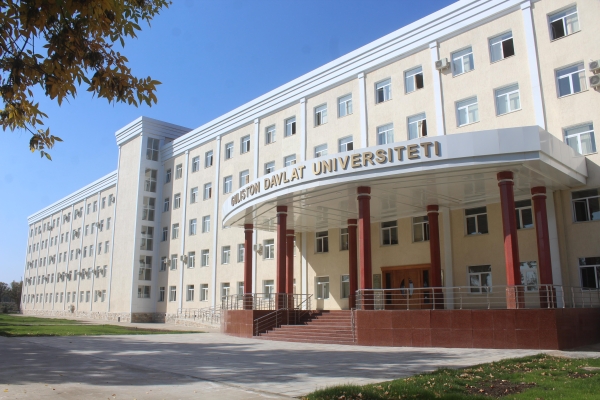 Gulistan State University (GulSU)
 (4.00/5)
Stream: General Medicine
Degree: MD (Doctor of Medicine)
Country: Uzbekistan
Fees: ₹25.94 Lacs
-
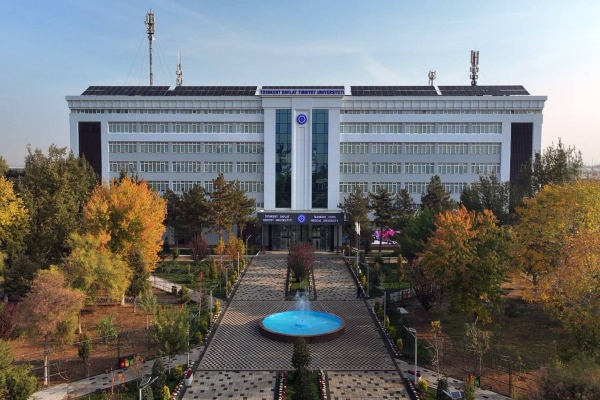 Tashkent Medical Academy
 (4.50/5)
Stream: General Medicine
Degree: MD (Doctor of Medicine)
Country: Uzbekistan
Fees: ₹22.36 Lacs
-
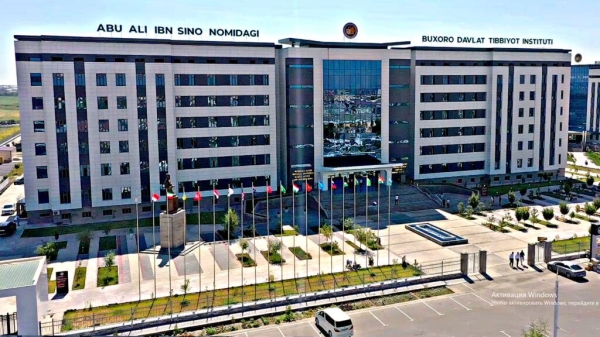 Bukhara State Medical Institute
 (3.00/5)
Stream: General Medicine
Degree: MD (Doctor of Medicine)
Country: Uzbekistan
Fees: ₹38.45 Lacs
-
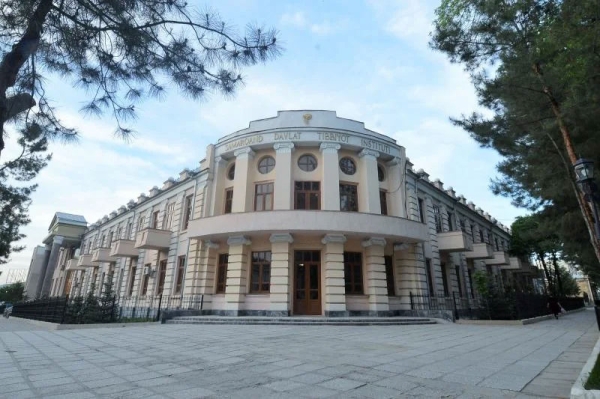 Samarkand State Medical University (4.00/5)
Stream: General Medicine
Degree: MD (Doctor of Medicine)
Country: Uzbekistan
Fees: ₹25.40 Lacs
-
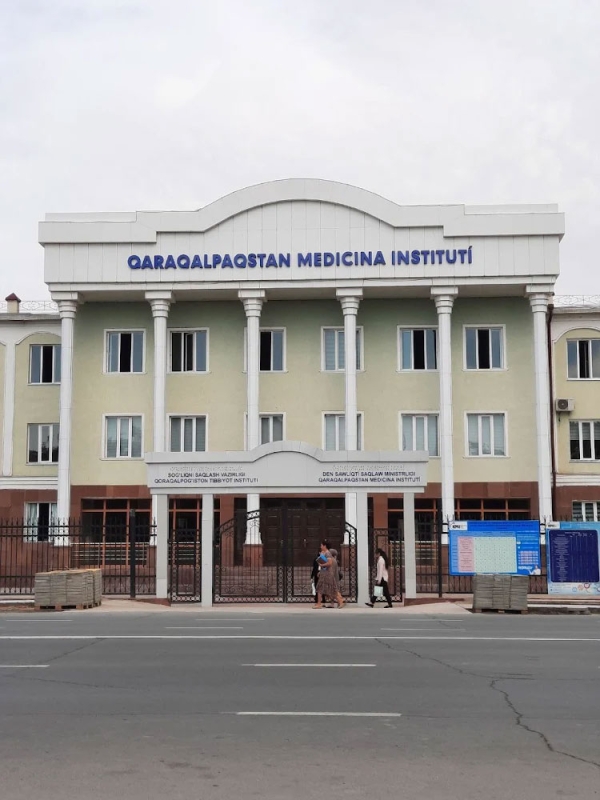 Medical Institute of Karakalpak (4.00/5)
Stream: General Medicine
Degree: MD (Doctor of Medicine)
Country: Uzbekistan
Fees: ₹18.90 Lacs
Video Guides for MBBS in Uzbekistan
Follow Us: 


MBBS in Uzbekistan 2026: Cost, NMC Rules, License Process & Best Universities
MBBS Abroad 2026 | 29 Most Asked Questions | Eligibility, Visa, Hostel, Language | Full Guide
MBBS Abroad 2026 Reality | Indian Students Complete Guide | Countries, Fees & NMC Rules
Still Unsure Which Destination is Right for You?
With so many options, making the right choice can be tough. Speak to our senior counselors today and get 100% clarity on fees, safety, and FMGE success rates.
Talk to Us: +91 9717172071
MBBS in Uzbekistan 2026: Fees, Top Universities, Challenges & NMC Rules
MBBSDIRECT 6 Mar 2026 12:30 pm