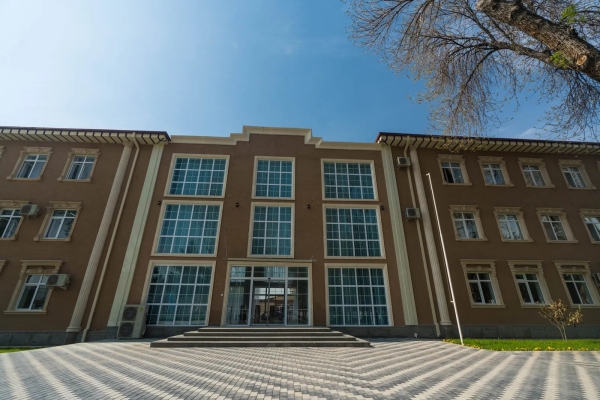
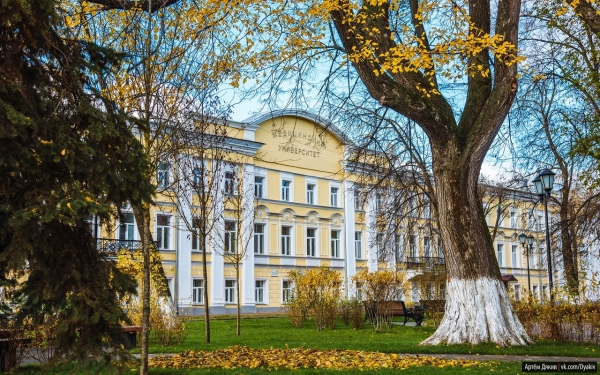
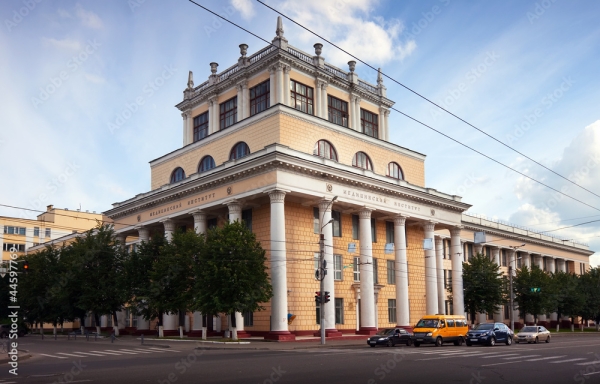
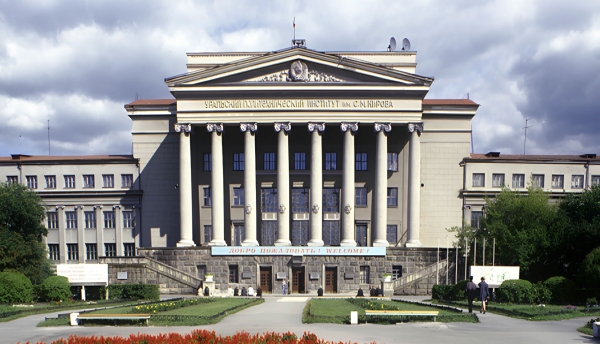
Samarkand State Medical University

Uzbekistan  |  MD (Doctor of Medicine)  |  Bachelor

(4.00/5)
Public
Russia | MBBS (Doctor of General Medicine) | Master

Samarkand State Medical University (SamSMU)

NMC Recognised Est. 1930 — 95+ Years Oldest Med. Univ. in Central Asia UNESCO Silk Road City Uzbekistan ~₹25 Lakh Total Dual Intake — Feb & Sep Indian Mess Available
★★★★½ (4.50 / 5)
By MBBSDirect.com  |  Updated: March 2026  |  Samarkand, Uzbekistan • Founded 1930 • Oldest Medical University in Central Asia • NMC & WHO Recognised • Silk Road UNESCO City

An Overview of University

University Type :Public (State Government) — Ministry of Health, Uzbekistan
Established :1930 — oldest medical university in Central Asia; 95+ years of uninterrupted history
UNESCO Status :Located in Samarkand — UNESCO World Heritage city; ancient Silk Road; Registan, Shah-i-Zinda, Gur-e-Amir
Medium of Course :English (core curriculum) + Uzbek / Russian (clinical practice)
Annual Tuition Fee :$3,500 USD per year (consistent across all 6 years)
Annual Hostel Fee :$500 USD per year (all 6 years) — 4 dedicated dormitories; 1,300 capacity
Other Expenses/Year :$600 USD (Insurance + Visa Extension + Misc.)
Total Per Year :$4,600 USD — same for every year
Total 6-Year Cost :$27,600 USD (~₹25.40 Lakh at current rates)
Course Duration :6 years (5 years study + 1 year internship)
Degree Awarded :Doctor of General Medicine (MBBS equivalent)
Curriculum System :ECTS (European Credit Transfer System) — enhances global recognition
NMC Recognition :Yes — NMC approved; WHO listed (WDOMS); FMGE / NExT eligible
Clinical Training :2 university clinics + 9 affiliated hospitals; clinical rotations from Year 3
Indian Mess :Yes — optional; approx. $1,200/year from Year 2 onwards
Student Body :3,000+ international students; active Indian student association
Academic Intakes :Two intakes per year — February AND September / October

MBBS for Indian Students — 2026 Complete Guide

Why Samarkand State Medical University Stands Apart in Uzbekistan

Uzbekistan has emerged as one of the most compelling MBBS-abroad destinations for Indian students. With NMC-approved universities, affordable fee structures, an English-medium curriculum, and a safe, culturally compatible environment, Uzbekistan offers a combination that few other countries can match at this price point. Among all the NMC-approved universities in Uzbekistan, one name stands above the rest in terms of institutional history, academic credibility, and clinical infrastructure: Samarkand State Medical University — SamSMU.

Founded in 1930, SamSMU is the oldest continuously operating medical university in Central Asia. It is not a recently established institution capitalising on the demand for affordable MBBS seats. It is a university with over 95 years of history, built to produce doctors — and it has done exactly that across generations of physicians who now practise across Uzbekistan, Central Asia, and internationally. In 2022, reflecting its modernised scope and expanded programmes, it was formally restructured and renamed Samarkand State Medical University — an upgrade in status that acknowledges both its historic foundation and its forward-looking academic development.

For Indian students, SamSMU offers a combination that stands out clearly: the oldest medical university in Central Asia, early clinical rotations from Year 3, a fully transparent fee of $4,600 USD per year (~₹25.40 Lakh over 6 years), an Indian mess facility, dual intakes in February and September, and the extraordinary privilege of studying in Samarkand — a UNESCO World Heritage city on the ancient Silk Road whose monuments rank among the most magnificent in the world.

SamSMU at a Glance — Key Facts

FactorDetails
University Full NameSamarkand State Medical University (SamSMU)
LocationSamarkand, Uzbekistan — ancient Silk Road city; UNESCO World Heritage site
Established1930 — oldest medical university in Central Asia; 95+ years of uninterrupted academic history
UNESCO StatusSamarkand is a UNESCO World Heritage city — Registan, Shah-i-Zinda, Gur-e-Amir among the world's most remarkable monuments
Degree AwardedDoctor of General Medicine (equivalent to MBBS)
Course Duration6 years (5 years academic study + 1 year internship)
Medium of InstructionEnglish (core curriculum) + Uzbek / Russian (clinical practice)
Curriculum SystemECTS (European Credit Transfer System) — enhances global recognition of SamSMU's degree
NMC RecognitionYes — NMC approved; WHO listed (WDOMS); eligible for FMGE / NExT
Clinical Facilities2 university clinics + 9 affiliated medical hospitals; clinical rotations from Year 3
Annual Tuition Fee$3,500 USD per year (consistent across all 6 years)
Hostel Fee$500 USD per year — 4 dedicated dormitories; 1,300 capacity; fully furnished; private bathrooms
Other Expenses$600 USD per year (Insurance + Visa Extension + Miscellaneous)
Total Per Year$4,600 USD per year (all 6 years)
Total 6-Year Cost$27,600 USD (approx. ₹25.40 Lakh at current rates)
Indian MessYes — optional; approx. $1,200/year from Year 2 onwards
Student Body3,000+ international students; active Indian student association
Academic IntakesTwo intakes per year — February AND September / October
KEY FACT: SamSMU's total 6-year cost is $27,600 USD (~₹25.40 Lakh). Tuition $3,500 + Hostel $500 + Other Expenses $600 = $4,600 USD per year — same every year. One of the most affordable NMC-recognised MBBS programmes globally. Two intakes per year — February AND September/October — giving more flexibility than single-intake universities.

A University Built for Medicine — The SamSMU Story

Founded in 1930, Samarkand State Medical University holds a distinction that no other university in Central Asia can claim: it is the oldest continuously operating medical institution in the entire region. For over 95 years, SamSMU has produced physicians, surgeons, researchers, and specialists who have served Uzbekistan, Central Asia, and the broader international medical community. The university began as a medical faculty serving the public health needs of the region and expanded over decades into a full-scale medical university with multiple faculties.

In 2022, reflecting its modernised scope and expanded programmes, SamSMU was formally restructured and renamed Samarkand State Medical University — an upgrade in status that acknowledges both its 95-year institutional heritage and its forward-looking academic development. Today, SamSMU operates faculties in General Medicine, Dentistry, Pharmacy, Nursing, Preventive Medicine, Medical Biology, and Traditional Medicine. Its curriculum uses the ECTS (European Credit Transfer System) — a credit-module system that enhances the global recognition of SamSMU's degree.

For Indian students, the institutional depth of SamSMU matters for a specific reason: this is not a university established to capture the wave of Indian MBBS-abroad demand. It was a functioning Central Asian medical institution for over 60 years before the MBBS-abroad industry existed. The infrastructure, the faculty, the clinical hospitals, the academic systems — all were built to produce doctors, and Indian students enter that same system with the same standards applied.

PERSPECTIVE: When you study at an institution founded in 1930 — the oldest medical university in Central Asia — you are not entering a programme designed for international fee revenue. You are entering a real medical university with 95+ years of academic history, faculty who have spent careers in medicine and research, and hospital systems that have treated patients across generations. That institutional foundation makes a genuine difference.

Samarkand — A City Unlike Any Other University Destination

Samarkand is one of the oldest continuously inhabited cities in the world — a place where Alexander the Great once stood, where the Silk Road passed through for centuries, and where some of the most magnificent Islamic architecture on earth was built. It is a UNESCO World Heritage city with monuments such as the Registan, Shah-i-Zinda, and Gur-e-Amir that draw visitors from across the globe. For Indian students, Samarkand offers a unique and enriching living environment: the city is safe, well-administered, and accustomed to hosting international students. The population is warm and hospitable, the food culture is varied and affordable, and the cost of living is among the lowest of any MBBS-abroad destination.

  • UNESCO World Heritage city — Registan, Shah-i-Zinda, Gur-e-Amir; monuments of outstanding universal value visited by travellers from across the world
  • Ancient Silk Road — Samarkand was the crossroads of civilisations for centuries; its cultural depth is unlike any other MBBS destination
  • Safe, stable, and welcoming — Uzbekistan is a well-governed country; SamSMU's campus is secure; international students are a recognised and respected community
  • Climate similar to North India — mild winters (−5°C to 5°C), warm summers (30°C–40°C); Indian students from northern states find the seasonal pattern very familiar
  • Extremely low cost of living — food, transport, and daily expenses are well below comparable MBBS destinations in Russia, Eastern Europe, or the Philippines
  • Dual annual intakes — February AND September/October; missing one intake does not mean waiting a full year
  • Active Indian student association — 3,000+ international students; well-established community with senior support from Day 1
  • Uzbek cuisine overlaps with North Indian flavours — rice dishes, bread, grilled preparations; food transition is comfortable for most Indian students
UNIQUE ADVANTAGE: No other NMC-approved MBBS destination offers Indian students the experience of living and studying in a UNESCO World Heritage city on the ancient Silk Road. Samarkand is not just where you will earn your medical degree — it is one of the most historically remarkable places in the world. For students who value that dimension of a formative life experience, SamSMU offers something truly distinctive.

Clinical Training at SamSMU — 2 University Clinics + 9 Affiliated Hospitals

Samarkand State Medical University operates two university clinics and works with nine affiliated medical schools and hospitals for student internships and clinical rotations. This multi-hospital clinical model means students have access to a broad range of patient cases, clinical departments, and supervised practice environments across their clinical years. Clinical rotations begin from Year 3 onwards — earlier than at many international medical universities where hospital contact begins only in Year 4 or 5.

By Years 4–6, all major clinical disciplines are covered: Internal Medicine, Surgery, Obstetrics and Gynaecology, Paediatrics, Neurology, Psychiatry, ENT, Ophthalmology, Dermatology, Infectious Diseases, and more. Faculty who are both academic and clinical professionals unify theory and practice in a way that directly prepares students for the clinical reasoning tested by FMGE / NExT.

  • Clinical rotations begin from Year 3 — earlier than at many international medical universities
  • 2 university clinics + 9 affiliated hospitals — diverse patient population and clinical settings
  • Faculty who are both academic and clinical professionals — theory and practice are unified
  • Exposure to tropical and infectious diseases less common in Western countries — broader clinical breadth
  • OSCE-format practical examinations throughout — aligned with FMGE / NExT and international licensing standards
  • Year 6 comprehensive internship — all-department rotations, final state examinations, and clinical assessments
CLINICAL EDGE: FMGE / NExT tests applied clinical reasoning, not just textbook knowledge. Students who have had genuine ward exposure — participating in case discussions, examining patients, and working under faculty supervision — consistently outperform those who received only classroom instruction. SamSMU's multi-hospital clinical model, beginning from Year 3, is designed to provide exactly that depth of exposure.

Course Structure & Curriculum at SamSMU — Year by Year

SamSMU's General Medicine programme follows a 6-year structured curriculum (5 years of study + 1 year internship), aligned with international standards and benchmarked against NMC requirements for recognition. A credit-module system based on ECTS (European Credit Transfer System) is used, enhancing the global recognition of SamSMU's degree. The English-medium programme is delivered at the same academic standard as local-medium programmes — same subjects, same faculty, same clinical rotations, different language of instruction.

YearPhaseSubjects / Focus Areas
Year 1Pre-ClinicalAnatomy, Histology, Biochemistry, Biophysics, Latin, Uzbek / Russian Language (Beginner)
Year 2Pre-ClinicalPhysiology, Microbiology, Pathological Anatomy, Uzbek / Russian Language (Intermediate)
Year 3Para-ClinicalPathophysiology, Pharmacology, Propedeutics of Internal Medicine — Clinical rotations begin, Language (Clinical)
Year 4ClinicalInternal Medicine, Surgery, Paediatrics, Neurology, Psychiatry — Full hospital rotations
Year 5ClinicalObstetrics & Gynaecology, ENT, Ophthalmology, Infectious Diseases, Oncology, Dermatology
Year 6InternshipAll-department rotations, OSCE Exams, Final State Examinations, Clinical Internship

Pre-Clinical Years (1–2) — Foundation Building

The first two years establish the foundational sciences — Anatomy, Physiology, Biochemistry, Histology, and Microbiology — with rigour and depth. SamSMU's long-established faculty bring decades of academic experience to these subjects. Language training in Uzbek or Russian begins from Day 1 — an investment that pays directly during clinical rotations where patients and hospital staff communicate in local languages.

Para-Clinical Year (3) — The FMGE-Critical Year and First Clinical Exposure

Year 3 is strategically the most important year for FMGE / NExT preparation. Pathology, Pharmacology, and Propedeutics of Internal Medicine carry the heaviest examination weightage. At SamSMU, these subjects are taught with the depth they deserve, and clinical rotations begin — bridging the gap between pre-clinical theory and real patient interaction one year earlier than at many international universities.

FMGE TIP: Pathology and Pharmacology together account for approximately 15–20% of FMGE marks. Students who genuinely master these in Year 3 — not merely passing university exams but achieving deep understanding — consistently report feeling significantly more confident when they sit the licensing examination back in India.

Clinical Years (4–6) — Hospital-Based Learning

From Year 4, students are fully embedded in clinical rotations across SamSMU's university clinics and affiliated hospitals. All major clinical disciplines are covered in Years 4 and 5. Year 6 is a comprehensive internship year covering all departments, OSCE-style practical assessments, and final state examinations. Students who invest in language learning during Years 1–3 interact with patients, participate fully in ward discussions, and engage with faculty at a deeper level.

Complete Fee Structure — Year by Year (in US Dollars)

SamSMU's fee structure is transparent and fixed. All fees are denominated in US Dollars (USD). Three components — tuition, hostel, and other expenses — are consistent across all 6 years. Total: $4,600 USD per year, identical for every year of the programme.

YearTuition (USD)Hostel (USD)Other Exp. (USD)Total/Year (USD)
Year 1$3,500$500$600$4,600
Year 2$3,500$500$600$4,600
Year 3$3,500$500$600$4,600
Year 4$3,500$500$600$4,600
Year 5$3,500$500$600$4,600
Year 6$3,500$500$600$4,600
TOTAL$21,000$3,000$3,600$27,600 USD

What the Fee Includes

  • Tuition fees — $3,500 USD per year, fixed and consistent across all 6 years
  • On-campus hostel accommodation — $500 USD per year; 4 dedicated dormitories; 1,300 capacity; fully furnished with private bathrooms, Wi-Fi, laundry, study rooms
  • Medical and health insurance — mandatory for all international students (included in other expenses)
  • Visa extension charges — annual renewal required to maintain legal student status in Uzbekistan (included in other expenses)
  • Miscellaneous university administrative charges — all included within the $600 USD other expenses

Indian Mess — Optional from Year 2

SamSMU has an established Indian mess facility (approximately $1,200/year — optional from Year 2 onwards). This is one of the most appreciated facilities for Indian students. Uzbek cuisine also shares many flavour profiles with North Indian food — rice dishes, bread, grilled meats, and vegetable preparations — making the food transition relatively comfortable for most Indian students. Most students develop a cooking routine and form meal-sharing groups within the hostel. Overall food costs are among the lowest of any MBBS-abroad destination.

CURRENCY NOTE: Fees are denominated in US Dollars (USD). At current exchange rates , the total 6-year institutional cost of $27,600 USD is approximately ₹25.40 Lakh. Build a 10–15% currency buffer for exchange rate fluctuations over 6 years. Uzbekistan's low cost of living keeps personal expenses well below comparable MBBS destinations globally.

SamSMU vs Other NMC-Approved Universities Abroad — Honest Comparison

FactorSamarkand State Medical UniversityTypical NMC-Approved Abroad University
Established1930 — oldest medical university in Central Asia; 95+ years of historyVaries; many post-1990 institutions
Clinical TrainingBegins Year 3; 2 university clinics + 9 affiliated hospitalsVaries; some only from Year 4 or 5
NMC RecognitionYes — fully NMC approved; WHO listed (WDOMS)Varies; verify each individually
Annual Tuition$3,500 USD/year — fixed all 6 years$4,000–$8,000 USD (wide range)
Hostel4 dedicated dormitories; 1,300 capacity; $500 USD/year; fully furnished; private bathroomsOn or off-campus; rates and quality vary
Total 6-Year Cost$27,600 USD — fully transparent$30,000–$60,000 USD (varies greatly)
Academic IntakesTwo per year — February AND September/OctoberOften single intake only
LocationSamarkand — UNESCO World Heritage city; Silk Road; safe, affordableVaries — major cities, regional towns
Indian MessOptional from Year 2; ~$1,200/yearVaries; often self-catering only
ClimateContinental; mild winters; warm summers — similar to North IndiaVaries widely by country and region
OUR HONEST VIEW: SamSMU is the oldest medical university in Central Asia, with 95+ years of history, an early-start clinical training model from Year 3, four dedicated student dormitories, an optional Indian mess, and a genuinely transparent fee structure. At $4,600 USD per year total — one of the most affordable NMC-approved options globally — it delivers institutional credibility, genuine clinical exposure, and predictable costs in one of the world's most remarkable UNESCO cities. For Indian families seeking all of these without compromise, SamSMU is one of the strongest choices available anywhere.

Eligibility & Admission Process for SamSMU

Eligibility Criteria

  • Cleared NEET (mandatory under NMC rules — no exceptions for any foreign medical university)
  • Class 12 with Physics, Chemistry, and Biology — minimum 50% aggregate in PCB (40% for SC/ST/OBC)
  • Minimum age 17 years on or before 31st December of the year of admission
  • Valid Indian passport

Step-by-Step Admission Process

  • NEET Qualification: Confirm your NEET scorecard. This is the mandatory starting point — no application proceeds without it.
  • Application Submission: Submit Class 10 and 12 marksheets, NEET scorecard, and passport copy to SamSMU's admissions office via MBBSDirect.com.
  • University Review & Admission Letter: SamSMU reviews the application and issues an official admission letter confirming acceptance.
  • Invitation Letter Issuance: SamSMU issues the official invitation letter required for the Uzbekistan study visa application.
  • First-Year Fee Payment: Pay the first-year fees ($4,600 USD total) to SamSMU's official account. Retain all payment receipts.
  • Student Visa Application: Apply at the Uzbekistan Embassy / Consulate in India with the invitation letter, academic documents, medical certificate, and passport. Visa processing is typically straightforward.
  • Travel & Arrival: SamSMU assists with arrival and registration. Two intakes: February and September/October.

Documents Required

  • Class 10 Marksheet & Certificate (attested / apostilled)
  • Class 12 Marksheet & Certificate (attested / apostilled)
  • NEET Score Card (original + copies)
  • Valid Indian Passport (minimum 1.5 years validity from travel date)
  • 10 Passport-size photographs
  • Birth Certificate (attested)
  • Medical Fitness Certificate (from a registered doctor)
  • Police Clearance Certificate
  • Migration Certificate (from Class 12 board)
IMPORTANT: SamSMU offers two annual intakes — February and September/October. This dual-intake structure is a significant advantage — students who miss the September window can join in February without losing a full year. However, seats for the English-medium programme are in demand. Applications should be submitted promptly once NEET results are confirmed. Do not delay — later applicants risk limited seat availability, especially for the preferred September intake.

Life at SamSMU — Samarkand, Hostel, Food & Student Community

Location — Samarkand, Uzbekistan

Samarkand is the third largest city in Uzbekistan and one of the most historically significant cities in the world. It was a major centre of the Silk Road, a hub of Islamic scholarship and architecture, and is home to monuments — the Registan, Bibi-Khanym Mosque, Shah-i-Zinda — that are among the most beautiful in Central Asia. The city is safe, well-administered, and actively welcoming to international students. The cost of living is extremely low compared to Russia, Eastern Europe, or the Philippines. SamSMU is a prominent institution in the city, and its large international student population is well-integrated into the community.

Hostel — Four Dedicated On-Campus Dormitories

SamSMU operates four dedicated student dormitories with a total capacity of 1,300 students. At $500 USD per year, hostel accommodation is one of the most affordable in any MBBS-abroad destination. Rooms are shared (typically 3–4 students per room), fully furnished with beds, desks, wardrobes, and private bathrooms. Each floor has common areas with refrigerators, TV, and laundry. There are dedicated study rooms, computer rooms with Wi-Fi, and separate dormitories for male and female students. Modern heating and hot water are available year-round.

Food — Indian Mess and Local Options

SamSMU has an established Indian mess facility (approximately $1,200/year — optional from Year 2 onwards), which is one of the most appreciated facilities for Indian students. Uzbek cuisine shares many flavour profiles with North Indian food — rice dishes, bread, grilled meats, and vegetable preparations — making the food transition relatively comfortable. Local ingredients are readily available and inexpensive. Most Indian students develop a cooking routine and form meal-sharing groups within their hostel. Overall food costs are among the lowest of any MBBS-abroad destination.

Language — Uzbek, Russian, and the Clinical Environment

SamSMU provides language training in Uzbek and/or Russian from Year 1. While the academic curriculum is in English, clinical environments — patients, nursing staff, ward communications — operate in Uzbek or Russian. Students who invest in language learning from Year 1 report a dramatically better experience during clinical rotations. Language classes are part of the structured curriculum and should be treated as a core subject, not an optional extra.

Climate — Samarkand Seasons

  • Winter (November–February): −5°C to 5°C — mild by Central Asian standards; much more comfortable than Russia's northern cities
  • Spring / Autumn: 15°C to 25°C — beautiful and pleasant; Samarkand is especially scenic in spring
  • Summer (June–August): 30°C–40°C — hot and dry; similar to North Indian summers; Indian students adapt quickly
  • Continental climate with four distinct seasons; students from North India find the seasonal pattern very familiar
  • SamSMU hostels have heating and hot water year-round; summer heat is manageable in the same way as Indian summers

Who Should Choose SamSMU?

✓  SamSMU is the right choice if:

  • You want the oldest, most established medical university in Central Asia — SamSMU's 95+ years of history is unmatched in the region
  • You value clinical training that begins from Year 3 — earlier than at most international medical universities
  • Your budget supports $4,600 USD per year (approx. ₹25.40 Lakh over 6 years) — one of the most affordable NMC-approved options globally
  • You want a fully transparent fee structure — tuition, hostel, and other expenses clearly defined with no hidden institutional charges
  • You want the flexibility of dual annual intakes — February AND September/October means a missed September doesn't cost a full year
  • You prefer a climate similar to North India — warm summers and mild winters — over Russia's harsh continental or Arctic cold
  • You want to live and study in one of the world's most historically remarkable cities — a UNESCO World Heritage Silk Road site
  • You are willing to invest in local language learning — Uzbek / Russian is essential for clinical years

✗  Consider alternatives if:

  • You specifically want to be in Russia and prefer the Russian university experience and environment
  • You are not willing to invest in Uzbek or Russian language learning — clinical years at SamSMU will be more challenging without it
  • You require an Indian mess included in the base fee — at SamSMU the Indian mess is optional and costs approximately $1,200/year from Year 2
  • Seats are already full for your preferred intake — MBBSDirect.com can advise on alternatives or the next available session

Pre-Departure Checklist — Before You Fly to SamSMU, Samarkand

Document / Administrative

  • NEET scorecard (original + 3 copies)
  • Official SamSMU invitation letter (original)
  • Uzbekistan student visa stamped in passport
  • Year 1 fee payment receipt ($4,600 USD)
  • Class 10 & 12 certificates (attested originals)
  • Passport validity: minimum 1.5 years from travel date
  • Medical fitness certificate (from registered doctor)
  • Police clearance certificate
  • Medical insurance confirmation documentation

Practical / Personal

  • Warm layers for winter + light clothing for hot summers
  • Indian medicines and personal health supplies (3–6 months)
  • Debit card with international ATM access + some USD for arrival
  • Indian grocery staples for first few weeks (spices, lentils, rice)
  • SamSMU student WhatsApp group joined (via MBBSDirect.com)
  • Uzbek / Russian language basics app downloaded and practised
  • Flight booked with SamSMU arrival date confirmed
  • Emergency contact list (family + SamSMU + Indian Embassy Tashkent)
  • University registration documents printed and organised

Get Free Counselling for MBBS Admission at Samarkand State Medical University

If you are planning to study MBBS at Samarkand State Medical University (SamSMU) and need expert guidance, our experienced team can help. Founded 1930 — oldest medical university in Central Asia. UNESCO Silk Road city. Year 3 clinical start. NMC approved. $4,600 USD/year — same every year. Two intakes: February & September. We provide complete support including admission, visa, and travel arrangements.

Get Free Counselling

The Bottom Line — Is SamSMU Right for You?

Samarkand State Medical University is not located in Europe, Russia, or a Western country. But it is, by the measures that genuinely matter for a student investing 6 years and ₹23–25 Lakh in a medical education — institutional credibility, clinical infrastructure, transparent costs, and academic depth — one of the most compelling value propositions among NMC-approved medical universities anywhere in the world.

The 95-year history is not just a marketing figure. It means SamSMU was built to produce doctors across generations — not to capture a temporary wave of international demand. The early clinical start from Year 3 means students spend more time in hospitals, not fewer. The four dedicated dormitories, the optional Indian mess facility, the active Indian student community — all reflect an institution that has genuinely invested in supporting its international students over decades. The transparent fee breakdown — $27,600 USD over 6 years, at the same $4,600 USD every year, with no surprises — means families can plan with confidence.

And at $4,600 USD per year, in one of the most historically remarkable cities on earth, SamSMU delivers a medical education experience that is difficult to match at any price. The Registan, Shah-i-Zinda, and Gur-e-Amir are not photographs in a travel magazine — for SamSMU students, they are part of the city where six formative years unfold.

If you would like to apply to SamSMU or want to discuss whether it is the right fit for your specific situation, the team at MBBSDirect.com is here for an honest conversation. We will tell you if SamSMU is right for you — and if it is not, we will tell you that too.

www.mbbsdirect.com — Your trusted guide to MBBS abroad — honest advice, direct admissions, no hidden charges.


Frequently Asked Questions

Yes. SamSMU is listed in the WHO World Directory of Medical Schools (wdoms.org) and is approved by the National Medical Commission (NMC) of India. Indian students who complete the 6-year General Medicine programme and return to India can appear for FMGE / NExT and, upon clearing it, register as practising doctors in India.

The $600 USD annual other expenses figure covers three components: (1) Mandatory medical and health insurance for international students; (2) Annual student visa extension fees required every year to maintain legal student status in Uzbekistan; and (3) Miscellaneous university administrative charges. These three elements are bundled into a single transparent figure so families can plan without uncertainty.

The total institutional cost for 6 years at SamSMU is $27,600 USD — at $4,600 USD per year. This breaks down as: Tuition $3,500 USD + Hostel $500 USD + Other Expenses (insurance, visa extension, miscellaneous) $600 USD = $4,600 USD per year. At current exchange rates , total 6-year cost in INR is approximately ₹25.40 Lakh. Personal expenses, Indian mess (if opted, ~$1,200/year from Year 2), books, and flights are additional.

Clinical rotations at SamSMU begin from Year 3 — earlier than at many international medical universities where clinical training only starts from Year 4 or Year 5. This earlier exposure means students spend three full years in clinical settings before graduation, developing stronger applied clinical reasoning skills directly relevant to performing well on FMGE / NExT's clinical-reasoning questions.

SamSMU was founded in 1930, making it the oldest continuously operating medical university in Central Asia — with over 95 years of uninterrupted academic history. In 2022, it was formally restructured and renamed Samarkand State Medical University, reflecting its modernised scope and expanded programmes while retaining its long institutional heritage. This longevity means established faculty, proven systems, and genuine academic standards built over generations.

Yes. Structured Uzbek and/or Russian language training is provided from Year 1 as part of the curriculum. This is essential: clinical years involve interaction with patients and hospital staff in Uzbek or Russian. Students who invest seriously in language learning from Year 1 report a materially better clinical experience. Language training is not an optional extra — it is a core academic requirement and a genuine professional necessity for clinical rotations.

The $500 USD hostel fee covers on-campus accommodation for the full academic year in one of SamSMU's four dedicated dormitories. Rooms are fully furnished (beds, desks, wardrobes, private bathrooms), with common areas including refrigerators, TV, laundry, computer rooms with Wi-Fi, and study spaces. Separate dormitories for male and female students are provided. Modern heating and hot water are available year-round.

Yes. NEET qualification is mandatory for all Indian students applying to any foreign medical university, including SamSMU. This is an NMC requirement with no exceptions, applicable since 2018. Minimum criteria: NEET qualified, Class 12 with PCB minimum 50% aggregate (40% for SC/ST/OBC), and minimum age 17 years on or before 31st December of the admission year.

Core academic subjects — lectures, textbooks, written examinations — are delivered in English. Clinical training takes place in Uzbek or Russian environments, as patients and hospital staff communicate in local languages. SamSMU provides language training from Year 1 to bridge this gap. The English-medium academic programme is delivered at the same academic standard as local-medium programmes — same subjects, same depth, different language of instruction.

Samarkand offers a significantly milder climate than Russia's northern or central cities — winters are mild, summers are warm and familiar to Indian students from northern states. The cost of living is lower than in Russia. The city is safe and culturally fascinating. Russian university cities offer larger established Indian communities in some cases, but Samarkand's unique character — its UNESCO heritage status, its Silk Road history, its affordable and hospitable environment — makes it a genuinely compelling alternative that many Indian students prefer once they experience it.

After completing the 6-year programme, you return to India and appear for FMGE / NExT. Upon clearing it, you complete a compulsory rotating internship in India (typically 1 year), then register with your State Medical Council and are eligible to practise as a licensed doctor. The most common path is FMGE → Indian internship → practice or NEET PG for specialisation. SamSMU's General Medicine degree is also accepted for international licensing pathways (USMLE, PLAB, AMC).

Standard documents required: Class 10 and Class 12 marksheets and certificates (attested/apostilled), NEET scorecard, valid Indian passport (minimum 1.5 years validity), passport-sized photographs (10 copies), birth certificate (attested), medical fitness certificate from a registered doctor, police clearance certificate, and migration certificate from your Class 12 board. MBBSDirect.com guides applicants through the complete document preparation and attestation process.

SamSMU offers two annual intakes: February and September/October. This dual-intake structure is a significant advantage — students who miss the September window can join in February without losing a full year. The September intake is generally preferred by most Indian students as it aligns with the end-of-year NEET results cycle. Applications should be submitted promptly once NEET results are confirmed.

Samarkand is consistently rated among the safest cities in Central Asia for international students. Uzbekistan is a stable country with a strong government presence and low crime rates. SamSMU's campus provides a secure, well-managed living environment. The Indian student community at SamSMU is well-established — seniors support new students from Day 1. Standard international student precautions apply as in any foreign city.

Yes — and for families who want to make a fully confident decision, a campus visit is strongly recommended. Seeing the hostels, visiting the university clinics, meeting current Indian students, and experiencing Samarkand firsthand provides confidence that no brochure or website can replace. MBBSDirect.com can help arrange campus visit coordination or connect you with current SamSMU students for direct, unfiltered feedback.

After clearing FMGE / NExT: (1) Practise as a General Physician in India after internship; (2) Appear for NEET PG to pursue MD / MS specialisation in India; (3) Pursue international licensing pathways (USMLE for the USA, PLAB for the UK, AMC for Australia) — SamSMU's General Medicine degree is accepted for these; (4) Continue clinical practice or academic medicine in Uzbekistan or other countries. The most common path is FMGE → Indian internship → NEET PG.

Contact MBBSDirect.com with your NEET scorecard and Class 12 marks. We verify your eligibility, guide you through document preparation and attestation, submit your application directly to SamSMU, help you receive the official admission and invitation letters, guide the Uzbekistan student visa process, and assist with pre-departure preparation. Our process is direct and transparent — no hidden service charges, no false promises.

Several newer universities in Uzbekistan offer lower headline tuition fees — but they come with significant unknowns: faculty stability, hospital access quality, administrative consistency, and NMC recognition status can all be uncertain for recently established programmes. SamSMU's 95+ year history means its systems are proven. Its NMC recognition is long-established. Its faculty have careers, not short-term contracts. For a family making a 6-year, ₹23–25 Lakh investment, institutional stability is not a minor consideration.

After receiving the official invitation letter from SamSMU, Indian students apply for an Uzbekistan student visa at the Uzbekistan Embassy or Consulate in India. The application requires the invitation letter, academic documents, medical certificate, passport photographs, and passport. Processing is typically straightforward and efficient. Once in Uzbekistan, student visas are renewed annually — the visa extension cost is included within the $600 USD annual other expenses. MBBSDirect.com guides applicants through the complete visa process.

Samarkand is one of the oldest continuously inhabited cities in the world and a UNESCO World Heritage Site. The Registan — a complex of three magnificent madrasahs whose facades are covered in intricate Islamic tilework — is considered one of the most beautiful architectural ensembles on earth. Shah-i-Zinda is a necropolis of extraordinary Islamic mausolea. Gur-e-Amir is the mausoleum of Timur (Tamerlane), one of history's most consequential conquerors. For students who will spend six formative years somewhere, Samarkand offers a depth of historical and cultural experience that no other NMC-approved MBBS destination can provide.

Get Free Counselling for MBBS Admission in Samarkand State Medical University

If you are planning to study MBBS in Samarkand State Medical University and need expert guidance, our experienced team can help you to answer all your question and doubts.

We provide complete support including admission assistance, visa processing, and travel arrangements.

Get Free Counselling to get personalized guidance for your MBBS abroad journey.

Request A Call Back

Our experts will reach out to guide you through your MBBS abroad journey.

    Want To Study In This University?   Get Consultation