Student Helpline! +91 9717172071
  Apply Here



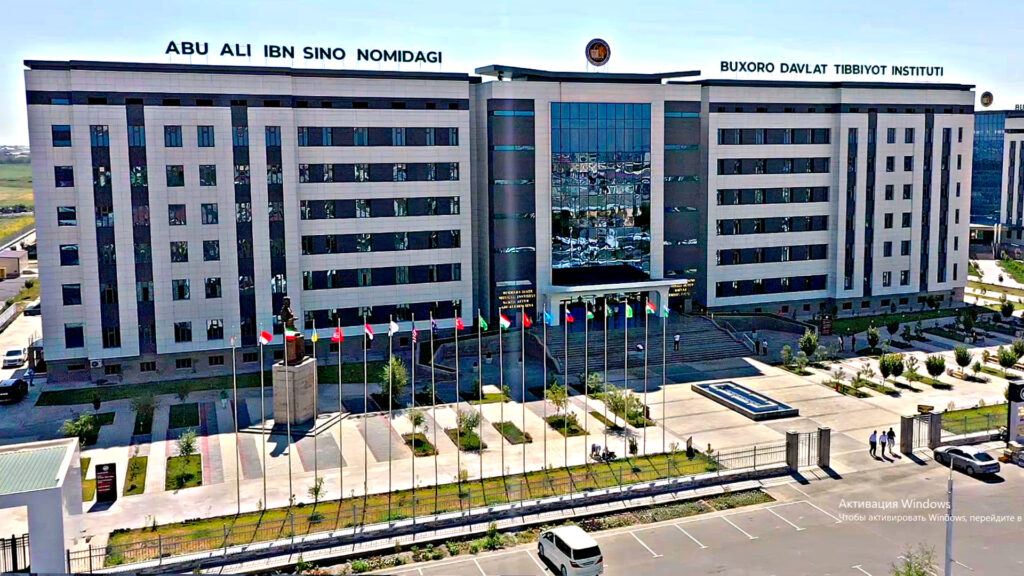
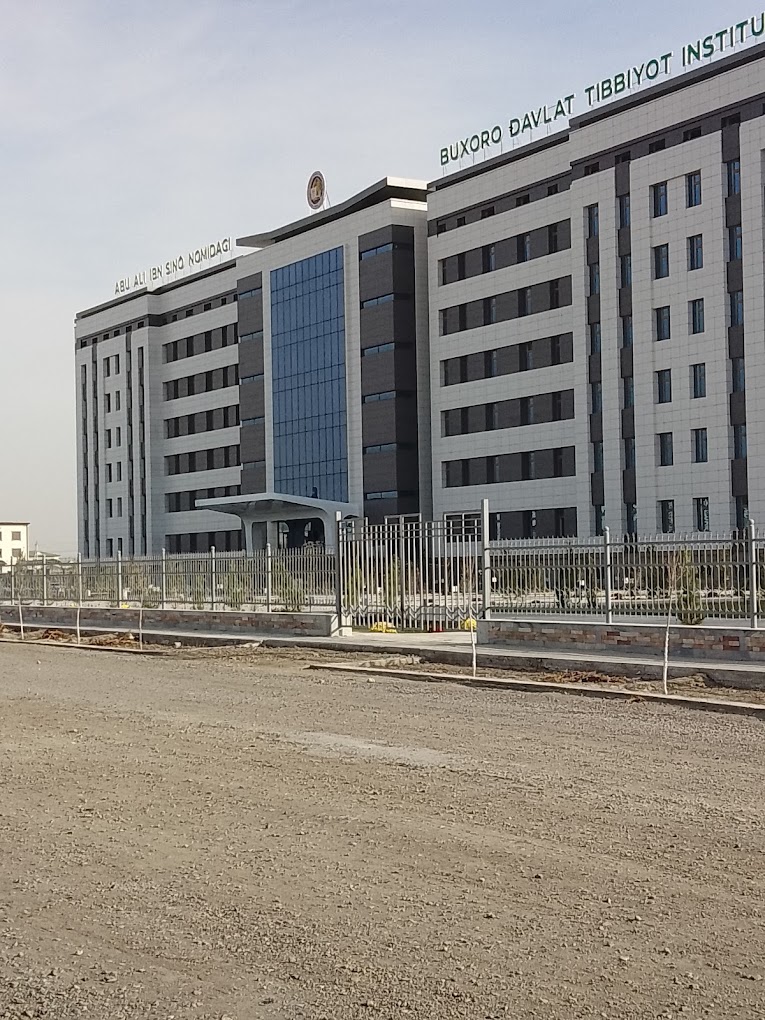
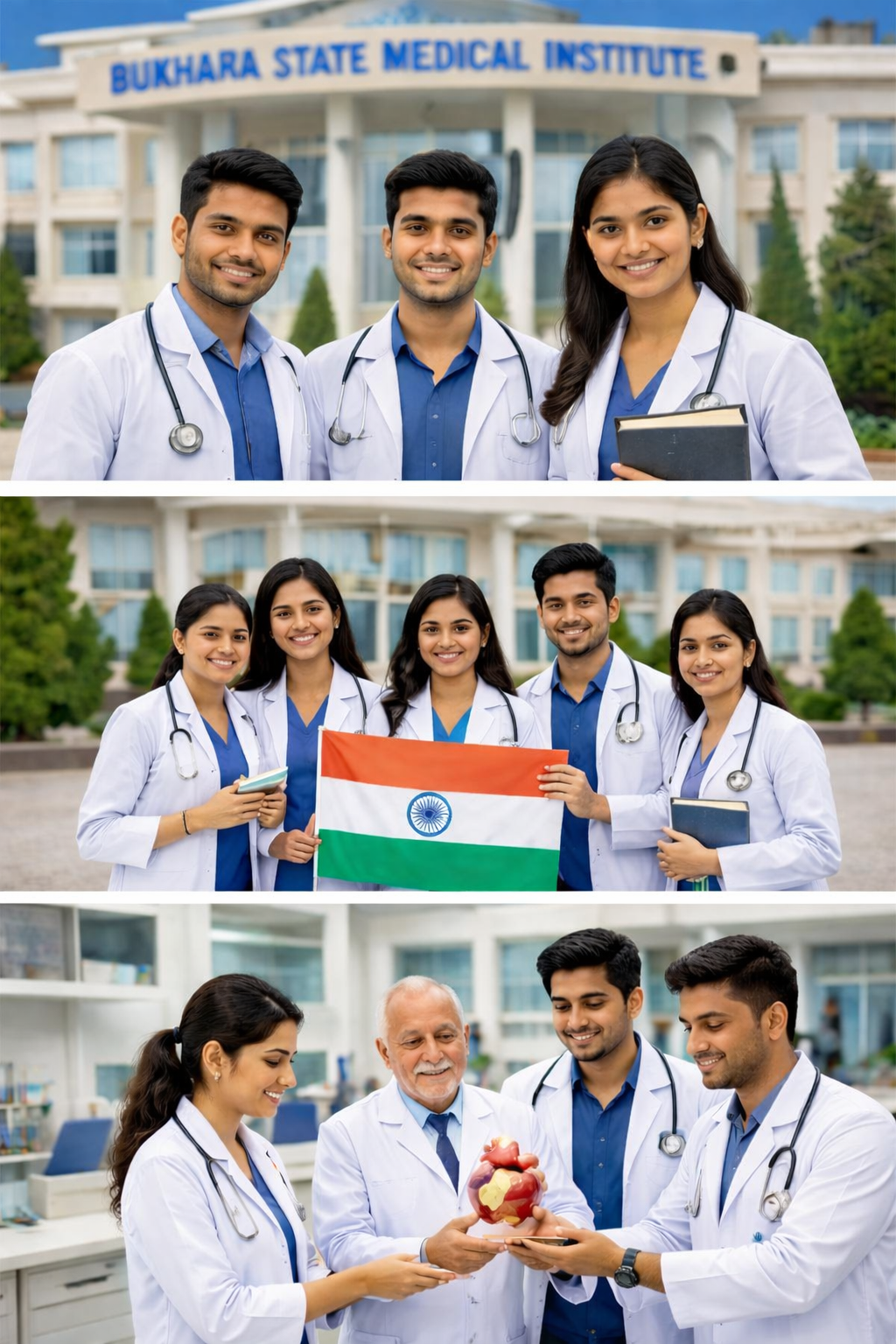
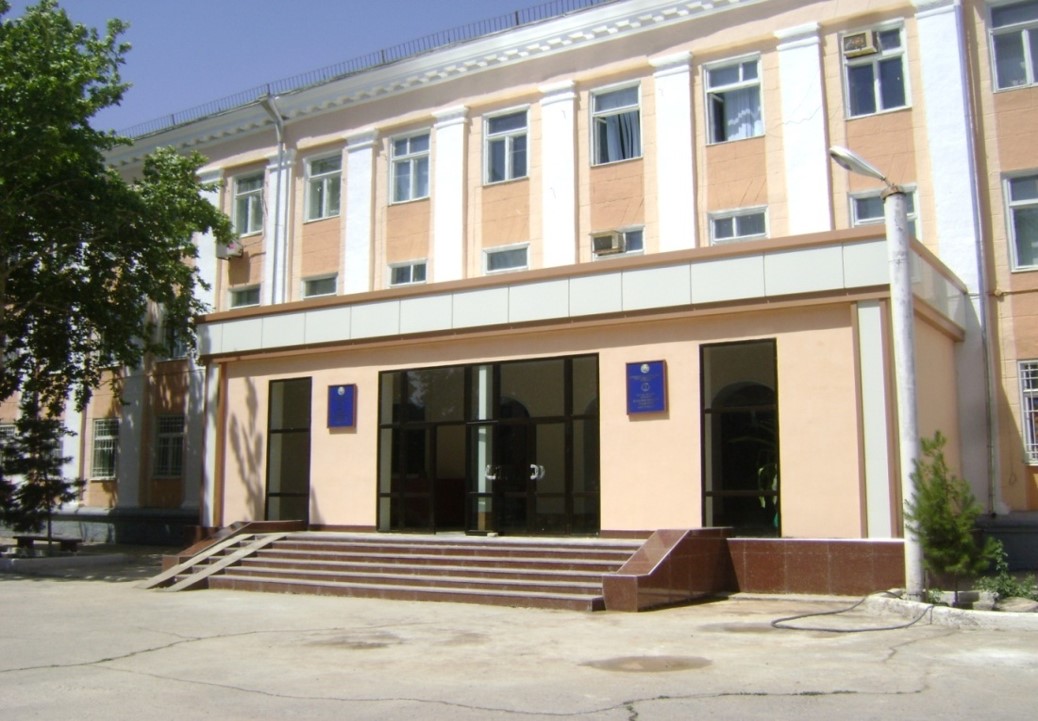
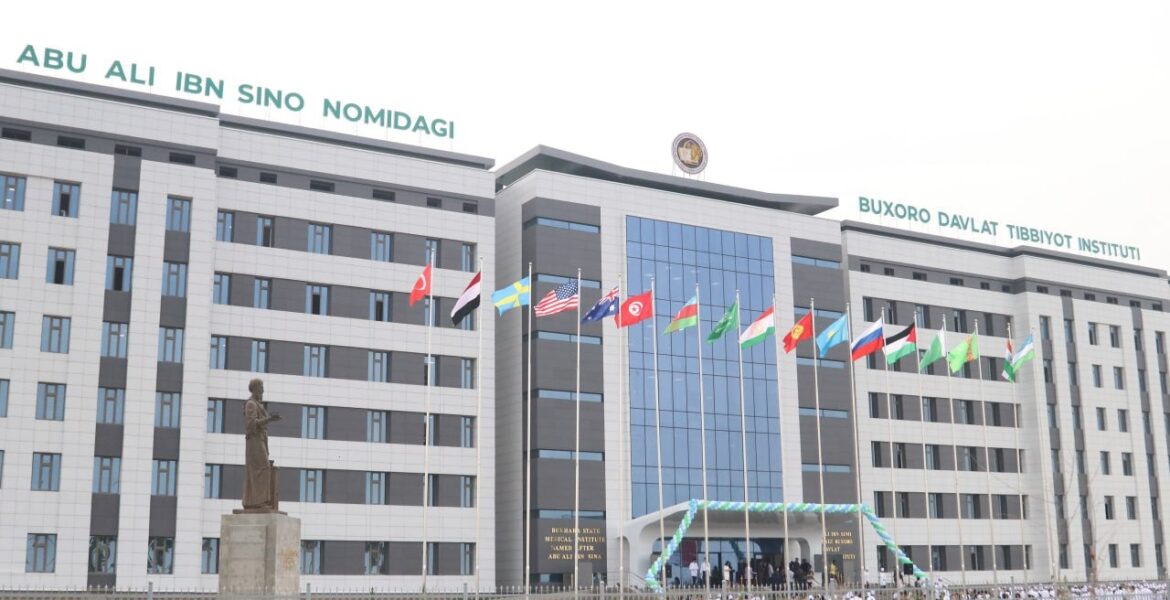
Bukhara State Medical University (BSMU)
Named after Abu Ali Ibn Sino (Avicenna)
An Overview of University
| University Type : | Public (Government) — Ministry of Higher Education, Uzbekistan |
| Full Name : | Bukhara State Medical University named after Abu Ali Ibn Sino (Avicenna) |
| Founded : | August 24, 1990; named after Avicenna in March 1991 |
| Named After : | Abu Ali Ibn Sino (Avicenna) — greatest physician of the medieval Islamic world; Canon of Medicine used in European universities for 600+ years |
| FMGE Pass Rate : | ~48% (2024 results) — among the stronger rates for universities of comparable age |
| Medium of Course : | English (full curriculum for international students — all lectures, exams, and assessments) |
| Year 1 Fee (ALL-IN) : | $8,200 USD — Tuition + Hostel + Indian Mess (3 meals/day) + Insurance + Visa + Registration + Misc. |
| Years 2–6 Fee (ALL-IN) : | $5,598 USD per year — Tuition + Hostel + Indian Mess + Insurance + Visa + Misc. |
| Total 6-Year Cost : | $36,190 USD — FULLY ALL-INCLUSIVE (~₹38.45 Lakh at current rates) |
| Course Duration : | 6 years (pre-clinical + clinical + internship) |
| Degree Awarded : | Doctor of General Medicine (MBBS equivalent) |
| NMC Recognition : | Yes — NMC, WHO, FAIMER & UNESCO recognised; WDOMS listed; FMGE / NExT eligible |
| Indian Faculty : | 4 dedicated Indian faculty members for NMC / FMGE / NExT coaching |
| Faculties : | 7 faculties — General Medicine, Dentistry, Paediatrics, Pharmacy, Preventive Medicine, Medical Pedagogy, Nursing |
| Faculty Staff : | 600+ teaching and research staff |
| Students : | 4,000+ enrolled; international students from 20+ countries |
| Graduates : | 30,000+ medical professionals trained since founding |
| Climate : | Warm continental — mild winters (rarely below 0°C); no extreme cold; most India-compatible climate in Central Asia |
| City UNESCO Status : | Historic Centre of Bukhara — UNESCO World Heritage Site since 1993; 2,000+ years; most complete medieval city in Central Asia |
| Admission Speed : | Admission letter within 3–4 days; full process ~15 days |
| Academic Session : | Starts September each year |
MBBS for Indian Students — 2026 Complete Guide
Why Bukhara State Medical University Stands Apart for Indian Students
Thousands of Indian students choose to study MBBS abroad every year. Most look at Russia. Some look at Eastern Europe. But a growing and significant number are discovering what may be the most distinctively positioned MBBS destination available: Bukhara State Medical University in Uzbekistan — an NMC-approved government university named after Avicenna, located in one of the world's most historically extraordinary cities, offering the most genuinely all-inclusive fee structure in the entire MBBS-abroad landscape.
BSMU was founded on August 24, 1990, by decree of the Cabinet of Ministers of the Republic of Uzbekistan, and in March 1991 was officially named after Abu Ali Ibn Sino — Avicenna — the greatest physician-scientist of the medieval Islamic world and author of the Canon of Medicine, a text that shaped medical education in both the Islamic world and Europe for over 600 years. A medical university bearing Avicenna's name, in the city where his intellectual tradition was born and flourished, is not a coincidence — it is an institutional statement of purpose.
For Indian students and their families, BSMU's defining practical advantage is its fee structure. Year 1 costs USD 8,200 — all-inclusive. Years 2 through 6 cost USD 5,598 per year — all-inclusive. What does 'all-inclusive' mean? It means tuition, hostel accommodation, Indian mess (three meals a day prepared by dedicated mess staff), medical insurance, visa extension, and all miscellaneous charges are covered within one single annual fee. There are no hidden components. There is no separate food budget to manage. The total 6-year cost is USD 36,190 — everything included — approximately ₹38.45 Lakh.
BSMU at a Glance — Key Facts
| Factor | Details |
|---|---|
| University Full Name | Bukhara State Medical University (BSMU) named after Abu Ali Ibn Sino (Avicenna) |
| Location | Bukhara, Uzbekistan — UNESCO World Heritage 'Noble Bukhara'; on the ancient Silk Road |
| Founded | August 24, 1990; named after Avicenna in March 1991 |
| Named After | Abu Ali Ibn Sino (Avicenna) — greatest physician-scholar of the medieval Islamic world; Canon of Medicine used in Europe for 600+ years |
| FMGE Pass Rate | ~48% (2024 results) — among the stronger rates for universities of comparable establishment age |
| Degree Awarded | Doctor of General Medicine (equivalent to MBBS) |
| Course Duration | 6 years (pre-clinical + clinical + internship) |
| Medium of Instruction | English — full curriculum for international students; all lectures, textbooks, examinations in English |
| NMC Recognition | Yes — NMC, WHO, FAIMER & UNESCO recognised; WDOMS listed; FMGE / NExT eligible |
| Indian Faculty | 4 dedicated Indian faculty members for NMC / FMGE / NExT coaching |
| Year 1 Fee (ALL-INCLUSIVE) | $8,200 USD — covers Tuition + Hostel + Indian Mess (3 meals/day) + Insurance + Visa + Registration + Misc. |
| Years 2–6 Fee (ALL-INCLUSIVE) | $5,598 USD per year — covers Tuition + Hostel + Indian Mess + Insurance + Visa + Misc. |
| Total 6-Year Cost | $36,190 USD — FULLY ALL-INCLUSIVE (approx. ₹38.45 Lakh at current rates) |
| Faculty Staff | 600+ teaching and research staff; 7 faculties |
| Students | 4,000+ enrolled; international students from 20+ countries |
| Graduates | 30,000+ medical professionals trained since founding |
| Climate | Warm continental — mild winters (rarely below 0°C); no extreme cold; most India-compatible climate in Central Asia |
| Admission Speed | Admission letter within 3–4 days; full process from document submission to invitation letter ~15 days |
| Academic Session | Starts September each year |
Avicenna's Legacy — The BSMU Story and the Name That Defines It
The institutional story of Bukhara State Medical University begins on August 24, 1990, when the newly independent Republic of Uzbekistan established the university by decree of its Cabinet of Ministers. Within months — in March 1991 — the university was officially named after Abu Ali Ibn Sino: the scholar known throughout the world as Avicenna.
Avicenna is not merely a historical figure. He is one of the most important intellectual figures in the history of human civilisation. Born in 980 CE in the Bukhara region, he produced his masterwork — the Canon of Medicine — a five-volume encyclopaedia that systematised all known medical knowledge and served as the primary medical textbook in both the Islamic world and European universities for over six centuries. His contributions to pharmacology, clinical observation, and the philosophy of medicine were foundational. In the Islamic world he is known as the 'Prince of Physicians' and the 'Father of Modern Medicine.' For a university in Bukhara to bear his name is not a marketing choice — it is the most natural institutional tribute possible, given that this is the city and region where Avicenna was born, educated, and formed.
Since its founding in 1990, BSMU has grown rapidly into one of Uzbekistan's leading medical institutions — from a single Faculty of Medicine to 7 faculties, 600+ faculty members, 4,000+ enrolled students, and over 30,000 medical graduates who practise across Uzbekistan and internationally. It has established 20 joint international programmes and has operated English-medium MBBS for international students for over 20 years.
The Bukhara Advantage — A UNESCO Silk Road City Unlike Any Other
No other NMC-approved medical university in the world — whether in Russia, Eastern Europe, Central Asia, or beyond — is located in a city like Bukhara. The Historic Centre of Bukhara has been a UNESCO World Heritage Site since 1993, recognised as the most complete example of a medieval city in Central Asia, with an urban fabric that has remained largely intact for over five centuries. Bukhara has been continuously inhabited for over 2,000 years. It was a major centre of the Silk Road — the ancient trade network connecting China, India, Persia, and Europe. During the Islamic golden age, it earned the title of 'Bukhārā-ye Sharīf' — Noble Bukhara — as a centre of Islamic scholarship and learning that drew students from across the Muslim world.
For Indian medical students, Bukhara offers a specific combination of advantages genuinely unique in the global MBBS landscape. The climate is warm continental — mild winters where temperatures rarely fall below 0°C, and long sunny summers. This makes Bukhara by far the most climatically comfortable major MBBS destination in Central Asia for students from India — there is no extreme cold, no Arctic adaptation required. Uzbekistan itself is one of the safest and most student-friendly countries in Central Asia, with a population historically welcoming to Indian visitors through a thousand years of Silk Road connections.
- UNESCO World Heritage city since 1993 — the most complete medieval city in Central Asia; 2,000+ years of history; 140+ architectural monuments; Poi-Kalyan complex, Ark Citadel, Samanid Mausoleum, Lyabi-Khauz ensemble
- Avicenna's birthplace and intellectual home — the university bears his name in the city where he was born, educated, and formed as a physician
- Warmest MBBS destination in Central Asia — winters rarely below 0°C; no extreme cold; no heavy-duty thermals required; immediate physical comfort for Indian students
- Safe, stable Uzbekistan — a peaceful country; population historically and culturally welcoming to Indians through the Silk Road
- All-inclusive fee — the most transparent and manageable fee structure in the MBBS abroad market: one single payment covers everything
- Indian mess included in fee — home-style Indian food three times a day, vegetarian and non-vegetarian, at no additional cost
- 4 dedicated Indian faculty for FMGE / NExT coaching — institutional support for Indian students that is rare among MBBS abroad universities
- Samarkand accessible by high-speed train (~3.5 hours) — day trips to another UNESCO World Heritage Silk Road city possible for students
Clinical Training at BSMU — Hospital Network & Dedicated FMGE Preparation
BSMU's clinical training is conducted across its affiliated hospitals and medical facilities in Bukhara. Clinical exposure begins from Year 3, with full hospital rotations running from Year 4 through Year 6. Students rotate through clinical departments covering Internal Medicine, Surgery, Obstetrics and Gynaecology, Paediatrics, Neurology, Psychiatry, ENT, Ophthalmology, Oncology, Dermatology, Infectious Diseases, and more.
One of BSMU's most distinctive clinical preparation features is its investment in dedicated Indian faculty for NMC coaching. Four Indian faculty members are specifically assigned to coach Indian students on FMGE / NExT preparation — providing subject-by-subject guidance, mock examinations, and examination strategy support that directly addresses the Indian licensing examination. This institutional provision of dedicated NMC coaching is rare among MBBS abroad universities and reflects BSMU's specific understanding of what Indian graduates need to succeed when they return home.
- Clinical exposure from Year 3 — earlier than many comparable MBBS abroad universities
- Full hospital rotations from Year 4 across BSMU's affiliated hospital network in Bukhara
- 7 faculties covering General Medicine, Dentistry, Paediatrics, Pharmacy, Preventive Medicine, Medical Pedagogy, Nursing
- 4 dedicated Indian faculty members providing NMC / FMGE / NExT coaching — unique institutional support for Indian students
- Practical-based approach from the earliest years — BSMU prioritises clinical skill development alongside theoretical knowledge
- OSCE-style practical examinations in Year 6 — directly aligned with FMGE / NExT clinical competency requirements
- FMGE pass rate approximately 48% (2024) — among the stronger rates for universities of comparable establishment age
Course Structure & Curriculum at BSMU — Year by Year
BSMU's General Medicine programme follows the 6-year structured curriculum aligned with NMC requirements for international recognition. The English-medium programme is conducted entirely in English — lectures, textbooks, written examinations, and all academic assessments. The curriculum is designed specifically with FMGE / NExT preparation in mind, structured to build both the theoretical knowledge and clinical competence that the licensing examination tests.
| Year | Phase | Subjects / Focus Areas |
|---|---|---|
| Year 1 | Pre-Clinical | Anatomy, Histology, Biochemistry, Biophysics, Latin, Uzbek / Russian Language (Beginner) |
| Year 2 | Pre-Clinical | Physiology, Microbiology, Pathological Anatomy, Language (Intermediate) |
| Year 3 | Para-Clinical | Pathophysiology, Pharmacology, Propedeutics of Internal Medicine — Clinical exposure begins; Language (Clinical) |
| Year 4 | Clinical | Internal Medicine, Surgery, Paediatrics, Neurology, Psychiatry — Hospital rotations across BSMU's affiliated hospitals |
| Year 5 | Clinical | Obstetrics & Gynaecology, ENT, Ophthalmology, Infectious Diseases, Oncology, Dermatology |
| Year 6 | Internship | All-department clinical rotations, OSCE Exams, Final State Examinations, Supervised Clinical Internship |
Pre-Clinical Years (1–2) — Foundation Building in Avicenna's City
The first two years establish the foundational sciences — Anatomy, Physiology, Biochemistry, Histology, and Microbiology — taught entirely in English with the rigour required for FMGE / NExT preparation from Day 1. BSMU's 600+ faculty bring a breadth of specialist expertise reflecting the university's development into a comprehensive medical institution since 1990. The fact that the pre-clinical curriculum is delivered in the city where Avicenna formulated the first systematic account of anatomy and physiology in the Islamic world is not irrelevant — it is a reminder of the depth of medical tradition that Bukhara itself embodies.
Para-Clinical Year (3) — The FMGE-Critical Year and Clinical Exposure
Year 3 is strategically the most important year for FMGE / NExT preparation — and BSMU's curriculum is explicitly structured with this in mind. Pathology, Pharmacology, and Propedeutics of Internal Medicine carry the heaviest examination weightage in the licensing exam. At BSMU, these subjects are taught by faculty who understand the specific demands of the Indian licensing examination, supported by the 4 dedicated Indian NMC coaching faculty. Year 3 also marks the beginning of clinical exposure — reinforcing the theoretical para-clinical subjects with practical hospital context at exactly the moment this reinforcement is most valuable.
Clinical Years (4–6) — Bukhara Hospital Training
From Year 4, students enter BSMU's affiliated hospital network for structured clinical rotations. Year 5 covers the remaining clinical disciplines. Year 6 is the comprehensive internship year — all-department rotations, OSCE-style practical examinations, and the final state examination. The English-medium curriculum means there is no language barrier in academic learning throughout all 6 years. Clinical years involve interaction with Uzbek-speaking patients and staff — basic Uzbek or Russian language skills are helpful for ward-level communication and are developed through the language training integrated in the curriculum.
Complete Fee Structure — The All-Inclusive Breakdown (in US Dollars)
BSMU's fee structure is the most transparent and genuinely all-inclusive in the MBBS abroad market. There are no separate components to track, no hidden costs to discover, and no unexpected annual increases. Year 1 costs USD 8,200 — covering everything: tuition, hostel, three daily Indian meals, medical insurance, visa extension, first-year registration, and all miscellaneous charges. From Year 2 onwards, the annual fee reduces to USD 5,598 — still fully all-inclusive. Total 6-year cost: USD 36,190.
| Year | Annual Fee (USD) | What's Included |
|---|---|---|
| Year 1 | $8,200 | Tuition + Hostel + Indian Mess + Insurance + Visa Extension + First-Year Registration + Miscellaneous |
| Year 2 | $5,598 | Tuition + Hostel + Indian Mess + Insurance + Visa Extension + Miscellaneous |
| Year 3 | $5,598 | Tuition + Hostel + Indian Mess + Insurance + Visa Extension + Miscellaneous |
| Year 4 | $5,598 | Tuition + Hostel + Indian Mess + Insurance + Visa Extension + Miscellaneous |
| Year 5 | $5,598 | Tuition + Hostel + Indian Mess + Insurance + Visa Extension + Miscellaneous |
| Year 6 | $5,598 | Tuition + Hostel + Indian Mess + Insurance + Visa Extension + Miscellaneous |
| TOTAL | $36,190 USD | Fully all-inclusive over 6 years — tuition, accommodation, Indian meals, insurance, visa, and miscellaneous |
What the All-Inclusive Fee Covers
- Tuition fees — included within the annual all-inclusive fee for all 6 years
- Hostel accommodation — secure on-campus housing; furnished rooms; 24/7 CCTV security; shared kitchens; gym; laundry; Wi-Fi; centralised heating; hot/cold water 24 hours
- Indian mess — 3 meals daily — vegetarian and non-vegetarian Indian food prepared by dedicated mess staff; included for all 6 years; no separate food budget required
- Medical and health insurance — mandatory for international students; fully included
- Visa extension charges — annual renewal to maintain legal student status; fully included
- Miscellaneous administrative and student services charges — fully included
- First-year registration charges — included in the Year 1 fee of USD 8,200
What the Fee Does NOT Cover
International flight tickets to/from India, books and study materials (a modest additional cost), and personal expenses (mobile, clothing, entertainment). FMGE / NExT preparation resources on return to India. Everything else — accommodation, all meals, insurance, visa — is covered. This is the most complete all-in fee structure available in the Indian MBBS abroad market.
BSMU vs Other NMC-Approved MBBS Universities — Honest Comparison
| Factor | Bukhara State Medical University (Uzbekistan) | Typical NMC-Approved Russian University |
|---|---|---|
| Country | Uzbekistan — safe, stable, student-friendly; historically welcoming to Indians through the Silk Road | Russia — various logistical and climate considerations for Indian students |
| City | Bukhara — UNESCO World Heritage Silk Road city; 2,000+ year history; 'Noble Bukhara'; warm climate | Varies — Russian regional cities with colder climates |
| Named After | Abu Ali Ibn Sino (Avicenna) — the greatest physician of the medieval Islamic world | Typically named after Soviet-era figures or generic regional names |
| Fee Structure | ALL-INCLUSIVE: Year 1 $8,200; Years 2–6 $5,598/yr — tuition, hostel, Indian mess, insurance, visa all included | Fees typically exclude meals; multiple separate cost components to manage |
| Total 6-Year Cost | $36,190 USD — everything included; approx. ₹38.45 Lakh | RUB 20,00,000–50,00,000 (varies); personal food extra |
| Indian Mess | Yes — included in the all-in fee; Indian meals (veg & non-veg) prepared by dedicated staff | Varies; often separate cost or self-cooking required |
| NMC Recognition | Yes — NMC, WHO, FAIMER, UNESCO recognised | Varies; verify each individually |
| Indian Faculty | 4 dedicated Indian faculty for NMC / FMGE / NExT coaching | Rarely available at comparable universities |
| Climate | Warm continental — mild winters (rarely below 0°C); no extreme cold; highly compatible for Indian students | Cold to very cold winters; significant adaptation required |
| FMGE Pass Rate | ~48% (2024) — among the stronger rates for universities of comparable age | Varies widely; many newer institutions below 30% |
Eligibility & Admission Process for BSMU
Eligibility Criteria
- Cleared NEET (mandatory under NMC rules — no exceptions for any foreign medical university)
- Class 12 with Physics, Chemistry, and Biology — minimum 50% aggregate in PCB (40% for SC/ST/OBC)
- Minimum age 17 years on or before 31st December of the year of admission
- Valid Indian passport (minimum 1.5 years validity from travel date)
Step-by-Step Admission Process
- NEET Qualification: Confirm your NEET scorecard. No application can proceed without a valid NEET qualification.
- Application Submission: Submit Class 10 and 12 marksheets, NEET scorecard, and passport copy via MBBSDirect.com. The entire process typically completes within one to two weeks.
- University Review & Admission Letter: BSMU reviews the application and issues an official admission confirmation letter within 3–4 days of a complete submission.
- Invitation Letter: Following the admission letter, BSMU issues the official invitation letter required for the Uzbekistan student visa application.
- Fee Payment: Pay Year 1 fees (USD 8,200 — fully all-inclusive) to BSMU's official account. Retain all payment receipts.
- Student Visa Application: Apply at the Uzbekistan Embassy in India with the invitation letter, academic documents, medical certificate, and passport. Uzbekistan visa processing is generally straightforward for Indian students.
- Travel & Arrival: A BSMU university representative receives students at Bukhara airport. Classes begin in September each year.
Documents Required
- Class 10 Marksheet & Certificate (attested / apostilled)
- Class 12 Marksheet & Certificate (attested / apostilled)
- NEET Score Card (original + copies)
- Valid Indian Passport (minimum 1.5 years validity from travel date)
- 10 Passport-size photographs
- Birth Certificate (attested)
- Medical Fitness Certificate (from a registered doctor)
- Police Clearance Certificate
- Migration Certificate (from Class 12 board)
Life at BSMU — Bukhara, Hostel, Food & Student Community
Location — Bukhara: UNESCO World Heritage Silk Road City
Bukhara is one of the world's most extraordinary ancient cities — a living UNESCO World Heritage Site on the Silk Road, with over 2,000 years of continuous history and more than 140 architectural monuments. The historic city centre — with its domed bazaars, minarets, madrasas, mosques, and the magnificent Poi-Kalyan complex — is the most intact medieval urban landscape in all of Central Asia. Avicenna was born and educated in this region. Medieval Indian merchants lived and traded here. The Samanid Mausoleum, the Ark Citadel, the Lyabi-Khauz ensemble, and the Ulugbek Madrasa are all within the historic centre — a daily reminder that students are studying in a city that has been a centre of knowledge and scholarship for over a thousand years. Samarkand — another UNESCO World Heritage Silk Road city — is accessible by high-speed train in approximately 3.5 hours.
Hostel — Secure On-Campus Accommodation (Included in Fee)
BSMU provides secure on-campus hostel accommodation for all international students — included within the annual all-inclusive fee. Separate hostels for male and female students, with rooms on a sharing basis (typically double or triple sharing). Hostel facilities include: 24-hour security with CCTV monitoring, Wi-Fi throughout, centralised heating, hot and cold water 24 hours, shared kitchens (one per block), laundry rooms with washing machines, gymnasium, and access to the campus sports and recreation complex. The hostel is fully furnished — beds, cupboards, study tables, and mattresses all provided.
Food — Indian Mess Included in the All-In Fee
BSMU provides a dedicated Indian mess serving three meals a day — and the cost is fully included within the annual all-inclusive fee. Both vegetarian and non-vegetarian Indian food options are prepared daily by dedicated mess staff who understand Indian dietary preferences, cooking traditions, and the importance of home-style food for students far from home. Students from all Indian dietary backgrounds — vegetarian, non-vegetarian, those following specific regional traditions — find familiar, nourishing food available on campus every day, at no additional cost beyond the annual fee. There is no need to self-cook, no need to seek out Indian restaurants in an unfamiliar city, and no food budget to separately manage.
Language — English-Medium Study in an Uzbek City
BSMU's entire academic programme for international students is conducted in English — lectures, textbooks, examinations, and all academic assessments. There is no language barrier in the classroom for Indian students. For clinical years, basic Uzbek or Russian language skills are helpful for direct patient communication in hospital environments — the university provides language support to help students develop the basic clinical communication they need. The overall language environment at BSMU is significantly more accessible for Indian students than at Russian universities, where clinical language demands are higher.
Climate — Bukhara's Warm Continental Seasons
- Winter (December–February): 0°C to 10°C — mild by Central Asian standards; standard light winter clothing is sufficient; no extreme cold or Arctic conditions
- Spring (March–May): 15°C to 25°C — beautiful, warm spring; Bukhara's gardens and the surrounding oasis landscape come alive
- Summer (June–August): 30°C to 38°C — hot, sunny Central Asian summer; warm, dry heat that Indian students typically manage well
- Autumn (September–November): 15°C to 25°C — ideal conditions; the academic year begins in warm, pleasant weather
- No extreme cold — Bukhara's winters are the mildest of any major MBBS destination in Central Asia or Eastern Europe; no special cold-weather investment required
Who Should Choose BSMU?
✓ BSMU is the right choice if:
- You want complete fee transparency and the simplest possible financial structure — one all-inclusive annual fee covering tuition, hostel, Indian mess, insurance, and visa; no separate food budget to manage
- You want Indian mess included in the fee — home-style Indian food three times a day, vegetarian and non-vegetarian, at no additional cost
- You want dedicated NMC / FMGE / NExT coaching built into the university — 4 Indian faculty specifically assigned to prepare Indian students for the licensing examination
- You want a warm climate compatible with Indian students — Bukhara winters are mild (rarely below 0°C); no extreme cold adaptation required; no Arctic clothing investment
- You are drawn to the extraordinary UNESCO World Heritage city setting — studying in a city of 2,000+ years of history, on the ancient Silk Road, in the birthplace of Avicenna's intellectual tradition
- Your budget supports $8,200 in Year 1 and $5,598/year from Year 2 — total $36,190 over 6 years, approx. ₹38.45 Lakh, fully all-inclusive
- You appreciate that Uzbekistan is a safe, stable country with a historically deep connection to India through the Silk Road
✗ Consider alternatives if:
- You specifically require a university in Russia — BSMU is in Uzbekistan, Central Asia
- Your budget requires a lower total cost than $36,190 over 6 years — while BSMU's all-in structure is transparent, there are universities with lower headline fees (though typically with additional separate costs)
- You are not willing to do basic language learning for clinical communication — while BSMU's academics are entirely in English, basic Uzbek helps in clinical settings
- Seats are already full for the upcoming intake — in which case MBBSDirect.com can advise on alternatives or next-year planning
Pre-Departure Checklist — Before You Fly to BSMU, Bukhara
Document / Administrative
- NEET scorecard (original + 3 copies)
- Official BSMU offer / invitation letter (original)
- Uzbekistan student visa stamped in passport
- Year 1 fee payment receipt (USD 8,200)
- Class 10 & 12 certificates (attested/apostilled originals)
- Passport validity: minimum 1.5 years from travel date
- Medical fitness certificate (from registered doctor)
- Police clearance certificate
- Medical insurance confirmation document
Practical / Personal
- Light to medium warm clothing (Bukhara winters are mild — no Arctic gear needed)
- Indian medicines and personal health supplies (3–6 months)
- Debit card with international ATM access + some USD for arrival
- Personal Indian food items and favourite snacks for first few days
- BSMU Indian student WhatsApp group joined (via MBBSDirect.com)
- Language basics app downloaded — basic Uzbek phrases helpful
- Flight booked to Bukhara International Airport or via Tashkent
- Emergency contact list (family + BSMU + Indian Embassy Tashkent)
- University registration documents printed and organised
The Bottom Line — Is BSMU Right for You?
Bukhara State Medical University is not simply another MBBS abroad option on a list. It is a university named after Avicenna — the greatest physician of the medieval Islamic world — located in the UNESCO World Heritage city where Avicenna's intellectual tradition was born, on the ancient Silk Road that connected India and Bukhara for over a thousand years. It offers the most genuinely all-inclusive fee structure in the MBBS abroad market: USD 8,200 in Year 1 and USD 5,598 from Year 2, covering everything — tuition, hostel, Indian meals, insurance, visa, and all charges — with a total 6-year cost of USD 36,190, approximately ₹38.45 Lakh.
The Avicenna connection matters — the name reflects a genuine historical and intellectual bond between the university, the city, and the tradition of medicine that Avicenna systematised. The all-inclusive fee matters — for Indian families, knowing that a single annual payment covers everything is a practical simplicity with enormous value over six years. The Indian mess included in the fee matters — home-style food every day, at no additional cost. The 4 dedicated Indian NMC coaching faculty matter — institutional support for FMGE / NExT that most universities simply do not provide. The warm climate matters — no extreme cold, no Arctic adaptation, physical comfort that allows students to focus fully on their studies. And the city matters — Bukhara is one of the world's most extraordinary places, and spending six formative years there is an experience that cannot be had anywhere else.
If you would like to apply to BSMU or want to discuss whether it is the right fit for your specific situation, the team at MBBSDirect.com is here for an honest conversation. We will tell you if BSMU is right for you — and if it is not, we will tell you that too.
www.mbbsdirect.com — Your trusted guide to MBBS abroad — honest advice, direct admissions, no hidden charges.