Student Helpline! +91 9717172071
  Apply Here



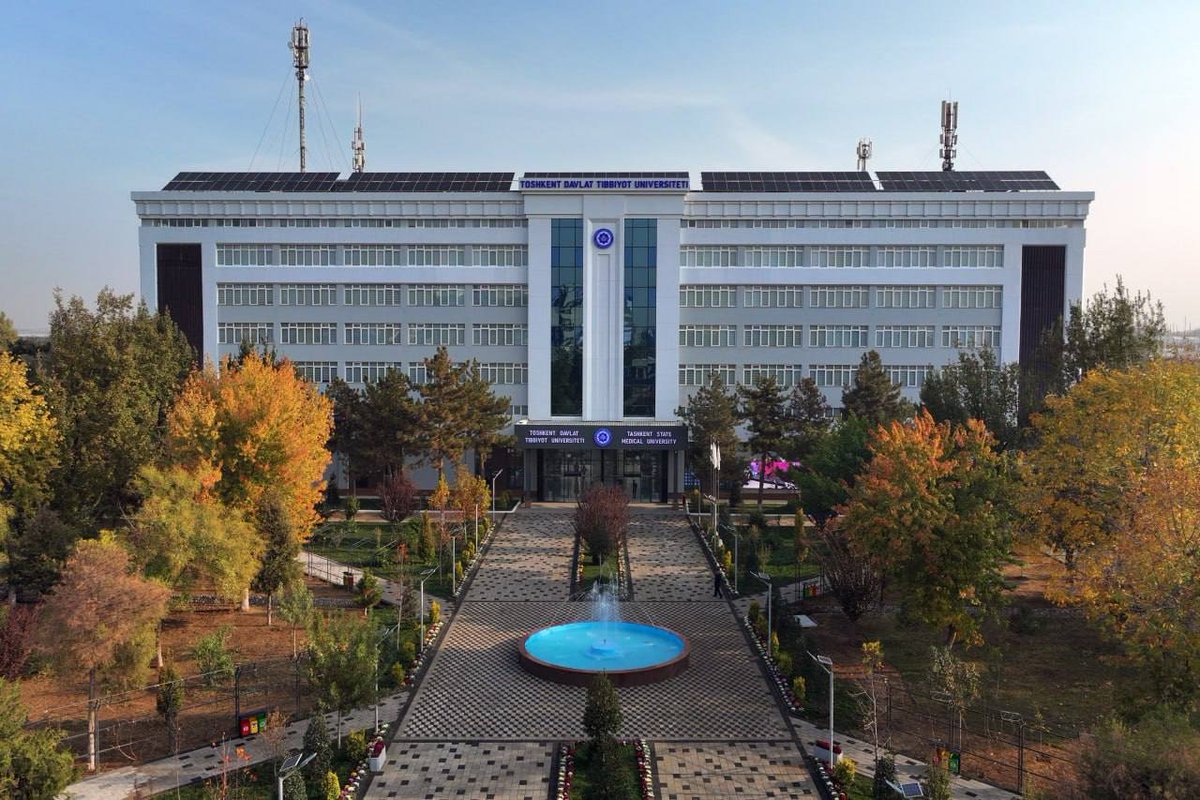
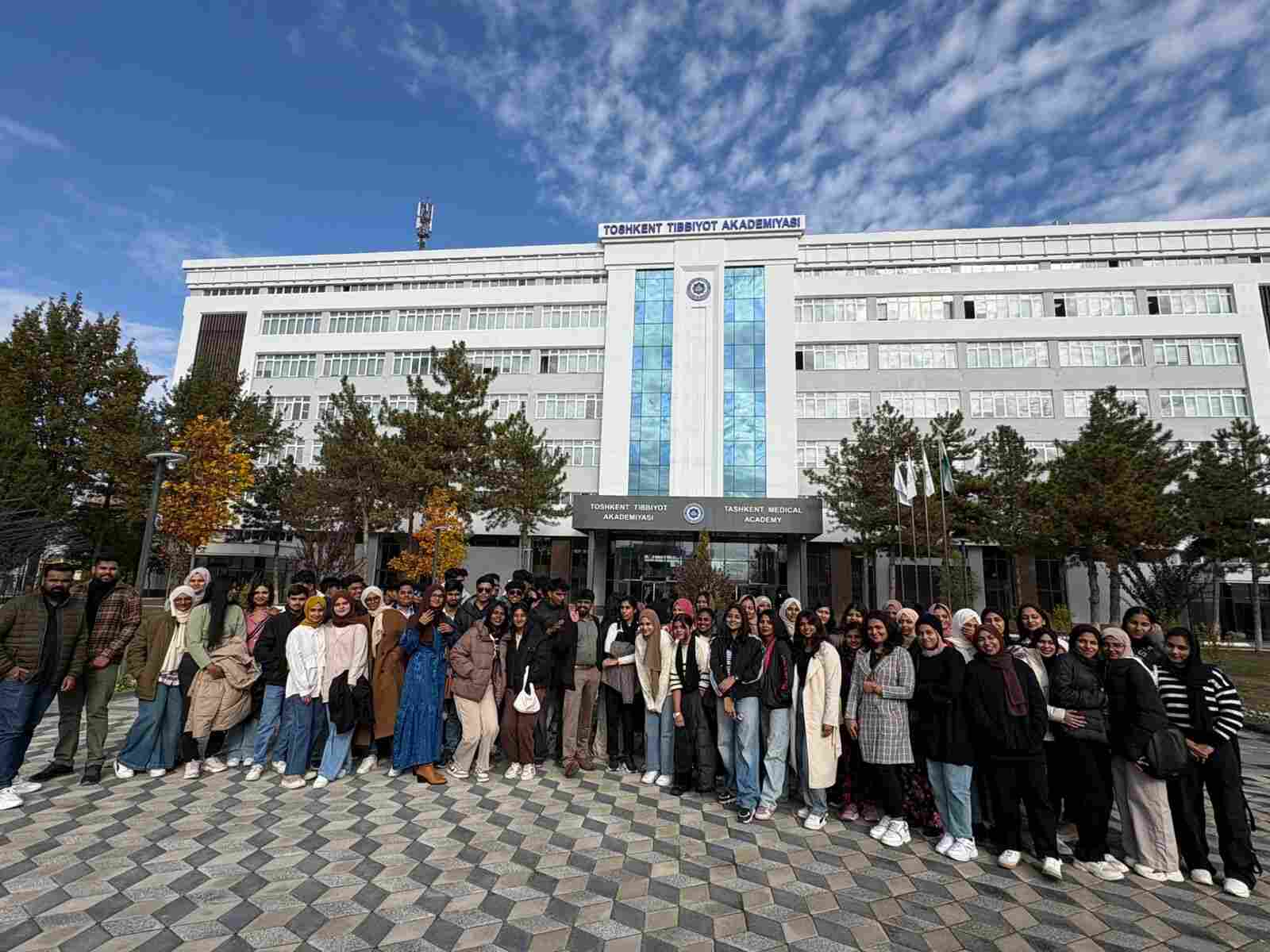
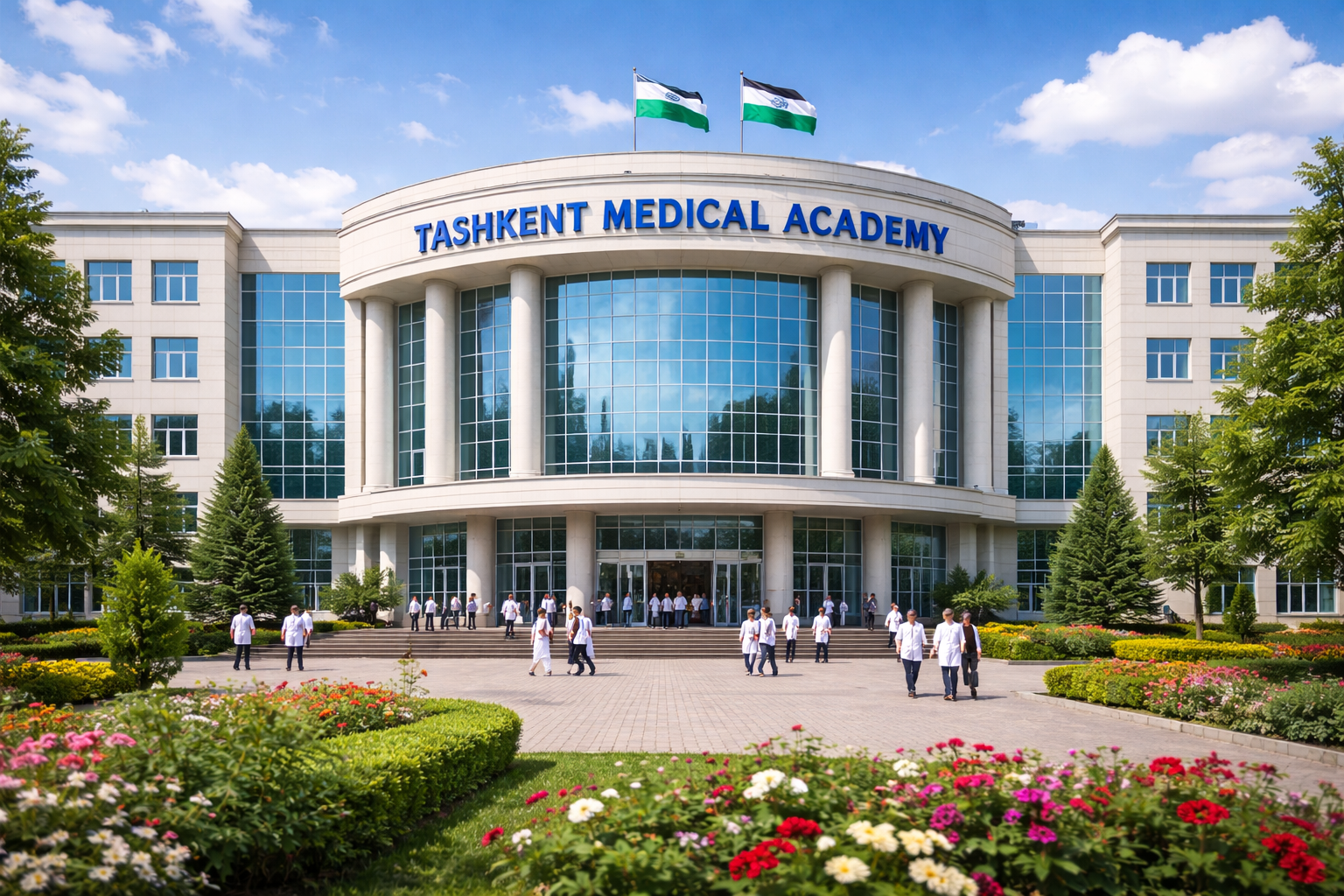
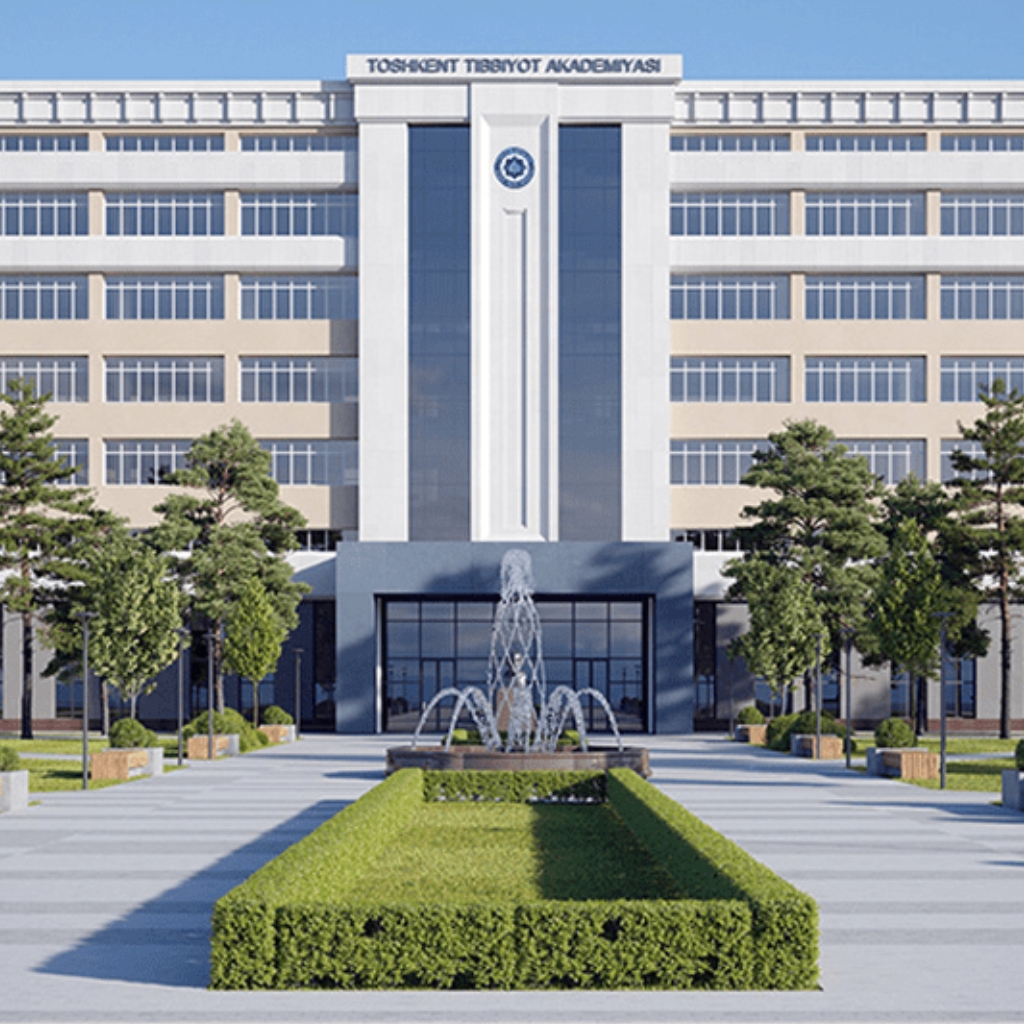
Tashkent State Medical University (TSMU)
An Overview of University
| University Type : | Public — Ministry of Health, Uzbekistan |
| Estd. Year : | 1919 — 100+ years of continuous operation |
| Medium of Course : | English (full curriculum) + Uzbek/Russian (clinical) |
| Annual Tuition Fees : | USD 5,000 per year |
| Annual Hostel Fees : | USD 700 per year |
| Total 6-Year Cost : | ~USD 33,000–37,000 (~₹28–32 Lakh) |
| Course Duration : | 6 years (5 academic + 1 internship) |
| Degree Type : | Doctor of General Medicine (MD) |
| Degree Awarded : | MBBS equivalent (General Medicine) |
| NMC Recognition : | Yes — NMC, WHO, WDOMS, UNESCO, FAIMER |
| Teaching Hospitals : | Tashkent's premier hospitals — largest network in Uzbekistan |
| Fee Currency : | USD (no exchange rate risk) |
| Int'l Partnerships : | 70+ universities — Europe, USA, Asia, CIS |
| Indian Community : | 1,000+ Indian students; Indian mess on campus |
| Proximity to India : | 2–3 hour direct flight from Delhi / Mumbai |
| Academic Intakes : | September (main) and February |
MBBS for Indian Students — 2026 Complete Guide
Why Tashkent State Medical University Stands Apart
Among all NMC-approved medical universities in Uzbekistan, Tashkent State Medical University (TSMU) occupies a position of unmatched historical authority — it is not only the oldest and most recognised medical institution in the country, but also the flagship medical university of the entire Central Asian region. Founded in 1919, TSMU has over 100 years of continuous medical education history, making it one of the most established medical universities in Asia. It is situated in Tashkent, the capital city of Uzbekistan, with a population of over 2 million — giving its students access to the largest and most diverse hospital network in the country.
For Indian students, the TSMU proposition is built on several specific advantages. Tashkent is just 2–3 hours by direct flight from Delhi or Mumbai — closer to India than any Kazakhstan or Russian university city. Uzbekistan's capital is culturally warmer, more familiar, and climatically more manageable than northern Kazakhstan cities. The city has a growing Indian community, Indian restaurants, and Indian grocery stores. TSMU's 100+ years of institutional history means its degree is recognised everywhere — by NMC India, WHO, WDOMS, UNESCO, and FAIMER — and its alumni include practising doctors across India, Russia, the USA, the UK, and the Middle East.
TSMU has 70+ international university partnerships across Europe, the United States, Asia, and CIS countries — among the highest of any Central Asian medical institution. Its 10,000+ enrolled students include a growing international community, with Indian students forming one of the most established international groups. For Indian families who want their child to study at a century-old institution in a capital city with strong NMC recognition, affordable fees, close proximity to India, and a proven alumni track record — TSMU is among the strongest MBBS destinations in all of Central Asia.
TSMU at a Glance — Key Facts
| Factor | Details |
|---|---|
| Full Name | Tashkent State Medical University (TSMU) |
| Location | Tashkent, Uzbekistan — capital city; 2+ million population; 2–3 hour flight from India |
| Founded | 1919 — one of the oldest medical universities in Central Asia; 100+ years of history |
| Degree Awarded | Doctor of General Medicine (MD / equivalent to MBBS India) |
| Course Duration | 6 years total: 5 years academic + 1 year clinical internship |
| Medium of Instruction | English (complete MBBS curriculum for international students); Uzbek and Russian available |
| NMC Recognition | Yes — NMC (India), WHO, WDOMS, UNESCO, FAIMER recognised |
| Total Students | 10,000+ total (local + international) |
| Indian Students | ~1,000+ Indian students — well-established Indian student community in Tashkent |
| Teaching Faculty | 1,000+ faculty including professors, doctors of medical sciences, and clinical specialists |
| International Partnerships | 70+ partner universities across Europe, USA, Asia, and CIS countries |
| Indian Support On Campus | Indian mess available; Indian student community network; FMGE preparation support |
| Clinical Training | Begins Year 3; full rotations Years 4–5; Tashkent's premier teaching hospitals |
| Annual Tuition Fee | $5,000 USD/year |
| Hostel Fee | $700 USD/year (shared room; fully furnished) |
| Year 1 Total Fee | ~$6,500 USD (tuition + hostel + admission/insurance/visa) |
| Years 2–6 Fee/Year | ~$6,100 USD/year |
| Total 6-Year Cost | ~$33,000–37,000 USD (approx. ₹28–32 Lakh at current rates) |
| Academic Intakes | September (main) and February; applications open from June/July |
100 Years of Medical Education — The TSMU Story
Tashkent State Medical University was founded on 21 April 1919 — making it one of the oldest higher education institutions not just in Uzbekistan, but in all of Central Asia. It was established as the Turkestan State University Faculty of Medicine, serving the medical education needs of the entire Soviet Central Asian region from the very beginning. Over the following decades it evolved into a standalone, dedicated medical institution — and was formally designated as the Tashkent State Medical Institute, before receiving university status as Tashkent State Medical University.
Through the Soviet era, TSMU was the premier institution for training doctors across Uzbekistan, Tajikistan, Kyrgyzstan, Turkmenistan, and parts of Kazakhstan — a vast catchment area that gave its faculty and clinical training infrastructure a scale and depth matched by few institutions in the region. Following Uzbekistan's independence in 1991, TSMU transitioned to serving the independent Republic of Uzbekistan while maintaining its international reputation. It has been recognised by the WHO World Directory of Medical Schools, received NMC India recognition, and is listed in FAIMER and UNESCO databases.
Today, TSMU operates under the Ministry of Health of the Republic of Uzbekistan. It has 70+ international academic partnerships with universities across Europe, the USA, Asia, and CIS countries. It enrolls 10,000+ students across all programmes. Its General Medicine (MBBS equivalent) programme has produced thousands of Indian graduates who have gone on to clear FMGE and practise medicine across India. Over a century of operation, TSMU has built institutional credibility that no newer university can replicate.
Tashkent — Central Asia's Most Accessible Capital City
Tashkent is the capital and largest city of Uzbekistan, with a metropolitan population of over 2 million people. It is the political, economic, cultural, and educational centre of the country — and one of the three most important cities in all of Central Asia. Tashkent has a metro system, an international airport with direct flights to Delhi, Mumbai, and other Indian cities, and a fully developed urban infrastructure including shopping centres, hospitals, universities, and cultural institutions.
For Indian students, Tashkent has several specific advantages that no other Central Asian university city can match:
- Proximity to India: At just 2–3 hours by direct flight from Delhi or Mumbai, Tashkent is the closest major Central Asian city to India. Students can fly home for semester breaks without the exhausting multi-leg journeys required for Kazakhstan or Russian universities
- Milder Climate: Tashkent's climate is continental but milder than northern Kazakhstan — summers average 30–35°C (similar to North India), and winters are manageable at −2 to −8°C, far warmer than Almaty (−15°C) or Russian university cities
- Affordable Living: Tashkent is one of the most affordable capital cities in Central Asia for student living — meals, transport, and accommodation are significantly cheaper than Almaty or Moscow
- Indian Community: Indian restaurants, Indian grocery stores, and an established Indian expat community make it one of the most familiar-feeling Central Asian cities for Indian students
- Capital City Infrastructure: Metro system, international airport, hospitals, universities, parks, bazaars, and cultural institutions — a genuinely cosmopolitan city with excellent quality of life
The Indian Student Community — A Growing and Supported Presence
Tashkent State Medical University has an established and growing Indian student community, with over 1,000 Indian students currently enrolled. Indian students at TSMU benefit from the presence of senior batches who have navigated the same admission process, the same curriculum, and the same FMGE preparation journey — and who actively support incoming students.
Indian students at TSMU have access to Indian mess facilities serving familiar vegetarian and non-vegetarian food. The presence of Indian restaurants and Indian grocery stores in Tashkent city means that even students not on university mess facilities can easily find familiar food. An Indian student representative network operates on campus, providing peer support, FMGE study groups, and guidance for new arrivals. MBBSDirect.com connects prospective students with the TSMU Indian student community WhatsApp groups before they even arrive in Tashkent.
Clinical Infrastructure — Tashkent's Premier Teaching Hospitals
TSMU's clinical training infrastructure is defined by one decisive advantage: location. As the capital city's flagship medical university, TSMU has affiliations with Tashkent's premier teaching hospitals — the largest, best-equipped, and highest patient-volume medical institutions in Uzbekistan. A city of 2 million+ people generates enormous and diverse medical caseloads across all specialties. TSMU students in their clinical years rotate through the full spectrum of patient care with a breadth and depth of exposure that smaller-city universities cannot provide.
- Affiliations with Tashkent's premier teaching hospitals — largest hospital network in Uzbekistan
- Capital city patient volume — diverse caseload across all major specialties including Cardiology, Oncology, and Emergency Medicine
- State-of-the-art simulation centre for procedural and clinical skills training
- Modern laboratories for pre-clinical anatomy, physiology, biochemistry, and microbiology
- Smart classrooms with digital teaching infrastructure across all faculties
- Large multi-language library with e-library access for all enrolled students
- FMGE-focused teaching support available through established Indian student networks
- Clinical training from Year 3; full hospital rotations Years 4–5; comprehensive Year 6 internship
Course Structure & Curriculum — Year by Year
TSMU's General Medicine (MD) programme runs for 6 years (5 years academic + 1 year internship), delivered entirely in English for international students, and structured to meet NMC and WHO guidelines. Uzbek and Russian language training is provided from Year 1 — essential for clinical years when hospital environments operate in local languages.
| Year | Phase | Subjects / Focus Areas |
|---|---|---|
| Year 1 | Pre-Clinical | Anatomy, Histology, Biochemistry, Biophysics, Latin, Uzbek/Russian Language (Beginner) |
| Year 2 | Pre-Clinical | Physiology, Microbiology, Immunology, Genetics, Uzbek/Russian Language (Intermediate) |
| Year 3 | Para-Clinical | Pathology, Pathophysiology, Pharmacology, Propedeutics of Internal Medicine — Clinical contact begins |
| Year 4 | Clinical | Internal Medicine, General Surgery, Paediatrics, Neurology, Psychiatry — Full hospital rotations |
| Year 5 | Clinical | Obstetrics & Gynaecology, ENT, Ophthalmology, Infectious Diseases, Oncology, Emergency Medicine, Dermatology |
| Year 6 | Internship | All-department rotations across Tashkent affiliated hospitals, OSCE Exams, Final State Examinations |
Pre-Clinical Years (1–2) — Foundational Sciences
TSMU's pre-clinical curriculum covers Anatomy, Histology, Biochemistry, Physiology, Microbiology, and Genetics across Years 1 and 2, taught by faculty in the country's oldest and most established medical university. The depth of foundational science teaching at TSMU reflects 100+ years of curriculum refinement. Uzbek and Russian language training begins in Year 1 with practical hospital vocabulary as a core component, preparing students for the bilingual clinical environment from Year 3.
Para-Clinical Year (3) — FMGE Preparation Begins
Year 3 at TSMU introduces Pathology, Pharmacology, and Propedeutics of Internal Medicine alongside the student's first hospital contact. These subjects collectively represent approximately 15–20% of FMGE examination marks. TSMU's teaching in these disciplines draws on its deep institutional expertise and its connections to Tashkent's premier clinical hospitals.
Clinical Years (4–6) — Tashkent's Hospital Network
From Year 4, TSMU students rotate through all major clinical departments in Tashkent's affiliated hospitals. As a capital city of 2 million+ people, Tashkent provides genuine patient volume and case diversity across all specialties. Students who have invested in Uzbek and Russian from Years 1–2 participate more fully in ward rounds and clinical discussions. The Year 6 internship covers all departments with OSCE-format examinations that directly align with FMGE/NExT clinical assessment requirements.
Complete Fee Structure — Year by Year (in USD)
TSMU's fee structure is denominated in US Dollars (USD). Year 1 includes a one-time admission and registration charge in addition to tuition, hostel, and mandatory insurance and visa costs. From Year 2, only tuition, hostel, and annual insurance/visa extension apply.
| Year | Tuition (USD) | Hostel (USD) | Misc / Fees (USD) | Notes | Total/Year (USD) |
|---|---|---|---|---|---|
| Year 1 | $5,000 | $700 | $800 | Admission reg + insurance + visa ext | $6,500 |
| Year 2 | $5,000 | $700 | $400 | Insurance + visa extension | $6,100 |
| Year 3 | $5,000 | $700 | $400 | Insurance + visa extension | $6,100 |
| Year 4 | $5,000 | $700 | $400 | Insurance + visa extension | $6,100 |
| Year 5 | $5,000 | $700 | $400 | Insurance + visa extension | $6,100 |
| Year 6 | $5,000 | $700 | $400 | Insurance + visa extension | $6,100 |
| TOTAL | $30,000 | $4,200 | $2,800 | $37,000 USD |
What the Fee Includes
- Tuition ($5,000 USD/year) — all lectures, practicals, laboratory sessions, and clinical rotations
- Hostel accommodation ($700 USD/year) — fully furnished shared rooms; 2–3 students per room; central heating; 24/7 Wi-Fi; CCTV security
- Medical and health insurance — mandatory for Uzbekistan student visa (included in other fees)
- Annual visa extension charges — to maintain legal student status in Uzbekistan each year
- One-time admission and registration fee — Year 1 only, included in Year 1 other fees
- Access to campus library, e-library resources, laboratories, simulation centre, and sports facilities
What the Fee Does NOT Include
Indian mess charges (approx. $1,200–1,400 USD/year — optional from Year 1); personal expenses (mobile, clothing, entertainment); flight tickets to/from India; supplementary books and study materials; and FMGE preparation resources on return to India. Tashkent is one of the most affordable capital cities in Central Asia — monthly student living expenses outside of university fees are approximately $150–200 USD including food, transport, and utilities.
TSMU vs Other NMC-Approved Universities Abroad — Honest Comparison
| Factor | Tashkent State Medical University | Typical NMC-Approved Abroad University |
|---|---|---|
| Establishment | Founded 1919 — 100+ years; oldest medical university in Central Asia | Varies widely; many established post-2000 |
| NMC Recognition | NMC, WHO, WDOMS, UNESCO, FAIMER recognised | Varies; verify each institution individually |
| Location | Capital city — Tashkent; 2+ million population; best hospital infrastructure in Uzbekistan | Often smaller cities with limited hospital networks |
| Clinical Exposure | Largest hospital network in Uzbekistan — Tashkent's premier teaching hospitals | Varies; smaller cities may have limited patient load |
| Int'l Partnerships | 70+ partner universities globally — Europe, USA, Asia, CIS | Varies; most have fewer partnerships |
| Proximity to India | 2–3 hour direct flight from Delhi/Mumbai; close cultural proximity | Kazakhstan: longer travel; Russia: significantly further |
| Climate | Continental — mild; similar to North India; warmer than Kazakhstan | Kazakhstan: harsh winters −15 to −25°C; Russia: severe |
| Cost of Living | One of the most affordable capital cities in Central Asia for students | Kazakhstan cities generally costlier; Russia higher |
| Total 6-Year Cost | ~$33,000–37,000 USD — fully transparent | $25,000–$60,000 USD (wide variation) |
Life at TSMU — Tashkent, Hostel, Food & The Indian Community
Location — Tashkent: Central Asia's Capital
The TSMU campus is located in the heart of Tashkent city — Uzbekistan's capital and largest city, with 2 million+ residents. The campus is centrally positioned, with hostels and academic buildings within easy reach of each other and of Tashkent's affiliated teaching hospitals. The city has a metro system, buses, shared taxis, and ride-hailing apps available at very affordable fares. Tashkent International Airport has direct connections to Delhi, Mumbai, and other Indian cities — 2–3 hours in the air.
Hostel — Furnished Accommodation, Indian Student Sections
TSMU provides hostel accommodation for international students in furnished rooms shared between 2–3 students. Rooms have beds, desks, wardrobes, central heating, and access to 24/7 high-speed Wi-Fi, laundry, CCTV surveillance, and recreational facilities. Hostel cost is approximately $700 USD per year — among the most affordable hostel arrangements available for a capital city medical university in Central Asia. Dedicated sections for Indian students within the hostel buildings provide community cohesion and a familiar social environment.
Food — Indian Mess & Tashkent's Indian Food Scene
TSMU provides Indian mess facilities serving familiar vegetarian and non-vegetarian food. Beyond the university mess, Tashkent city itself has Indian restaurants, Indian grocery stores, and a growing Indian food culture. Monthly food expenses for students cooking their own food or using local restaurants are approximately $120–150 USD. The combination of university Indian mess and city-wide Indian food availability makes Tashkent one of the most food-comfortable destinations for Indian students in Central Asia.
Language — Uzbek, Russian & the Clinical Environment
TSMU provides Uzbek and Russian language training from Year 1, with sessions specifically designed around hospital and patient interaction vocabulary. These sessions do not interfere with the English-medium academic curriculum. Investing in language from Year 1 pays significant dividends in Years 3–6 when ward rounds, patient conversations, and clinical discussions take place in Uzbek and Russian. No IELTS or TOEFL is required for admission.
Climate — Tashkent's Four Seasons
- Summers (June–August): 30°C–35°C — warm and sunny; very similar to North Indian summer conditions
- Winters (December–February): −2°C to −8°C — cold but manageable; significantly milder than Almaty or Nur-Sultan
- Spring / Autumn: 15°C–25°C — beautiful seasons with cherry blossoms and pleasant outdoor weather
- Tashkent is significantly warmer than Almaty (−15°C) and far warmer than Nur-Sultan or Russian university cities
- Indian students from Punjab, Rajasthan, UP, Gujarat, Haryana, and most of North India adapt to Tashkent's climate comfortably
Sports & Campus Life
The Indian student community at TSMU has built an active social and cultural presence on campus and in Tashkent city. Diwali, Holi, and Indian cultural events are celebrated by the student community. Sports facilities on campus include basketball, volleyball, football courts, and a gymnasium. Tashkent's parks, historical sites, and the nearby mountains provide weekend recreation. The combination of academic focus, cultural familiarity, and easy India connectivity — just 2–3 hours by direct flight — makes TSMU one of the most practically comfortable MBBS-abroad experiences available to Indian students.
Eligibility & Admission Process for TSMU
Eligibility Criteria
- Cleared NEET (mandatory under NMC rules — no exceptions for Indian students)
- Class 12 with Physics, Chemistry, and Biology — minimum 50% aggregate in PCB (40% for SC/ST/OBC)
- Minimum age 17 years on or before 31st December of the admission year
- Valid Indian passport
- No separate university entrance examination required
Step-by-Step Admission Process
- NEET Qualification: Confirm your valid NEET scorecard. This is the mandatory starting point for all Indian MBBS-abroad applications.
- Application Submission: Submit scans of Class 10 and 12 marksheets, NEET scorecard, and passport to TSMU via MBBSDirect.com. Admission letter is typically issued promptly after document evaluation.
- Invitation Letter: TSMU processes the official Invitation Letter from the Ministry of Higher Education of Uzbekistan — required for the Uzbekistan student visa. Processing timeline varies; apply early.
- Fee Payment: Pay Year 1 tuition fee to confirm admission. This can be done on arrival in Tashkent in USD or via prior bank transfer depending on the payment method available.
- Visa Application: Submit visa documents at the Uzbekistan Embassy or Consulate in India with invitation letter, academic certificates, medical fitness certificate, HIV test report, and passport. Processing typically takes up to 30 days.
- Travel & Arrival: MBBSDirect.com arranges airport transfer from Tashkent International Airport to TSMU campus. Main intake: September. February intake also available.
Documents Required
- Class 10 Marksheet & Certificate (attested / apostilled)
- Class 12 Marksheet & Certificate (attested / apostilled)
- NEET Score Card (original + copies)
- Valid Passport (minimum 18 months validity from date of travel)
- 10–12 Passport-size photographs (white background)
- Birth Certificate (attested)
- Medical Fitness Certificate (from registered MBBS doctor)
- HIV Test Certificate (required for Uzbekistan student visa)
- Vaccination Record (up to date)
- Police Clearance Certificate
- Migration Certificate (from Class 12 board)
- Authorisation of documents by Ministry of External Affairs (MoEA), New Delhi
- Legalisation of documents by Uzbekistan Embassy / Consulate
Who Should Choose TSMU?
✓ TSMU is the right choice if:
- You want to study at a 100+ year old institution — the oldest and most historically credentialed medical university in Central Asia
- You want capital city clinical training — Tashkent's premier teaching hospitals with the largest and most diverse patient caseload in Uzbekistan
- You want the closest Central Asian MBBS destination to India — 2–3 hours by direct flight from Delhi or Mumbai
- You want a milder climate than northern Kazakhstan or Russian universities — manageable winters and familiar summer conditions
- You want NMC, WHO, WDOMS, UNESCO, and FAIMER recognition with 70+ international academic partnerships
- Your budget supports approximately $33,000–37,000 USD over 6 years ($5,500–6,500/year)
- You want to live and study in an affordable, safe, student-friendly capital city with Indian food, Indian community, and Indian connectivity
✗ Consider alternatives if:
- You specifically want the largest possible Indian student community on campus (2,000+) with a 24/7 Indian warden — South Kazakhstan Medical Academy in Shymkent may be a stronger choice for that priority
- You want the highest QS world ranking in the region — Al-Farabi KazNU in Almaty has a stronger QS ranking
- Your budget is at the absolute minimum and you are looking for the lowest possible headline tuition without capital city considerations
Pre-Departure Checklist — Before You Fly to Tashkent
Document / Administrative
- NEET scorecard (original + 3 copies)
- Official TSMU admission letter (original)
- Uzbekistan student visa stamped in passport
- Invitation letter from Ministry of Higher Education Uzbekistan (original)
- Class 10 & 12 certificates (MoEA attested originals)
- HIV test certificate (required for Uzbekistan visa)
- Vaccination record (complete and up to date)
- Passport: minimum 18 months validity from travel date
- MoEA attestation and Uzbekistan Embassy legalisation completed
Practical / Personal
- Warm layers for winter + light summer clothes (Tashkent has four seasons)
- Indian medicines and personal health supplies for first 3–6 months
- USD cash for Year 1 fees and initial expenses + international debit card
- Indian food staples for first few weeks — or rely on Indian mess from Day 1
- TSMU Indian student WhatsApp group joined via MBBSDirect.com
- Uzbek/Russian basics practised pre-departure (hospital vocabulary most useful)
- Flight to Tashkent booked; TSMU airport pickup arranged
- Emergency contact list: family + TSMU Indian student rep + Indian Embassy Tashkent
- Registration documents and fee receipt printed and organised in folder
The Bottom Line — Is TSMU Right for You?
Tashkent State Medical University's case to Indian families rests on a foundation that very few institutions in the world can offer: 100+ years of continuous medical education, the capital city of Uzbekistan, direct flight connectivity to India in 2–3 hours, and NMC/WHO recognition that has been maintained for decades. TSMU is not a recently established institution trying to build credibility — it is a century-old institution with credibility earned across generations of graduates who are today practising medicine in India, Russia, the USA, the UK, and the Gulf.
For a student going abroad for the first time, the combination of TSMU's institutional prestige, Tashkent's capital city advantages, the proximity to India, the manageable climate, the established Indian student community, and the affordable total cost creates a proposition that is genuinely compelling. Students who train at TSMU graduate from a university with 100+ years of international recognition — a degree that opens doors across multiple countries and licensing jurisdictions.
For families where the priority is: NMC and WHO recognised degree, English-medium curriculum, capital city clinical training, 100+ years of institutional history, close proximity to India (2–3 hour flight), affordable fees ($33,000–37,000 USD over 6 years), manageable climate, and a proven track record of Indian alumni clearing FMGE and building successful medical careers — Tashkent State Medical University is one of the strongest answers available anywhere in Central Asia.
The team at MBBSDirect.com is available for an honest conversation about whether TSMU is the right fit for your specific situation. We will tell you if TSMU is right for you — and if it is not, we will tell you that too.
www.mbbsdirect.com — Your trusted guide to MBBS abroad — Honest advice. Direct admissions. No hidden charges.