Student Helpline! +91 9717172071
  Apply Here



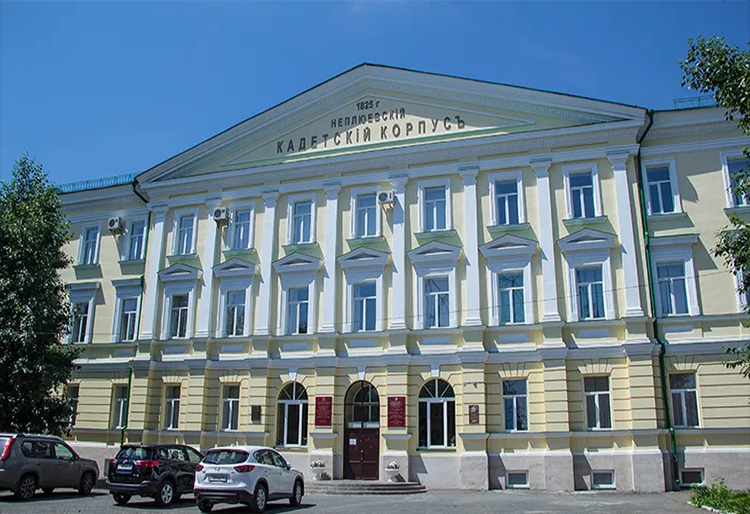
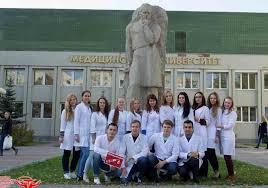
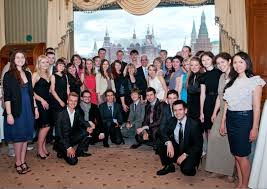
Omsk State Medical University (OSMU)
An Overview of University
| University Type : | Public (State Government) — Ministry of Health, Russia |
| Founded : | 1920 — Siberia's oldest and dominant medical institution; 100+ years of uninterrupted heritage |
| University Status : | Elevated to University 2015 (from Academy 1994 / Institute 1925 / West Siberian Medical Institute 1921) |
| Historical Distinction : | Prime centre of medical education for Western Siberia for over a century; 40,000+ graduates |
| ISO Certification : | ISO 9001:2008 — Quality Management System Certificate of Conformity; one of very few Russian medical universities with this international quality standard |
| National Ranking : | Consistently top 100 in Russia; top 15 medical universities nationally; top-ranked medical university in all of Siberia |
| Medium of Course : | English (core curriculum for international students) + Russian (clinical practice) |
| Annual Tuition Fee : | ₹4,00,000 per year (fixed all 6 years) |
| Annual Hostel Fee : | ₹35,000 per year (all 6 years) — on-campus; Indian mess facility included |
| Other Expenses/Year : | ₹55,000 (Insurance + Visa Extension + Misc.) |
| Total Per Year : | ₹4,90,000 per year (same for every year) |
| Total 6-Year Cost : | ₹29,40,000 (~₹29–30 Lakh) — fully transparent, no hidden charges |
| Course Duration : | 6 years (pre-clinical + clinical + internship) |
| Degree Awarded : | Doctor of General Medicine (MBBS equivalent) |
| NMC Recognition : | Yes — NMC, WHO, FAIMER & ECFMG recognised; WDOMS listed; FMGE / NExT eligible; USMLE (USA) & PLAB (UK) eligible |
| Teaching Hospitals : | 35+ affiliated government hospitals across Omsk; high patient inflow from city of 1.1 million |
| Faculty Strength : | 400+ faculty; 73%+ hold MD/PhD; 100+ full professors; 1,000+ awarded 'Excellence in Health' or 'Honored Doctor of Russia' |
| Departments : | 59 departments across 5 faculties: General Medicine, Paediatrics, Preventive Medicine, Dentistry, Pharmacy |
| Medical Library : | One of the largest medical libraries in Russia — direct FMGE / NExT preparation resource including Indian-author textbooks |
| Indian Mess : | Yes — Indian food facility (veg & non-veg) in hostel premises; active Indian student community |
| Scholarships : | Merit-based, need-based, and government-funded scholarships available |
| Sports : | 22 dedicated sports clubs; twice winner of national 'Healthy Lifestyle University' award (2012 & 2015) |
| Academic Session : | Starts September each year |
MBBS for Indian Students — 2026 Complete Guide
Why Omsk State Medical University Stands Apart in the Russian MBBS Landscape
Russia's Siberian region is vast — stretching from the Ural Mountains to the Pacific Ocean. Dozens of cities, dozens of universities. But when it comes to medical education, one institution has been the undisputed leading medical centre of Siberia for over a century: Omsk State Medical University. Founded in 1920, OSMU is not simply one of the older Russian medical universities — it is the institution that built and has sustained medical education across the entire Siberian region for more than 100 years. Today, with 59 departments across 5 faculties, 35+ affiliated government hospitals, and a faculty where over 73% hold MD/PhD degrees, it is the most comprehensively equipped dedicated medical university in Siberia.
What sets OSMU apart for Indian students is a combination that few Russian MBBS universities can match: 100+ years of Siberian medical leadership; an ISO 9001:2008 quality certification — one of the very few Russian medical universities to hold this international standard; one of the largest medical libraries in Russia — a resource of direct FMGE / NExT preparation value; 35+ affiliated government hospitals in a city of 1.1 million; and an Indian mess facility in the hostel. Over 40,000 OSMU graduates serve globally. More than 1,000 faculty members have been awarded 'Excellence in Health' or 'Honored Doctor of the Russian Federation.' OSMU is consistently ranked in Russia's top 100 universities and the top 15 medical institutions nationally.
All of this at a total 6-year cost of ₹29,40,000 (~₹29–30 Lakh) — ₹4,90,000 per year, fixed for all 6 years, fully transparent.
OSMU at a Glance — Key Facts
| Factor | Details |
|---|---|
| University Full Name | Omsk State Medical University (OSMU) |
| Location | Omsk, Russia — at the confluence of the Irtysh and Om rivers; southwestern Siberia; Trans-Siberian Railway junction |
| Founded | 1920 — Siberia's oldest and dominant medical institution; 100+ years of uninterrupted heritage |
| Historical Distinction | Prime centre of medical education for Western Siberia for over a century; 40,000+ graduates serving globally |
| ISO Certification | ISO 9001:2008 Quality Management System — one of very few Russian medical universities to hold this international quality standard |
| National Ranking | Top 100 in Russia; top 15 medical universities nationally; top-ranked in all of Siberia |
| Degree Awarded | Doctor of General Medicine (equivalent to MBBS) |
| Course Duration | 6 years (pre-clinical + clinical + internship) |
| Medium of Instruction | English (core curriculum for international students) + Russian (clinical practice) |
| NMC Recognition | Yes — NMC, WHO, FAIMER & ECFMG recognised; WDOMS listed; FMGE / NExT eligible; USMLE (USA) & PLAB (UK) pathways |
| Teaching Hospitals | 35+ affiliated government hospitals across Omsk; city of 1.1 million generating high patient inflow |
| Faculty Strength | 400+ faculty; 73%+ with MD/PhD; 100+ full professors; 1,000+ awarded 'Excellence in Health' or 'Honored Doctor of Russia' |
| Departments | 59 departments across 5 faculties: General Medicine, Paediatrics, Preventive Medicine, Dentistry, Pharmacy |
| Medical Library | One of the largest medical libraries in Russia — significant FMGE / NExT preparation resource; Indian-author textbooks available |
| Indian Mess | Yes — Indian food facility (veg & non-veg) in hostel premises; active Indian student community |
| Annual Tuition Fee | ₹4,00,000 per year (fixed all 6 years — no annual escalation) |
| Hostel Fee | ₹35,000 per year (all 6 years) — on-campus with Indian mess facility |
| Other Expenses | ₹55,000 per year (Insurance + Visa Extension + Miscellaneous) |
| Total Per Year | ₹4,90,000 per year — same for every year of the programme |
| Total 6-Year Cost | ₹29,40,000 (~₹29–30 Lakh) — fully transparent; no hidden charges |
| Scholarships | Merit-based, need-based, and government-funded scholarships available |
| Sports & Activities | 22 dedicated sports clubs; twice winner of national 'Healthy Lifestyle University' award (2012 & 2015) |
| Academic Session | Starts September each year |
Over a Century at the Heart of Siberian Medicine — The OSMU Story
The history of Omsk State Medical University begins in 1920 — a founding year that places it among the earliest wave of Soviet medical institutions, established in the aftermath of the First World War and the Russian Civil War in a city that had just served as the White Russian capital under Admiral Kolchak. OSMU was founded as the first dedicated medical education institution in Western Siberia, opening with 186 students.
In 1921, the institution was reorganised as the West Siberian State Medical Institute. In 1925, it was renamed the Omsk State Medical Institute. In 1994, it achieved Academy status. In 2015, it achieved full University status — formal acknowledgement of its comprehensive academic, research, and clinical mission. Since 1997, the university has been headed by Alexander I. Novikov — an academician of the International Academy of Advanced Sciences — providing consistent and distinguished academic leadership over nearly three decades.
Throughout this century of evolution, OSMU has maintained an unbroken record as the primary centre of medical education for Western Siberia. Over 40,000 medical graduates have trained here — doctors who now serve across Russia, CIS countries, and internationally. The university won the national 'Healthy Lifestyle University' competition twice — in 2012 and 2015 — reflecting its commitment to values that define a genuinely distinguished medical institution.
The Omsk Advantage — Siberia's Heart City on the Trans-Siberian Railway
Omsk is not merely a Russian regional city. It is the third largest city in Siberia — with a population of over 1.1 million, making it the twelfth-largest city in Russia. Situated at the confluence of the Irtysh and Om rivers in southwestern Siberia, Omsk was founded in 1716 as a Russian military fortress and grew into one of Russia's most strategically significant cities through the Trans-Siberian Railway. The railway — at 9,289 kilometres the world's longest, connecting Moscow to Vladivostok — passes directly through Omsk, earning the city the popular name 'the Chicago of Siberia.'
Omsk's history carries remarkable layers. The great Russian writer Fyodor Dostoevsky was imprisoned in Omsk from 1850 to 1854 — his four years of hard labour directly produced 'The House of the Dead,' one of the foundational works of Russian literature, and are widely considered to have shaped the psychological depth of his greatest novels. Today Omsk is Russia's largest oil refining complex, the scientific and cultural capital of Western Siberia, known as the 'theatre capital of Siberia' and the 'greenest city in Russia.'
- Siberia's dominant medical education city — OSMU is the premier medical institution of Western Siberia; studying here means training in the regional medical capital
- City of 1.1 million — third largest in Siberia; 35+ affiliated government hospitals with high patient inflow from urban population and surrounding region
- Trans-Siberian Railway junction — Omsk sits at the intersection of the northern and southern branches; excellent domestic rail connectivity throughout Russia
- Dostoevsky's city — Fyodor Dostoevsky imprisoned here 1850–1854; 'The House of the Dead' emerged from this experience; Dostoevsky Literary Museum in Omsk
- ISO 9001 quality certification — OSMU's academic quality validated by an international management standard beyond standard Russian accreditation
- Indian mess on campus — home-style Indian food available in hostel premises; active Indian student community
- Omsk Airport — domestic flights to Moscow, Saint Petersburg, Novosibirsk, Yekaterinburg, Kazan, Sochi and other major Russian cities
- Known as 'theatre capital of Siberia' — cultural infrastructure; Siberian International Marathon draws international participants annually
Clinical Training at OSMU — 35+ Affiliated Hospitals Across Omsk
OSMU's clinical training is conducted across 35+ affiliated government hospitals and medical institutions throughout Omsk — a city of 1.1 million that serves as the medical capital of Western Siberia, providing one of the highest patient inflows of any Russian MBBS university outside the major metropolitan centres. From Year 4 onwards, students rotate across the full spectrum of medical specialties: Internal Medicine, Surgery, Obstetrics and Gynaecology, Paediatrics, Neurology, Psychiatry, ENT, Ophthalmology, Oncology, Dermatology, Infectious Diseases, and more.
OSMU's clinical training advantage rests on two foundations. First, the sheer breadth of its hospital network — 35+ affiliated government hospitals means students rotate across a genuinely diverse range of clinical settings, specialties, and patient populations. Second, the faculty depth: over 73% of OSMU's 400+ faculty hold MD/PhD degrees, and more than 1,000 faculty members have been awarded 'Excellence in Health' or 'Honored Doctor of the Russian Federation' — meaning OSMU's clinical teachers are recognised practitioners at the highest level of Russian medicine.
- 35+ affiliated government hospitals across Omsk — one of the largest clinical training networks among Russian MBBS universities
- City of 1.1 million — high patient inflow; Western Siberia's medical capital drawing patients from the entire surrounding region
- 73%+ faculty with MD/PhD degrees — one of the strongest doctoral faculty ratios of any Russian MBBS university
- 1,000+ faculty with 'Excellence in Health' or 'Honored Doctor of Russia' awards — clinical teachers recognised at the highest level of Russian medicine
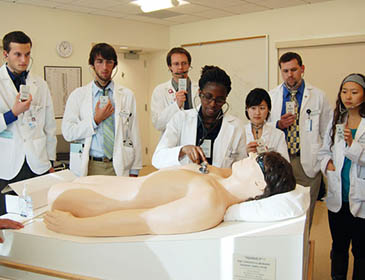
- Modern simulation laboratories — pre-clinical skills training before live hospital rotations
- 22 dedicated sports clubs and comprehensive campus facilities — holistic student development alongside medical training
- OSCE-style practical examinations in Year 6 — aligned with FMGE / NExT clinical competency requirements
Course Structure & Curriculum at OSMU — Year by Year
OSMU's General Medicine programme follows the 6-year structured curriculum aligned with NMC requirements for international recognition. The English-medium programme delivers the complete academic curriculum in English — all lectures, textbooks, and examinations. OSMU's curriculum is specifically structured to align with NMC guidelines and prepare Indian students for FMGE / NExT. One of OSMU's most practically significant academic assets is its possession of one of the largest medical libraries in Russia — a resource of exceptional value for the deep, self-directed study that FMGE / NExT demands.
| Year | Phase | Subjects / Focus Areas |
|---|---|---|
| Year 1 | Pre-Clinical | Anatomy, Histology, Biochemistry, Biophysics, Latin, Russian Language (Beginner) — ISO-certified learning environment from Day 1 |
| Year 2 | Pre-Clinical | Physiology, Microbiology, Pathological Anatomy, Russian Language (Intermediate) — Access to one of Russia's largest medical libraries |
| Year 3 | Para-Clinical | Pathophysiology, Pharmacology, Propedeutics of Internal Medicine, Russian Language (Clinical) — Clinical exposure begins; simulation labs |
| Year 4 | Clinical | Internal Medicine, Surgery, Paediatrics, Neurology, Psychiatry — Rotations across 35+ OSMU-affiliated Omsk hospitals |
| Year 5 | Clinical | Obstetrics & Gynaecology, ENT, Ophthalmology, Infectious Diseases, Oncology, Dermatology — High patient-inflow clinical environment |
| Year 6 | Internship | All-department rotations, OSCE Exams, Final State Examinations, Clinical Internship across Omsk's hospital network |
Pre-Clinical Years (1–2) — Foundation Building at Siberia's Premier Medical University
The first two years establish the foundational sciences — Anatomy, Physiology, Biochemistry, Histology, and Microbiology — within the academic culture of an institution that has been teaching these subjects in Siberia for over a century. OSMU's pre-clinical teaching benefits from a faculty where 73%+ hold MD/PhD degrees. Access to one of Russia's largest medical libraries from Year 1 means students can engage with reference materials, Indian-author textbooks, and research resources at a depth unavailable at smaller institutions. Russian language training begins from Year 1.
Para-Clinical Year (3) — The FMGE-Critical Year at Siberia's ISO-Certified Medical University
Year 3 is strategically the most important year for FMGE / NExT preparation. Pathology, Pharmacology, and Propedeutics of Internal Medicine carry the heaviest examination weightage. At OSMU, these subjects are taught within an ISO 9001-certified quality management framework — the curriculum is not simply delivered but systematically monitored and assessed against international quality benchmarks. Clinical exposure also begins from Year 3, introducing students to hospital environments while still building para-clinical knowledge.
Clinical Years (4–6) — 35+ Hospitals in Siberia's Medical Capital
From Year 4, students enter OSMU's network of 35+ affiliated government hospitals across Omsk for structured clinical rotations. The breadth of OSMU's clinical network means students rotate through a genuinely varied set of clinical environments — different hospital settings, different patient profiles, different specialist departments — over two years of clinical training. Year 6 is the comprehensive internship year — all-department rotations, OSCE examinations, and the final state examination.
Complete Fee Structure — Year by Year (in Indian Rupees)
OSMU's fee structure is transparent and fully defined. Three components — tuition, hostel, and other expenses — are fixed and consistent across all 6 years. Total: ₹4,90,000 per year, identical for every year of the programme.
| Year | Tuition (₹) | Hostel (₹) | Other Exp. (₹) | Total/Year (₹) |
|---|---|---|---|---|
| Year 1 | 4,00,000 | 35,000 | 55,000 | 4,90,000 |
| Year 2 | 4,00,000 | 35,000 | 55,000 | 4,90,000 |
| Year 3 | 4,00,000 | 35,000 | 55,000 | 4,90,000 |
| Year 4 | 4,00,000 | 35,000 | 55,000 | 4,90,000 |
| Year 5 | 4,00,000 | 35,000 | 55,000 | 4,90,000 |
| Year 6 | 4,00,000 | 35,000 | 55,000 | 4,90,000 |
| TOTAL | 24,00,000 | 2,10,000 | 3,30,000 | 29,40,000 |
What the Fee Includes
- Tuition fees — ₹4,00,000 per year; full academic year tuition for the General Medicine programme; fixed all 6 years, no annual escalation
- Hostel accommodation — ₹35,000 per year; on-campus; comfortable dormitory with all standard amenities
- Indian mess facility — Indian food (vegetarian and non-vegetarian) available in hostel premises; included in the hostel arrangement
- Access to one of Russia's largest medical libraries — significant academic resource for research and FMGE / NExT preparation
- 22 dedicated sports clubs and campus recreation facilities
- Medical and health insurance — mandatory for all international students (included in other expenses)
- Visa renewal / extension charges — required annually; included in other expenses
- Miscellaneous administrative and student services charges — included in the ₹55,000 other expenses
What the Fee Does NOT Include
Personal expenses (mobile, clothing, entertainment, dining out), international flight tickets to/from India, books and study materials (modest additional cost given excellent library access), and FMGE / NExT preparation resources on return to India. Food is available through the Indian mess facility on campus. Personal living costs in Omsk are among the most manageable of any major Russian MBBS university city — Siberian city costs are generally lower than western Russian cities like Moscow and Saint Petersburg.
OSMU vs Other NMC-Approved Russian Universities — Honest Comparison
| Factor | Omsk State Medical University | Typical NMC-Approved Russian University |
|---|---|---|
| Founded | 1920 — 100+ years; oldest and dominant medical institution in Siberia | Varies; some post-1990 with limited history |
| ISO Certification | ISO 9001:2008 certified — international quality management standard; very few Russian medical universities hold this | Typically not ISO quality-management certified |
| National Ranking | Top 100 in Russia; top 15 medical nationally; consistently top-ranked in all of Siberia | Varies; many not in top 100 nationally |
| Faculty Depth | 73%+ with MD/PhD; 100+ full professors; 1,000+ awarded 'Excellence in Health' or 'Honored Doctor' | Typically lower proportion of doctoral-qualified faculty |
| Teaching Hospitals | 35+ affiliated government hospitals; city of 1.1 million; Western Siberia's medical hub | Varies; typically fewer hospital affiliates |
| Medical Library | One of the largest medical libraries in Russia — significant FMGE / NExT preparation resource | Standard library facilities; not at this scale |
| NMC Recognition | NMC, WHO, FAIMER & ECFMG — USMLE and PLAB eligible | Varies; verify each individually |
| Indian Mess | Yes — Indian food in hostel; active Indian student community | Varies; not universally available |
| Annual Cost | ₹4,90,000/year — fixed all 6 years | Wide range; often with hidden additional costs |
| Total 6-Year Cost | ₹29,40,000 (~₹29–30 Lakh) — fully transparent | Varies widely; many have undisclosed charges |
Eligibility & Admission Process for OSMU
Eligibility Criteria
- Cleared NEET (mandatory under NMC rules — no exceptions for any foreign medical university)
- Class 12 with Physics, Chemistry, and Biology — minimum 50% aggregate in PCB (40% for SC/ST/OBC)
- Minimum age 17 years on or before 31st December of the year of admission
- Valid Indian passport
Step-by-Step Admission Process
- NEET Qualification: Confirm your NEET scorecard. No application can proceed without a valid NEET qualification.
- Application Submission: Submit Class 10 and 12 marksheets, NEET scorecard, and passport copy to OSMU's admissions office via MBBSDirect.com.
- University Review & Invitation Letter: OSMU reviews the application and issues an official invitation letter on university letterhead — required for the Russian student visa.
- First-Year Fee Payment: Pay Year 1 fees (₹4,90,000 total) to OSMU's official account and retain all payment receipts.
- Student Visa Application: Apply at the Russian Embassy or through VFS in India with the invitation letter, academic documents, medical certificate, and passport. Processing typically takes 3–6 weeks.
- Travel & Arrival: Fly to Omsk Tsentralny Airport — domestic connections to Moscow and major Russian cities. Classes begin in September.
Documents Required
- Class 10 Marksheet & Certificate (attested / apostilled)
- Class 12 Marksheet & Certificate (attested / apostilled)
- NEET Score Card (original + copies)
- Valid Indian Passport (minimum 1.5 years validity from travel date)
- 10 Passport-size photographs
- Birth Certificate (attested)
- Medical Fitness Certificate (from a registered doctor)
- Police Clearance Certificate
- Migration Certificate (from Class 12 board)
Life at OSMU — Omsk, Hostel, Food & Student Community
Location — Omsk, Capital of Western Siberia
Omsk is a city of over 1.1 million people at the confluence of the Irtysh and Om rivers in southwestern Siberia — the third largest city in Siberia and the twelfth largest in all of Russia. The Trans-Siberian Railway passes through the city, making it one of Russia's most important transport junctions — and earning it the historical nickname 'the Chicago of Siberia.' It is the administrative, industrial, scientific, and cultural capital of Western Siberia. Known as the 'theatre capital of Siberia' and celebrated for its green spaces, Omsk has a cultural infrastructure that punches well above its weight for a Siberian city. The Siberian International Marathon draws runners from across Russia and internationally every year.
Hostel — On-Campus Accommodation with Indian Mess
OSMU provides on-campus hostel accommodation for international students — well-maintained facilities equipped with standard amenities appropriate for a top-100 Russian university. Most importantly for Indian students: the hostel has a dedicated Indian food facility — Indian mess — providing familiar home-style cooking on campus. Rooms are available in single and shared configurations with access to common areas, Wi-Fi, and all necessary student facilities.
Food — Indian Mess in the Hostel
OSMU's hostel includes a dedicated Indian mess facility — one of the most practically valued features of the university for Indian students. Indian food options (both vegetarian and non-vegetarian) are available on campus, removing one of the most commonly cited practical difficulties of studying MBBS in Russia: the daily management of food in an unfamiliar culinary environment. Students who prefer to cook their own food also have access to shared kitchen facilities. Omsk's markets and stores stock Indian cooking ingredients, and the established Indian student community shares knowledge on food sourcing throughout the city.
Student Life — Siberia's Academic and Cultural Capital
Student life at OSMU reflects the scale and character of a 5,500-student institution in one of Siberia's great cities. The university has 22 dedicated sports clubs — football, basketball, volleyball, skiing, athletics and more. Physical fitness is embedded in OSMU's student culture — winning the national 'Healthy Lifestyle University' competition twice. The Indian student community at OSMU celebrates Diwali, Holi, and other cultural events, maintaining a vibrant connection to home while adapting to Siberian academic life.
Russian Language — Your Most Important Investment
OSMU provides structured Russian language training from Year 1. Russian language is essential for clinical years — Omsk's 35+ affiliated hospitals, their patients, and clinical staff communicate in Russian. Students who invest seriously from Year 1 have dramatically better clinical year experiences. Omsk's predominantly Russian-speaking environment provides total immersion — language acquisition is natural and continuous rather than selective.
Climate — Omsk's Siberian Seasons
- Winter (November–March): −15°C to −25°C — cold Siberian winters; proper warm clothing is non-negotiable; prepare thoroughly before arrival
- Spring (April–May): 5°C to 15°C — Siberian spring arrives quickly and dramatically; the Irtysh River thaws; the city's green spaces bloom
- Summer (June–August): 18°C to 28°C — warm, sunny Siberian summers; Omsk's parks and the Irtysh riverfront are extensive and enjoyable
- Autumn (September–October): 5°C to 15°C — mild and pleasant; the academic year begins in comfortable conditions
- OSMU hostels and all university buildings are centrally heated — indoor warmth fully maintained throughout winter
- Omsk winters are cold — invest in quality winter clothing (jacket, thermals, boots, gloves) before or immediately upon arrival
Who Should Choose OSMU?
✓ OSMU is the right choice if:
- You want Siberia's leading, longest-established, and most nationally recognised medical university — 100+ years, top-100 Russia, ISO 9001 certified
- You want Indian mess included in the hostel — home-style Indian food on campus daily, without self-catering effort
- You want 35+ affiliated hospitals in a city of 1.1 million — one of Russia's largest clinical training networks for a dedicated medical university
- You want a faculty where 73%+ hold MD/PhD degrees — exceptional doctoral qualification ratio ensuring research-quality teaching
- You want access to one of Russia's largest medical libraries — direct practical value for the deep study FMGE / NExT requires
- Your budget supports ₹4,90,000 per year for all 6 years — total ₹29,40,000 (~₹29–30 Lakh); fixed, transparent, no hidden charges
- You want NMC, WHO, FAIMER, and ECFMG recognition with FMGE / NExT, USMLE, and PLAB licensing pathways
- You want to study in a genuine Russian city of 1.1 million with 300 years of history, Dostoevsky connections, and the cultural character of Siberia's capital
✗ Consider alternatives if:
- You require a university in a warmer city — Omsk's winters (−15°C to −25°C) are among the coldest major Russian university environments; students for whom extreme cold is a genuine concern should consider universities in southern Russia
- Your budget requires the absolute lowest-cost Russian MBBS option — OSMU is competitive, but there are universities with lower total fees
- You are not willing to invest in Russian language learning — clinical years at any Russian university require it
- Seats are already full for the upcoming intake — MBBSDirect.com can advise on alternatives or next-year planning
Pre-Departure Checklist — Before You Fly to OSMU, Omsk
Document / Administrative
- NEET scorecard (original + 3 copies)
- Official OSMU offer / invitation letter (original)
- Student visa stamped in passport
- Year 1 fee payment receipt (₹4,90,000)
- Class 10 & 12 certificates (attested/apostilled originals)
- Passport validity: minimum 1.5 years from travel date
- Medical fitness certificate (from registered doctor)
- Police clearance certificate
- Medical insurance confirmation document
Practical / Personal
- Warm winter clothing (heavy jacket, thermals, waterproof boots, gloves — Omsk winters reach −25°C)
- Indian medicines and personal health supplies (3–6 months)
- Debit card with international ATM access + some USD/EUR for arrival
- Indian grocery staples and spices for first few weeks
- OSMU Indian student WhatsApp group joined (via MBBSDirect.com)
- Russian language basics app downloaded and practised
- Flight booked to Omsk Tsentralny Airport (direct or via Moscow)
- Emergency contact list (family + OSMU + Indian Embassy Moscow)
- University registration documents printed and organised
The Bottom Line — Is OSMU Right for You?
Omsk State Medical University is not simply another Russian MBBS option. It is the oldest and most comprehensively equipped dedicated medical university in Siberia — founded in 1920, consistently ranked in Russia's top 100, ISO 9001:2008 certified, with 100+ years of uninterrupted service as the prime medical education institution of Western Siberia. It has 35+ affiliated government hospitals in a city of 1.1 million, 73%+ doctoral-qualified faculty, one of Russia's largest medical libraries, and more than 1,000 faculty members recognised nationally for excellence in medicine. And it has an Indian mess on campus — home-style Indian food daily, included within the hostel arrangement.
The ISO certification matters — it is not a claim of quality but an independent verification of it against international standards that few Russian medical universities have sought or achieved. The 35+ hospitals matter — the breadth of clinical exposure across a major Siberian city is the foundation of competent medical practice. The medical library matters — one of Russia's largest, directly relevant to FMGE / NExT preparation. And the 100-year heritage matters — OSMU built and sustained medical education in Siberia across a century that saw the Soviet era, the Second World War, the collapse of the USSR, and Russia's 21st-century emergence.
All of this at ₹4,90,000 per year — ₹29,40,000 (~₹29–30 Lakh) over 6 years. Fixed, transparent, no hidden charges.
If you would like to apply to OSMU or want to discuss whether it is the right fit for your situation, the team at MBBSDirect.com is here for an honest conversation. We will tell you if OSMU is right for you — and if it is not, we will tell you that too.
www.mbbsdirect.com — Your trusted guide to MBBS abroad — honest advice, direct admissions, no hidden charges.