Student Helpline! +91 9717172071
  Apply Here



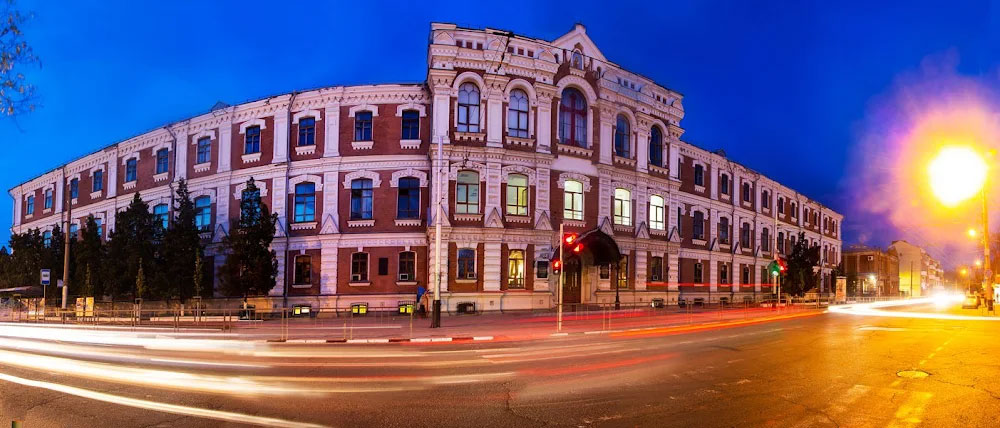
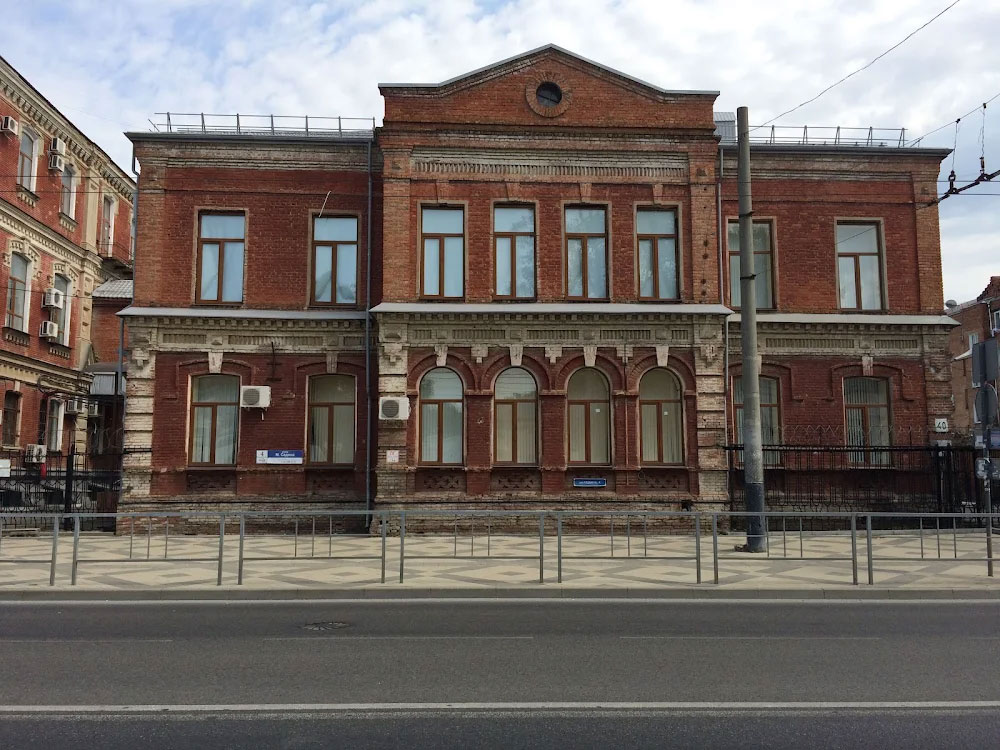
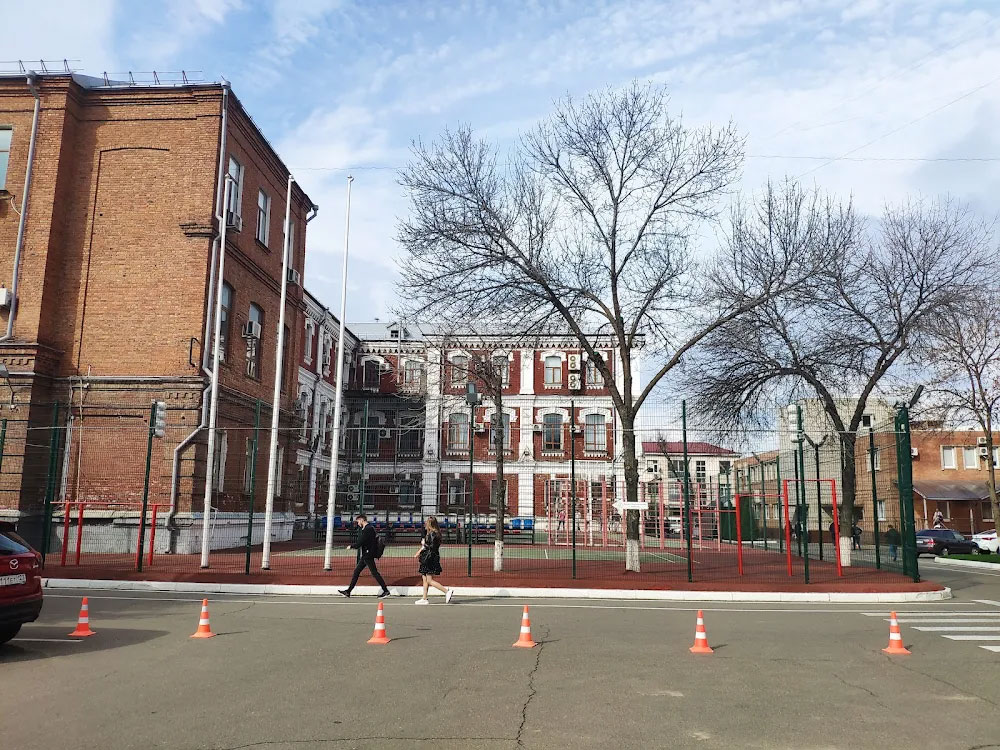
Kuban State Medical University (KubSMU)
An Overview of University
| University Type : | Public (Federal State) — Ministry of Healthcare, Russia |
| Estd. Year : | 1920 — over 100 years of continuous medical education |
| WWII Legacy : | Evacuated to Tyumen & Yerevan during WWII — never ceased training physicians |
| Climate Advantage : | Warmest major Russian university city — minimum rarely below −3°C; most India-friendly climate in Russia |
| Medium of Course : | English (core curriculum) + Russian (clinical practice) |
| Annual Tuition Fees : | RUB 4,82,000 per year (fixed all 6 years) |
| Annual Hostel Fees : | RUB 60,000 per year (all 6 years) — fully furnished; Indian mess included |
| Other Expenses/Year : | RUB 32,000 (Insurance + Visa Extension + Misc.) |
| Total Per Year : | RUB 5,74,000 — same for every year |
| Total 6-Year Cost : | RUB 34,44,000 (~₹29–34 Lakh) |
| Course Duration : | 6 years (pre-clinical + clinical + internship) |
| Degree Awarded : | Doctor of General Medicine (MBBS equivalent) |
| NMC Recognition : | Yes — NMC, WHO, FAIMER, ECFMG, WFME, GMC (UK) & AMC (Australia) recognised; FMGE / NExT eligible |
| Faculties & Departments : | 7 faculties; 66 departments across General Medicine, Paediatrics, Dentistry, Pharmacy & more |
| Teaching Hospitals : | Multiple affiliated teaching hospitals across Krasnodar |
| Indian Mess Facility : | Yes — on-campus Indian mess; vegetarian & non-vegetarian meals daily |
| International Students : | 3,500+ students from 57 countries |
| Hostel Capacity : | 4 dormitories; 1,977 beds; free Wi-Fi, laundry, 24-hr security |
| NMC Exam Training : | Yes — dedicated FMGE / NExT preparation support for Indian students |
| Academic Session : | September / October (admission window: June–September) |
MBBS for Indian Students — 2026 Complete Guide
Why Kuban State Medical University Stands Apart in Russia
Russia has over 40 NMC-approved medical universities admitting Indian students every year. Many are affordable. Several are old. But Kuban State Medical University — KubSMU — occupies a position that very few institutions in Russia can claim: it is one of the country's oldest continuously operating government medical universities, founded in 1920 in the southern city of Krasnodar, and it holds a distinction that matters enormously for Indian students — it is located in the warmest major university city in all of Russia, where minimum temperatures rarely drop below −3°C.
KubSMU carries over 100 years of medical education heritage — a full century of training physicians who now serve across Russia and internationally. It was founded by decree of the Kuban-Black Sea Revolutionary Committee on 4 July 1920, making it one of the first government medical institutions established in Russia after the Revolution. It operated continuously through the most difficult chapters of Russian history, including the Second World War — when the university was evacuated to Tyumen and Yerevan rather than closing. That institutional resilience is embedded in KubSMU's character.
For Indian students, KubSMU offers a combination that is genuinely rare in the Russian MBBS landscape: over a century of institutional history, one of the broadest international recognition profiles of any Russian MBBS university — NMC, WHO, FAIMER, ECFMG, WFME, GMC (UK), and AMC (Australia) — an on-campus Indian mess facility serving Indian meals daily, 7 faculties and 66 departments, 3,500+ international students from 57 countries, and the most climatically comfortable major Russian university city for students from India.
KubSMU at a Glance — Key Facts
| Factor | Details |
|---|---|
| University Full Name | Kuban State Medical University (KubSMU / KSMU) |
| Location | Krasnodar, Russia — capital of Krasnodar Krai, South Russia; near the Black Sea and Caucasus Mountains |
| Founded | 1920 — over 100 years of medical education; one of Russia's oldest medical universities |
| Historical Evolution | 1920 founding → Kuban Medical Institute 1921 → Kuban State Medical Academy → University status 2005 |
| WWII Legacy | Evacuated to Tyumen and Yerevan during WWII — continued training physicians; never closed |
| Climate Advantage | Warmest major university city in Russia — minimum temperatures rarely below −3°C; most India-friendly climate in Russia |
| Degree Awarded | Doctor of General Medicine (equivalent to MBBS) |
| Course Duration | 6 years (pre-clinical + clinical + internship) |
| Medium of Instruction | English (core curriculum) + Russian (clinical practice) |
| NMC Recognition | Yes — NMC, WHO, FAIMER, ECFMG, WFME, GMC (UK) & AMC (Australia); eligible for FMGE / NExT |
| Faculties & Departments | 7 faculties; 66 departments across General Medicine, Paediatrics, Dentistry, Pharmacy & more |
| International Students | 3,500+ students from 57 countries |
| Indian Mess Facility | Yes — on-campus; vegetarian and non-vegetarian Indian meals daily |
| NMC Exam Training | Yes — dedicated FMGE / NExT preparation support for Indian students |
| Annual Tuition Fee | RUB 4,82,000 per year (consistent across all 6 years) |
| Hostel Fee | RUB 60,000 per year (all 6 years) — fully furnished; 4 dormitories; 1,977 beds; Indian mess access |
| Other Expenses | RUB 32,000 per year (Insurance + Visa Extension + Miscellaneous) |
| Total Per Year | RUB 5,74,000 per year (all 6 years) |
| Total 6-Year Cost | RUB 34,44,000 (approx. ₹29–34 Lakh at current rates) |
| Academic Session | September / October (admission window: June–September) |
Over a Century of Medical Excellence — The KubSMU Story
The institutional history of Kuban State Medical University begins on 4 July 1920, when the Kuban-Black Sea Revolutionary Committee issued a decree opening a state university in Kuban — one of the first government university foundations in post-Revolutionary Russia. The university opened in the premises of the former Diecesan Women's School of Yekaterinodar, the city that would later be renamed Krasnodar. In 1921, the Medical Faculty became the independent Kuban Medical Institute, focused, purposeful, and growing steadily through the decades that followed.
When the Second World War reached southern Russia, KubSMU's response demonstrated the institutional character that 100+ years of operation have reinforced: the university did not close. It was evacuated — first to Tyumen in Siberia, then to Yerevan in Armenia — and continued training physicians throughout the war years, understanding that the nation's need for doctors was greatest precisely when conditions were most difficult. This wartime continuity is not simply a historical footnote; it reflects the institutional resilience and commitment to purpose that has defined KubSMU across a century.
In 1993 a branch opened in Maikop, the capital of the Republic of Adygea — reflecting KubSMU's role as the medical education centre of the broader southern Russian region. In 2005, the institution achieved full State University accreditation — the highest level of Russian university recognition. Today KubSMU has 7 faculties, 66 departments, 6,000+ students, 3,500+ international students from 57 countries, and 4 student dormitories housing 1,977 students.
The Krasnodar Advantage — Russia's Most India-Friendly University City
Of all the arguments for choosing KubSMU, the one that matters most practically to Indian students is one that no other major Russian MBBS university can replicate: Krasnodar's climate. Located in the North Caucasus region of South Russia, Krasnodar sits at roughly the same latitude as northern Spain and southern France. The minimum temperature in Krasnodar rarely drops below −3°C — making it categorically the warmest major university city in Russia and the most climatically comfortable destination in Russia for students from India.
Krasnodar is one of Russia's most dynamic and rapidly growing cities — the capital of Krasnodar Krai and the third most populous city in Russia after Moscow and Saint Petersburg, with a population of approximately 900,000. It lies near two of Russia's most celebrated natural features: the Black Sea coast (approximately 100–150 km away, with resort cities like Sochi and Anapa accessible) and the Caucasus Mountains. For students who want a quality of life that extends beyond the university campus, Krasnodar's southern location is unmatched by any other NMC-approved Russian MBBS university city.
- Warmest major university city in Russia — minimum temperatures rarely below −3°C; standard winter clothing sufficient, no Arctic-grade equipment required
- Near the Black Sea and Caucasus Mountains — Sochi, Anapa, and mountain resort areas accessible for travel
- Third most populous city in Russia — full metropolitan infrastructure; modern transport, shopping, entertainment
- On-campus Indian mess facility — Indian meals (vegetarian and non-vegetarian) available daily without leaving campus
- Large international student community from 57 countries — multicultural, inclusive campus environment
- Krasnodar Pasteur Street Airport with domestic connections to Moscow and other major Russian cities
- Significantly lower cost of living than Moscow and Saint Petersburg
- Nearby tourist attractions: Black Sea coast, Mount Tsakhvoa, Pshadskiye Waterfalls, Lake Abrau
Clinical Training at KubSMU — The Krasnodar Teaching Hospital Network
KubSMU's clinical training is conducted across multiple affiliated teaching hospitals and medical facilities throughout Krasnodar — a city of 900,000 with a well-developed regional healthcare system. From Year 4 onwards, students rotate through KubSMU's clinical departments gaining structured exposure across the full spectrum of medical specialties: Internal Medicine, Surgery, Obstetrics and Gynaecology, Paediatrics, Neurology, Psychiatry, ENT, Ophthalmology, Oncology, Dermatology, Infectious Diseases, and more.
KubSMU's 7 faculties and 66 departments provide a breadth of clinical and academic expertise that directly enriches the student's training environment. The university uses modern simulation-based training centres and well-equipped laboratories alongside hospital rotations, ensuring students develop hands-on skills in controlled simulation environments before and alongside live clinical work. All educational programmes at KubSMU are aligned with European standards of medical education.
- Year 4–6 hospital rotations across KubSMU's affiliated teaching hospital network in Krasnodar
- 66 departments across 7 faculties — General Medicine, Paediatrics, Dentistry, Pharmacy, and more
- Modern simulation-based training centres and advanced laboratory infrastructure
- European standards of medical education — programmes aligned with EU medical education benchmarks
- OSCE-style practical examinations in Year 6 — directly aligned with FMGE / NExT clinical competency requirements
- NMC exam training provided to Indian students — dedicated support for FMGE / NExT preparation beyond the standard curriculum
- Year 6 internship rotations across all major specialties in a structured, fully supervised programme
Course Structure & Curriculum at KubSMU — Year by Year
KubSMU's General Medicine programme follows the 6-year structured curriculum standard to Russian-model medical universities, fully aligned with NMC requirements and with European standards of medical education. The English-medium programme delivers the same academic content at the same standard as the Russian-medium programme — same depth, same examinations, same clinical expectations.
| Year | Phase | Subjects / Focus Areas |
|---|---|---|
| Year 1 | Pre-Clinical | Anatomy, Histology, Biochemistry, Biophysics, Latin, Russian Language (Beginner) |
| Year 2 | Pre-Clinical | Physiology, Microbiology, Pathological Anatomy, Russian Language (Intermediate) |
| Year 3 | Para-Clinical | Pathophysiology, Pharmacology, Propedeutics of Internal Medicine, Russian Language (Clinical) |
| Year 4 | Clinical | Internal Medicine, Surgery, Paediatrics, Neurology, Psychiatry — Hospital rotations across Krasnodar's affiliated teaching hospitals |
| Year 5 | Clinical | Obstetrics & Gynaecology, ENT, Ophthalmology, Infectious Diseases, Oncology, Dermatology |
| Year 6 | Internship | All-department rotations, OSCE Exams, Final State Examinations, Clinical Internship across KubSMU's hospital network |
Pre-Clinical Years (1–2) — Foundation Building
The first two years establish the foundational sciences — Anatomy, Physiology, Biochemistry, Histology, and Microbiology — with the rigour of an institution with over 100 years of medical education heritage and 66 departments of specialist faculty expertise. Russian language training begins from Day 1 and is the investment that determines the quality of clinical experience from Year 4 onwards.
Para-Clinical Year (3) — The FMGE-Critical Year
Year 3 is strategically the most important year for FMGE / NExT preparation. Pathology, Pharmacology, and Propedeutics of Internal Medicine carry the heaviest examination weightage. At KubSMU, these subjects are taught within a 100-year academic tradition and a 66-department faculty environment that brings genuine specialist depth to every para-clinical subject. The Propedeutics course bridges foundational science and hospital-based clinical medicine, beginning the preparation for ward work in Year 4.
Clinical Years (4–6) — Krasnodar Teaching Hospital Training
From Year 4, students enter KubSMU's affiliated teaching hospital network across Krasnodar for structured clinical rotations. Year 5 covers the remaining clinical disciplines. Year 6 is the comprehensive internship year — all-department rotations, OSCE-style practical examinations, and the final state examination. Students who invested in Russian language during Years 1–3 engage most fully in these years. Krasnodar's mild climate ensures that the logistics of moving between the university and affiliated hospitals across the city remains comfortable throughout the year.
Complete Fee Structure — Year by Year (in Russian Rubles)
KubSMU's fee structure is transparent and fully defined. Three components — tuition, hostel, and other expenses — are consistent across all 6 years. Total: RUB 5,74,000 per year, identical for every year of the programme. The hostel fee of RUB 60,000 per year covers fully furnished on-campus dormitory accommodation including access to the on-campus Indian mess facility.
| Year | Tuition (RUB) | Hostel (RUB) | Other Exp. (RUB) | Total/Year (RUB) |
|---|---|---|---|---|
| Year 1 | 4,82,000 | 60,000 | 32,000 | 5,74,000 |
| Year 2 | 4,82,000 | 60,000 | 32,000 | 5,74,000 |
| Year 3 | 4,82,000 | 60,000 | 32,000 | 5,74,000 |
| Year 4 | 4,82,000 | 60,000 | 32,000 | 5,74,000 |
| Year 5 | 4,82,000 | 60,000 | 32,000 | 5,74,000 |
| Year 6 | 4,82,000 | 60,000 | 32,000 | 5,74,000 |
| TOTAL | 28,92,000 | 3,60,000 | 1,92,000 | 34,44,000 RUB |
What the Fee Includes
- Tuition fees — RUB 4,82,000 per year, fixed and consistent across all 6 years
- On-campus fully furnished hostel dormitory accommodation — RUB 60,000 per year, consistent across all 6 years
- Access to on-campus Indian mess facility — Indian meals (vegetarian and non-vegetarian) available daily
- Hostel amenities: free Wi-Fi, laundry services, 24-hour security, hot water, central heating
- Medical and health insurance — mandatory for all international students (included in other expenses)
- Visa renewal / extension charges — required annually to maintain legal student status in Russia (included in other expenses)
- Miscellaneous administrative and student services charges — included in the RUB 32,000 other expenses figure
What the Fee Does NOT Include
Personal expenses (mobile, clothing, entertainment, dining outside campus), international flight tickets to/from India, books and study materials (approximately ₹10,000–20,000 per year), and FMGE / NExT preparation resources on return to India. The Indian mess on campus means students have direct access to Indian food without additional effort or cost beyond the hostel arrangement. Krasnodar's cost of living is lower than Moscow and Saint Petersburg — personal expenses are affordable by Russian standards.
KubSMU vs Other NMC-Approved Russian Universities — Honest Comparison
| Factor | Kuban State Medical University | Typical NMC-Approved Russian University |
|---|---|---|
| Founded | 1920 — over 100 years; operated continuously including through WWII | Varies; many post-1990 institutions |
| Climate | Warmest major Russian university city — minimum rarely below −3°C; most India-friendly in Russia | Cold to very cold; varying degrees |
| Indian Mess | Yes — on-campus Indian mess; vegetarian and non-vegetarian daily | Varies; not universally available |
| NMC Recognition | NMC, WHO, FAIMER, ECFMG, WFME, GMC (UK) & AMC (Australia) — one of Russia's broadest | Varies; verify each individually |
| Faculties | 7 faculties; 66 departments; 3,500+ international students from 57 countries | Varies in breadth |
| NMC Exam Training | Yes — dedicated FMGE / NExT preparation support for Indian students | Varies; not always dedicated |
| Annual Tuition | RUB 4,82,000/year — fixed all 6 years | RUB 2,50,000–7,00,000 (wide range) |
| Hostel | 4 dormitories; 1,977 beds; RUB 60,000/year — fully furnished with Indian mess | On/off-campus; rates vary widely |
| Total 6-Year Cost | RUB 34,44,000 — fully transparent | RUB 18,00,000–50,00,000 (varies) |
| WWII Continuity | Evacuated to Tyumen and Yerevan; never ceased operation | Most post-1990 institutions have no comparable continuity |
Eligibility & Admission Process for KubSMU
Eligibility Criteria
- Cleared NEET (mandatory under NMC rules — no exceptions for any foreign medical university)
- Class 12 with Physics, Chemistry, and Biology — minimum 50% aggregate in PCB (40% for SC/ST/OBC)
- Minimum age 17 years on or before 31st December of the year of admission
- Valid Indian passport
Step-by-Step Admission Process
- NEET Qualification: Confirm your NEET scorecard. No application to any foreign medical university can proceed without a valid NEET qualification.
- Application Submission: Submit Class 10 and 12 marksheets, NEET scorecard, and passport copy to KubSMU's admissions office via MBBSDirect.com.
- University Review & Invitation Letter: KubSMU reviews the application and issues an official invitation letter on university letterhead — required to apply for a Russian student visa.
- First-Year Fee Payment: Pay Year 1 fees (RUB 5,74,000 total) to KubSMU's official bank account and retain all payment receipts.
- Student Visa Application: Apply at the Russian Embassy or through VFS in India with the invitation letter, academic documents, medical certificate, and passport. Processing typically takes 3–6 weeks.
- Travel & Arrival: KubSMU assists with coordination on arrival in Krasnodar. Krasnodar Pasteur Street Airport has domestic connections from Moscow and other major Russian cities. Classes begin in September/October.
Documents Required
- Class 10 Marksheet & Certificate (attested / apostilled)
- Class 12 Marksheet & Certificate (attested / apostilled)
- NEET Score Card (original + copies)
- Valid Indian Passport (minimum 1.5 years validity from travel date)
- 10 Passport-size photographs
- Birth Certificate (attested)
- Medical Fitness Certificate (from a registered doctor)
- Police Clearance Certificate
- Migration Certificate (from Class 12 board)
Life at KubSMU — Krasnodar, Hostel, Food & Student Community
Location — Krasnodar, South Russia
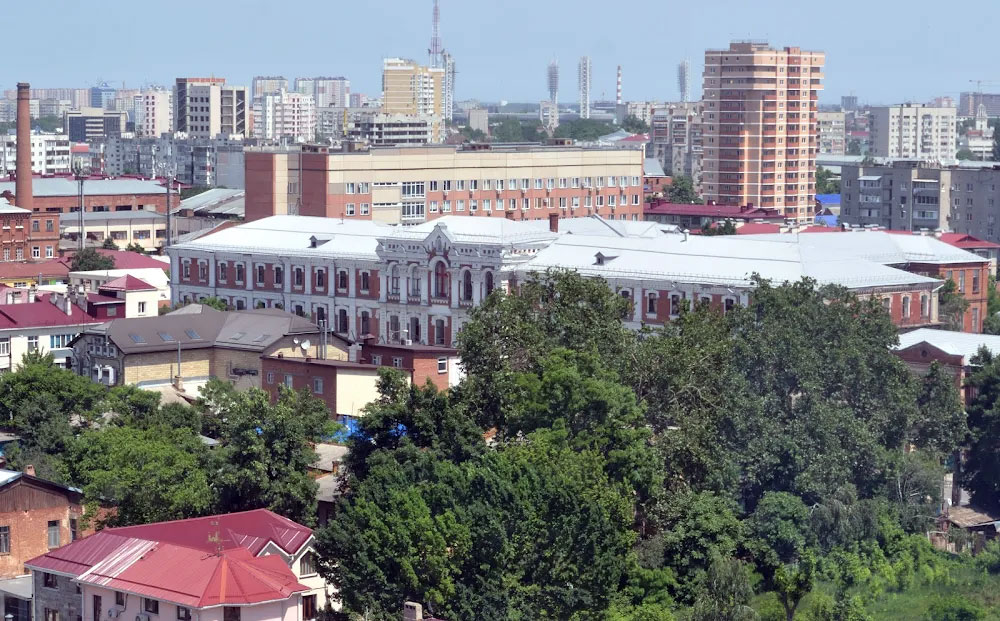
Krasnodar is the capital of Krasnodar Krai and the third most populous city in Russia — a dynamic, rapidly growing southern metropolis with a population of approximately 900,000. Located in the North Caucasus region near the Black Sea, Krasnodar sits at a latitude comparable to northern Spain and southern France, giving it the warmest climate of any major Russian university city. The Caucasus Mountains are visible on clear days to the south; the Black Sea coast with resort cities — Sochi, Anapa, Gelendzhik — is approximately 100–150 kilometres away. Krasnodar is a city of broad boulevards, parks, modern shopping centres, and cultural institutions.
Hostel — Fully Furnished On-Campus Dormitories
KubSMU provides on-campus fully furnished hostel dormitory accommodation across 4 student dormitories with a total capacity of 1,977 beds — one of the largest on-campus student housing facilities of any NMC-approved Russian medical university. Hostel fees are RUB 60,000 per year — consistent across all 6 years. The dormitories are equipped with free Wi-Fi, laundry services, 24-hour security, hot water, and central heating. Special attention is given to the safety and comfort of female students in dedicated accommodation. The dormitories are located immediately adjacent to the university campus.
Food — On-Campus Indian Mess Facility
KubSMU provides something that Indian students value more than almost any other practical feature of university life in Russia: an on-campus Indian mess facility. Indian meals — both vegetarian and non-vegetarian — are available on campus daily. For students from India who are particular about their diet, who follow specific dietary traditions, or who simply miss home food, KubSMU's Indian mess removes one of the most commonly cited challenges of studying MBBS in Russia. Students from all dietary backgrounds — vegetarian, non-vegetarian, Jain, and those with specific regional food preferences — find workable, familiar meal solutions on campus without needing to seek out restaurants or cook independently.
Student Life — Cultural Festivals and International Community
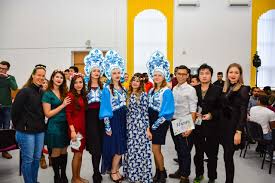
KubSMU has a vibrant international student community of 3,500+ students from 57 countries. The university actively supports cultural exchange — conducting events where students celebrate festivals, perform folk songs and dances, and share their national traditions. Indian students are among the most active participants in KubSMU's cultural life. The university enforces a strict no-smoking campus policy — creating a clean, professional student environment. KubSMU also provides merit-based scholarships for international students based on academic performance.
Russian Language — Your Most Important Investment
KubSMU provides structured Russian language training from Year 1 as part of the formal curriculum. Russian language is essential for clinical years at any Russian university. Hospital patients, nursing staff, and medical records are in Russian regardless of the English-medium nature of the academic programme. Krasnodar's vibrant city life — with its restaurants, markets, and social scene — provides daily immersive Russian language practice that accelerates practical language acquisition in a natural, enjoyable way.
Climate — Krasnodar Seasons
- Winter (November–February): −3°C to +8°C — Russia's mildest university city winter; occasional light snow but nothing like Moscow or northern cities; standard winter clothing is sufficient
- Spring (March–May): 8°C to 22°C — Krasnodar springs are warm and early; the city's parks and tree-lined avenues bloom beautifully
- Summer (June–August): 25°C to 35°C — hot and sunny; the Black Sea coast is within easy reach
- Autumn (September–October): 15°C to 25°C — warm, long autumn; the academic year begins in genuinely pleasant conditions
- Average annual temperature 11.6°C — warmer than any other major Russian university city
- Indian students adapt immediately and comfortably — no Arctic-grade clothing required
Who Should Choose KubSMU?
✓ KubSMU is the right choice if:
- You want the warmest, most climatically comfortable major university city in Russia — Krasnodar's winters are categorically milder than every other major Russian MBBS destination
- You want an on-campus Indian mess facility — daily Indian meals (vegetarian and non-vegetarian) available without leaving campus
- You value over 100 years of institutional history — KubSMU has operated continuously since 1920, through the Second World War, and across every chapter of modern Russian history
- You want the broadest possible international recognition — NMC, WHO, FAIMER, ECFMG, WFME, GMC (UK), and AMC (Australia) — enabling licensing pathways across India, USA, UK, Australia, and beyond
- You want a dynamic southern city near the Black Sea and Caucasus Mountains
- You want KubSMU's dedicated NMC exam training support for FMGE / NExT preparation
- Your budget supports RUB 5,74,000 per year for all 6 years — total RUB 34,44,000 over 6 years, approx. ₹29–34 Lakh at current rates
- You are willing to invest in Russian language learning, understanding that it is essential for clinical years
✗ Consider alternatives if:
- Your budget requires the lowest-cost Russian university options — there are universities with lower total fees than KubSMU, though not with its combination of climate, Indian mess, century of history, and recognition breadth
- You specifically require a university in Moscow or Saint Petersburg — KubSMU is in Krasnodar, South Russia
- You are not willing to invest in Russian language learning — clinical years at any Russian university require it
- Seats are already full for the upcoming intake — in which case MBBSDirect.com can advise on alternatives or next-year planning
Pre-Departure Checklist — Before You Fly to KubSMU, Krasnodar
Document / Administrative
- NEET scorecard (original + 3 copies)
- Official KubSMU offer / invitation letter (original)
- Student visa stamped in passport
- Year 1 fee payment receipt (RUB 5,74,000)
- Class 10 & 12 certificates (attested/apostilled originals)
- Passport validity: minimum 1.5 years from travel date
- Medical fitness certificate (from registered doctor)
- Police clearance certificate
- Medical insurance confirmation document
Practical / Personal
- Winter clothing (jacket, thermals — Krasnodar winters are mild; standard clothing sufficient)
- Indian medicines and personal health supplies (3–6 months)
- Debit card with international ATM access + some USD/EUR for arrival
- Favourite Indian food items and personal snacks for first few weeks
- KubSMU Indian student WhatsApp group joined (via MBBSDirect.com)
- Russian language basics app downloaded and practised
- Flight booked to Krasnodar (direct or via Moscow connection)
- Emergency contact list (family + KubSMU + Indian Embassy Moscow)
- University registration documents printed and organised
The Bottom Line — Is KubSMU Right for You?
Kuban State Medical University is not simply another Russian medical university on a list. It is one of Russia's oldest — founded in 1920 and operating continuously for over a century, through the Second World War, through every transformation of Russian society, without ever ceasing to train physicians. It holds one of the broadest international recognition profiles of any NMC-approved Russian MBBS university: NMC, WHO, FAIMER, ECFMG, WFME, GMC (UK), and AMC (Australia). It has an on-campus Indian mess facility. It has 7 faculties and 66 departments. And it is located in Krasnodar — definitively the warmest, most climatically comfortable major university city in Russia, near the Black Sea and the Caucasus Mountains.
The 100-year heritage matters — KubSMU's academic systems, clinical affiliations, and student support structures were built across a century of uninterrupted purpose. The climate matters — six years in Krasnodar is six years without the extreme cold that defines and challenges student life at every other major Russian MBBS destination. The Indian mess matters — for students from India, having home-style food available on campus daily is a practical advantage whose value compounds daily over six years. The recognition breadth matters — KubSMU graduates can pursue licensing across more countries than graduates of most comparable Russian institutions. And the transparent fee structure matters — RUB 34,44,000 over 6 years, at the same RUB 5,74,000 every year, with no surprises.
If you would like to apply to KubSMU or want to discuss whether it is the right fit for your specific situation, the team at MBBSDirect.com is here for an honest conversation. We will tell you if KubSMU is right for you — and if it is not, we will tell you that too.
www.mbbsdirect.com — Your trusted guide to MBBS abroad — honest advice, direct admissions, no hidden charges.