Student Helpline! +91 9717172071
  Apply Here



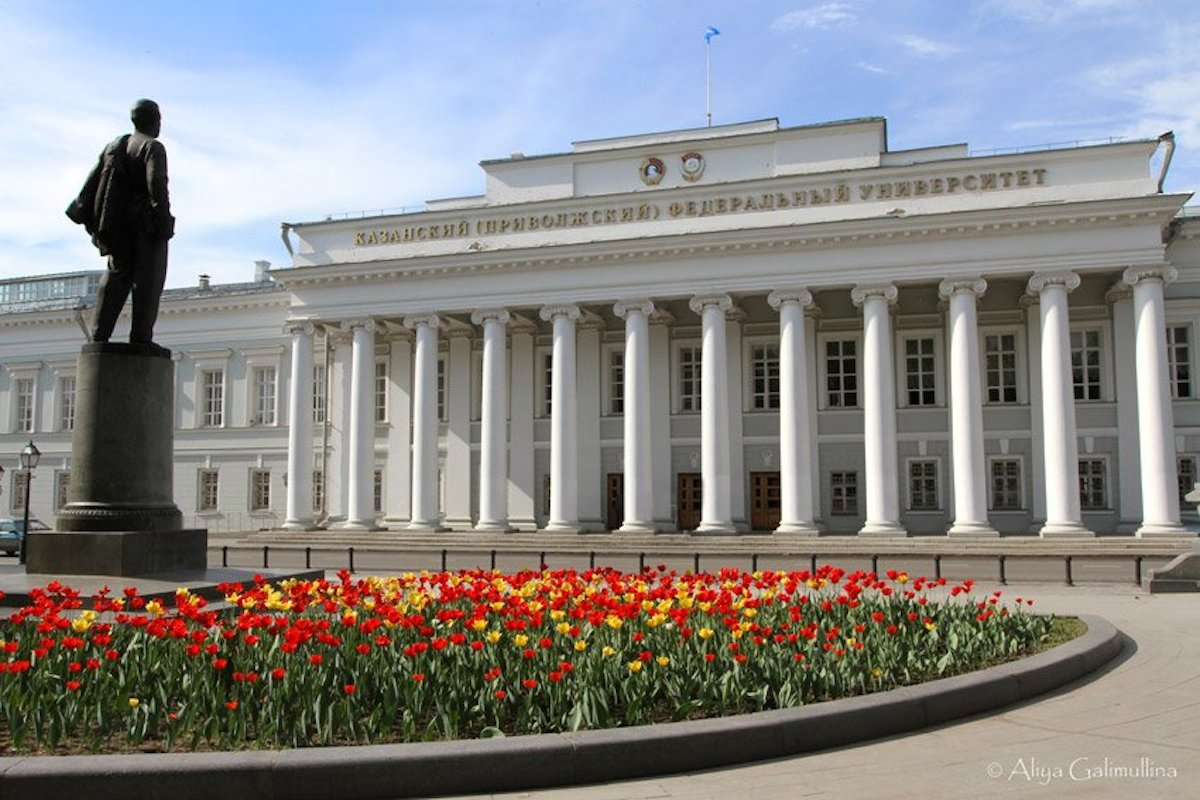
Kazan Federal University (KFU)
Institute of Fundamental Medicine & Biology
An Overview of University
| University Full Name : | Kazan Federal University (KFU) — Institute of Fundamental Medicine and Biology (IFMB) |
| University Type : | Federal Research University (one of only 8 Federal Universities in Russia — elevated by Presidential Decree 2010) |
| Founded : | 1804 — THE SECOND OLDEST university in Russia; 220+ years of institutional heritage |
| Historical Roots : | Founded by Emperor Alexander I, 17 November 1804; Federal University status 2010; MBBS at IFMB launched 2013 |
| Scientific Legacy : | Birthplace of Non-Euclidean Geometry (Lobachevsky); Organic Chemistry (Butlerov, Markovnikov, Arbuzov); Electron Spin Resonance / MRI foundation (Zavoisky) |
| QS World Ranking : | 322nd globally — one of the highest-ranked Russian universities offering NMC-approved MBBS |
| QS Stars : | 5+ Stars — the ONLY university in Russia to receive this QS Stars rating |
| FMGE Pass Rate : | 68.42% (2024) — among the highest for any NMC-approved Russian MBBS university |
| Research : | 415 laboratories; 290 partners in 64 countries; 17 centres of excellence; Project 5-100 & Priority 2030 |
| Medical Simulation Centre : | World-class; unique in Russia — Hospital Model, Dental Phantom Class, Medical Engineering Centre |
| Teaching Hospitals : | University Clinic + 10+ affiliated hospitals across Kazan |
| Medium of Course : | English (core curriculum Years 1–5) + Russian (clinical practice from Year 4) |
| NMC Recognition : | Yes — NMC, WHO, FAIMER, ECFMG & WFME recognised; WDOMS listed; FMGE / NExT eligible |
| Annual Tuition Fee : | RUB 5,94,000 per year (fixed all 6 years) |
| Hostel Fee : | RUB 20,000 per year — Universiade Village (built for 2013 World Summer Universiade); all 6 years |
| Other Expenses/Year : | RUB 38,500 (Insurance + Visa Extension + Misc.) |
| Total Per Year : | RUB 6,52,500 = approx. ₹7,83,000/year (at RUB 1 = ₹1.20) |
| Total 6-Year Cost : | RUB 39,15,000 = approx. ₹46,98,000 (~₹47 Lakh) at RUB 1 = ₹1.20 |
| Students : | 50,000+ total; 11,000+ international from 101 countries |
| Admission : | ~10% acceptance rate; own KFU Entrance Exam (Biology & Chemistry) in addition to NEET; apply April/May |
| Location : | Kazan, Republic of Tatarstan — Russia's Third Capital; FIFA World Cup 2018 host; UNESCO Kremlin; Volga River |
| Academic Session : | September 1st (main); Spring/February intake available for select programmes |
MBBS for Indian Students — 2026 Complete Guide
Why Kazan Federal University Stands Apart in Russia
Russia has over 40 NMC-approved medical universities admitting Indian students every year. Many are affordable. Several are old. But Kazan Federal University — KFU — occupies a position that is genuinely rare: it is the second oldest university in Russia, founded in 1804, ranked 322nd globally by QS, and the only university in Russia to have earned 5+ Stars in the QS Stars Rating system. More importantly for Indian MBBS students, its FMGE pass rate of 68.42% in 2024 is among the highest recorded for any NMC-approved Russian medical university — the most direct evidence available of the quality of clinical and academic preparation that KFU provides.
KFU's medical programme is delivered through the Institute of Fundamental Medicine and Biology (IFMB) — one of the most intensively developing institutes at the university, with 60+ subdivisions including departments, research laboratories, a botanical garden, and a world-class Medical Simulation Centre unique in Russia. This is not a standalone medical college. This is the medical institute of one of Russia's greatest research universities — an institution that gave the world non-Euclidean geometry, organic chemistry, electron spin resonance, and paramagnetic resonance — four discoveries that changed the trajectory of science and modern medicine.
For Indian students, KFU combines exceptional academic depth with outstanding value. Annual total: RUB 6,52,500 — approximately ₹7,83,000 per year. Six-year total: RUB 39,15,000 — approximately ₹46,98,000 (~₹47 Lakh) at RUB 1 = ₹1.20. For a QS top-400 university with a 68.42% FMGE pass rate, world-class simulation infrastructure, and the institutional heritage of Russia's second oldest university, this is one of the most compelling value propositions in MBBS abroad.
KFU at a Glance — Key Facts
| Factor | Details |
|---|---|
| University Full Name | Kazan Federal University (KFU) — Institute of Fundamental Medicine and Biology (IFMB) |
| Location | Kazan, Republic of Tatarstan, Russia — on the Volga River; Russia's 'Third Capital' |
| Founded | 1804 — THE SECOND OLDEST university in Russia; 220+ years of institutional heritage |
| Historical Roots | Founded by Emperor Alexander I, 17 November 1804; Federal University status 2010; MBBS at IFMB launched 2013 |
| Scientific Legacy | Non-Euclidean Geometry (Lobachevsky); Organic Chemistry (Butlerov, Markovnikov, Arbuzov); Electron Spin Resonance / MRI (Zavoisky) |
| QS World Ranking | 322nd globally — one of the highest-ranked Russian universities offering NMC-approved MBBS |
| QS Stars | 5+ Stars — the ONLY university in Russia to receive this rating |
| FMGE Pass Rate | 68.42% (2024) — among the highest for any NMC-approved Russian MBBS university |
| Degree Awarded | Doctor of General Medicine (MD equivalent to MBBS) |
| Course Duration | 6 years (pre-clinical + clinical + internship) |
| Medium of Instruction | English (core curriculum Years 1–5) + Russian (clinical practice from Year 4) |
| NMC Recognition | Yes — NMC, WHO, FAIMER, ECFMG & WFME recognised; WDOMS listed; FMGE / NExT eligible |
| Medical Simulation Centre | World-class; unique in Russia — Hospital Model, Dental Phantom Class, Medical Engineering Centre |
| Teaching Hospitals | University Clinic + 10+ affiliated hospitals across Kazan |
| Research | 415 laboratories; 290 partners in 64 countries; 17 centres of excellence; Project 5-100 & Priority 2030 |
| Annual Tuition Fee | RUB 5,94,000 per year (fixed all 6 years) |
| Hostel Fee | RUB 20,000 per year — Universiade Village (built for 2013 World Summer Universiade); all 6 years |
| Other Expenses | RUB 38,500 per year (Insurance + Visa Extension + Miscellaneous) |
| Total Per Year | RUB 6,52,500 = approx. ₹7,83,000/year (at RUB 1 = ₹1.20) |
| Total 6-Year Cost | RUB 39,15,000 = approx. ₹46,98,000 (~₹47 Lakh) at RUB 1 = ₹1.20 |
| Students | 50,000+ total; 11,000+ international from 101 countries |
| Admission Note | ~10% acceptance rate; KFU Entrance Exam (Biology & Chemistry) required; apply April/May; closes late July |
| Academic Session | September 1st (main); Spring/February intake available for select programmes |
Over 220 Years of Scientific Supremacy — The KFU Story
The history of Kazan Federal University begins on 17 November 1804, when Emperor Alexander I signed the Affirmative Letter and Charter creating Imperial Kazan University — the second university ever established in Russia. From its opening in 1805, the university immediately assumed the role it would maintain for over two centuries: the intellectual and scientific capital of the entire Volga-Ural region of Russia.
The scientific achievements that emerged from KFU in the 19th and early 20th centuries are foundational to the modern scientific world. Nikolai Ivanovich Lobachevsky — KFU's rector from 1827 to 1846 — created non-Euclidean geometry, challenging 2,000 years of Euclidean mathematics and providing the conceptual framework that Einstein later built upon in general relativity. Alexander Butlerov, Vladimir Markovnikov, and Alexander Arbuzov established Kazan as the birthplace of organic chemistry — the branch of science that underlies modern medicine, pharmacology, and biochemistry. Evgeny Zavoisky discovered electron spin resonance at Kazan — a phenomenon that became the foundation of MRI technology used in every modern hospital worldwide.
The medical faculty was among KFU's founding departments from 1804. In 2010, by presidential decree, the university was elevated to Kazan Federal University — one of only eight federal universities in Russia. In 2013, the Institute of Fundamental Medicine and Biology launched its General Medicine programme for international students, placing MBBS education within 220 years of scientific excellence. KFU was one of 18 universities selected for Russia's Project 5-100 programme, driving its QS ranking climb from 601+ in 2012 to 322nd in recent years.
The Kazan Advantage — Russia's Third Capital & the Universiade Village
Kazan is Russia's 'Third Capital' — the capital of Tatarstan, a city of 1.3 million on the Volga and Kazanka rivers, host of the 2013 Summer Universiade, 2015 FINA World Aquatics Championships, and 2018 FIFA World Cup. These events left Kazan with world-class infrastructure — including the Universiade Village, purpose-built to international standards for the 2013 Universiade, which today serves as KFU's dormitory campus. When KFU students live in the Universiade Village hostel, they are living in accommodation built for elite international athletes at one of the world's great sporting events.
Kazan is 820 kilometres from Moscow — accessible by domestic flight in approximately 1.5 hours. Kazan has its own international airport. The city's unique dual cultural character — Tatar and Russian coexisting, with the UNESCO-listed Kazan Kremlin housing both an Orthodox cathedral and a mosque — creates a genuinely multicultural environment. Indian food is available within walking distance of campus, and the established Indian student community at KFU is well-organised and active.
- Universiade Village dormitory — purpose-built for the XXVII World Summer Universiade 2013; 10 dormitories; Wi-Fi, kitchens, laundry, gym, swimming pool, sports ground; RUB 20,000/year
- Kazan International Airport — direct and connecting flights; 1.5 hours to Moscow by domestic flight
- Russia's 'Third Capital' — FIFA World Cup 2018; Universiade 2013; FINA 2015; world-class city infrastructure
- UNESCO-listed Kazan Kremlin — unique Tatar-Russian dual cultural heritage; one of Russia's most visited cultural destinations
- Indian food near campus — Indian restaurants within walking distance; established Indian student community
- Kazan Metro — direct, affordable connection from Universiade Village to main university campus
- QS-322 university in a dynamic, internationally experienced city — the combination of institutional prestige and city quality is unique in Russia
Clinical Training — World-Class Simulation Centre & 68.42% FMGE Pass Rate
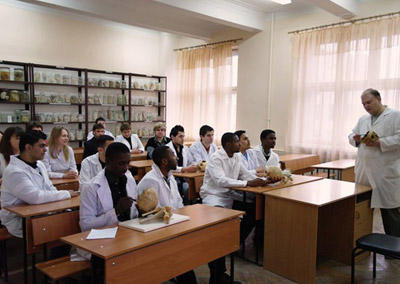
KFU's MBBS programme is delivered through the IFMB — with 60+ subdivisions, research laboratories, botanical garden, and a world-class Medical Simulation Centre unique in Russia. The institute's clinical base centres on the Kazan University Clinic, supported by 10+ affiliated hospitals across Kazan. Full hospital rotations begin in Year 4 across all major medical specialties. Kazan's population of 1.3 million provides strong and diverse patient flow.
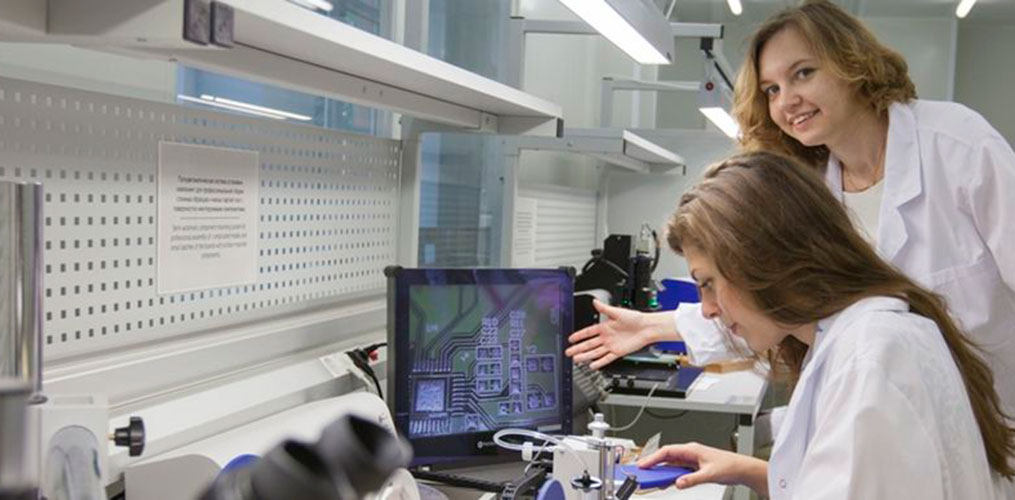
The Medical Simulation Centre at IFMB — including a Hospital Model, Dental Phantom Class, and Medical Engineering Centre — allows students to develop procedural skills and practise clinical scenarios in a controlled environment before live hospital work. This simulation-based approach directly builds the clinical competency that FMGE / NExT tests. KFU's 68.42% FMGE pass rate in 2024 is the most direct evidence that this approach works.
- University Clinic + 10+ affiliated hospitals — structured clinical rotations from Year 4
- World-class Medical Simulation Centre — unique in Russia: Hospital Model, Dental Phantom Class, Medical Engineering Centre
- 415 laboratories campus-wide — research university infrastructure enriches the entire learning environment
- 60+ IFMB subdivisions — departments, research labs, botanical garden, anatomical museum
- 68.42% FMGE pass rate (2024) — among the highest of any NMC-approved Russian MBBS university; direct evidence of preparation quality
- OSCE-style practical examinations — aligned with FMGE / NExT clinical competency requirements
Course Structure & Curriculum at KFU — Year by Year
KFU's General Medicine programme follows the 6-year NMC-aligned curriculum delivered in English for international students, within the research culture of Russia's second oldest and highest QS-ranked university. The IFMB curriculum is explicitly structured to prepare students for FMGE / NExT, with the Medical Simulation Centre providing procedural training from Year 3.
| Year | Phase | Subjects / Focus Areas |
|---|---|---|
| Year 1 | Pre-Clinical | Anatomy, Histology, Biochemistry, Biophysics, Latin, Russian Language — Foundation at Russia's second oldest university |
| Year 2 | Pre-Clinical | Physiology, Microbiology, Pathological Anatomy, Russian Language (Intermediate) |
| Year 3 | Para-Clinical | Pathophysiology, Pharmacology, Propedeutics of Internal Medicine, Russian Language (Clinical) — Medical Simulation Centre access begins |
| Year 4 | Clinical | Internal Medicine, Surgery, Paediatrics, Neurology, Psychiatry — Hospital rotations across KFU University Clinic and 10+ affiliated Kazan hospitals |
| Year 5 | Clinical | Obstetrics & Gynaecology, ENT, Ophthalmology, Infectious Diseases, Oncology, Dermatology |
| Year 6 | Internship | All-department rotations, OSCE Exams, Final State Examinations — Clinical internship across KFU's hospital network |
Pre-Clinical Years (1–2) — Foundation in a 220-Year Research University
Years 1 and 2 cover Anatomy, Physiology, Biochemistry, Histology, and Microbiology — taught within an academic environment shaped by 220 years of scientific enquiry. IFMB's 60+ subdivisions bring deep specialist faculty to pre-clinical subjects. The university's 415 laboratories, botanical garden, and anatomical museum enrich the learning environment beyond what a standalone medical institute can provide. Russian language training begins from Day 1 — essential for Year 4 clinical engagement.
Para-Clinical Year (3) — FMGE-Critical Year with Simulation Centre Access
Year 3 covers Pathology, Pharmacology, and Propedeutics — the heaviest FMGE / NExT examination subjects. At KFU, these are taught by research-active faculty in a 220-year research university. Year 3 also provides access to the Medical Simulation Centre, allowing students to build clinical procedural skills before entering live hospitals in Year 4 — a key contributor to KFU's 68.42% FMGE pass rate.
Clinical Years (4–6) — Kazan University Clinic and Hospital Network
Years 4–6 involve full rotations across KFU's University Clinic and 10+ affiliated Kazan hospitals. Year 6 includes OSCE examinations and the final state examination. Kazan's 1.3 million population provides strong patient flow and clinical case diversity. Students who invested in Russian language during Years 1–3 access the full depth of the clinical training available — communicating directly with patients and participating in ward rounds at a genuinely high level.
Complete Fee Structure — Year by Year (in Russian Rubles)
KFU's fee structure: Tuition RUB 5,94,000/year — fixed all 6 years. Hostel (Universiade Village) RUB 20,000/year. Other expenses RUB 38,500/year. Annual total: RUB 6,52,500. At RUB 1 = ₹1.20: Annual = ₹7,83,000. Six-year total: RUB 39,15,000 = ₹46,98,000 (~₹47 Lakh).
| Year | Tuition (RUB) | Hostel (RUB) | Other Exp. (RUB) | Total/Year (RUB) |
|---|---|---|---|---|
| Year 1 | 5,94,000 | 20,000 | 38,500 | 6,52,500 |
| Year 2 | 5,94,000 | 20,000 | 38,500 | 6,52,500 |
| Year 3 | 5,94,000 | 20,000 | 38,500 | 6,52,500 |
| Year 4 | 5,94,000 | 20,000 | 38,500 | 6,52,500 |
| Year 5 | 5,94,000 | 20,000 | 38,500 | 6,52,500 |
| Year 6 | 5,94,000 | 20,000 | 38,500 | 6,52,500 |
| TOTAL | 35,64,000 | 1,20,000 | 2,31,000 | 39,15,000 RUB |
INR Equivalent (at RUB 1 = ₹1.20): Annual cost = ₹7,83,000 | Total 6-Year cost = ₹46,98,000 (~₹47 Lakh)
What the Fee Includes
- Tuition fees — RUB 5,94,000 per year, fixed and consistent across all 6 years
- Universiade Village hostel — RUB 20,000 per year; purpose-built to international standards; Wi-Fi, kitchens, laundry, gym, swimming pool, sports ground
- Self-cooking kitchen facilities — shared kitchens in Universiade Village dormitories; students prepare their own meals
- Medical insurance — included in other expenses (RUB 38,500/year)
- Visa extension — included in other expenses
- Miscellaneous administrative charges — all within the RUB 38,500 annual other expenses
Self-Cooking Model — Food Arrangement at KFU
KFU operates on a self-cooking model — no university mess. Students cook in Universiade Village's shared kitchen facilities. Indian restaurants are available within walking distance of campus. The established Indian student community provides comprehensive guidance on Indian food sourcing in Kazan — spices, pulses, rice, and dietary staples are available through well-mapped networks. Campus canteen and cafeteria options are also available. Kazan's cost of living is significantly lower than Moscow, making personal expenses very manageable.
KFU vs Other NMC-Approved Russian Universities — Honest Comparison
| Factor | Kazan Federal University | Typical NMC-Approved Russian University |
|---|---|---|
| Founded | 1804 — 220+ years; SECOND OLDEST university in Russia | Varies; many post-1990 institutions |
| QS Global Ranking | 322nd globally — top QS-ranked Russian university with NMC MBBS | Typically unranked or ranked far below top 1,000 |
| QS Stars | 5+ Stars — ONLY university in Russia with this rating | No comparable QS Stars rating |
| FMGE Pass Rate | 68.42% (2024) — among the highest for NMC-approved Russian MBBS | Most below 50%; many below 30% |
| Simulation Centre | World-class Medical Simulation Centre — Hospital model, Dental Phantom, Medical Engineering Centre; unique in Russia | Standard labs; no simulation infrastructure |
| Hostel | Universiade Village — purpose-built for FIFA World Cup / Universiade athletes; RUB 20,000/year | Standard Soviet-era dormitories at most institutions |
| Scientific Heritage | Birthplace of Non-Euclidean Geometry, Organic Chemistry, Electron Spin Resonance | No comparable scientific discoveries |
| Research Network | 290 partners in 64 countries; 415 labs; 17 excellence centres | Minimal international research |
| Annual Tuition | RUB 5,94,000/year — exceptional value for a QS-322 global university | RUB 2,50,000–7,00,000 (wide range) |
| Total 6-Year Cost | RUB 39,15,000 (~₹47 Lakh) — outstanding value for a world-ranked research university | RUB 18,00,000–50,00,000 (varies) |
Eligibility & Admission Process for KFU
Eligibility Criteria
- Cleared NEET (mandatory under NMC rules — no exceptions)
- Class 12 with Physics, Chemistry, and Biology — minimum 50% aggregate in PCB (40% for SC/ST/OBC)
- Minimum age 17 years on or before 31st December of the year of admission
- Valid Indian passport
- KFU Entrance Examination (Biology and Chemistry) — conducted from June in multiple waves; separate from NEET; MBBSDirect.com advises on preparation
Step-by-Step Admission Process
- NEET Qualification: Confirm your NEET scorecard before applying.
- Early Application (April/May): Submit application via MBBSDirect.com as early as possible. Applications close late July. KFU's ~10% acceptance rate means early submission is critical.
- KFU Entrance Examination: Appear for KFU's own entrance exam in Biology and Chemistry (June onwards). MBBSDirect.com provides preparation guidance.
- University Review & Invitation Letter: KFU issues an official invitation letter following successful examination and document review.
- First-Year Fee Payment: Pay Year 1 fees (RUB 6,52,500 total) to KFU's official account and retain all payment receipts.
- Student Visa Application: Apply at the Russian Embassy or through VFS in India. Processing typically takes 3–6 weeks.
- Travel & Arrival: Kazan has its own international airport — students fly directly to Kazan. Classes begin September 1st.
Documents Required
- Class 10 & 12 Marksheets and Certificates (attested/apostilled)
- NEET Score Card (original + copies)
- Valid Indian Passport (minimum 1.5 years validity from travel date)
- 10 Passport-size photographs
- Birth Certificate (attested)
- Medical Fitness Certificate (from a registered doctor)
- Police Clearance Certificate
- Migration Certificate (from Class 12 board)
Life at KFU — Kazan, Universiade Village, Food & Student Community
Location — Kazan, Russia's Third Capital
Kazan is one of Russia's most dynamic cities — the capital of Tatarstan, Russia's 'Third Capital,' host of the FIFA World Cup 2018, Summer Universiade 2013, and FINA 2015. With 1.3 million people at the confluence of the Volga and Kazanka rivers, Kazan offers the UNESCO-listed Kazan Kremlin, a vibrant multicultural identity, and a city that has built world-class infrastructure through hosting global events. KFU's main campus is located in Kazan's historic city centre, connected to the Universiade Village dormitory campus via the Metro.
Hostel — Universiade Village Campus
KFU's dormitory campus is the Universiade Village — purpose-built for the XXVII World Summer Universiade 2013. Ten dormitories accommodate 2–3 students per room, all connected to the main campus via Kazan Metro. Facilities include Wi-Fi, shared kitchens, laundry, gym, swimming pool, sports ground, and UNICS and Bustan Sports Centres. The hostel fee is RUB 20,000 per year — one of the most affordable campus accommodation fees for a globally ranked university in Russia.
Food — Self-Cooking with Indian Food Near Campus
KFU operates on a self-cooking model. Students cook in Universiade Village's shared kitchen facilities. Indian restaurants are available within walking distance of the campus. The established Indian student community provides comprehensive guidance on Indian food sourcing in Kazan — spices, pulses, rice, and dietary staples are available through well-mapped networks. Campus canteen and cafeteria options are also available.
Student Life — 220-Year Research University in a World-Class City
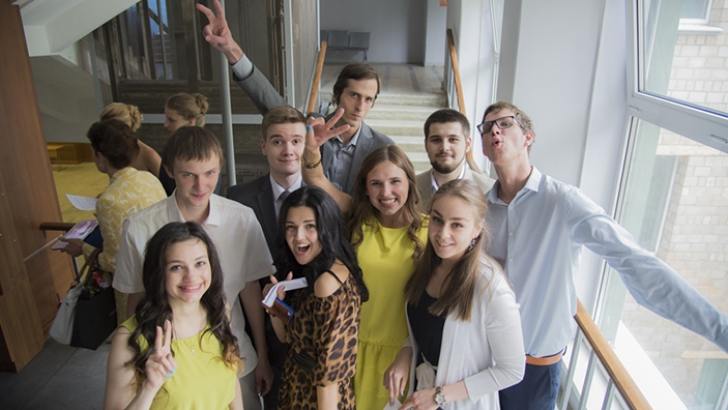
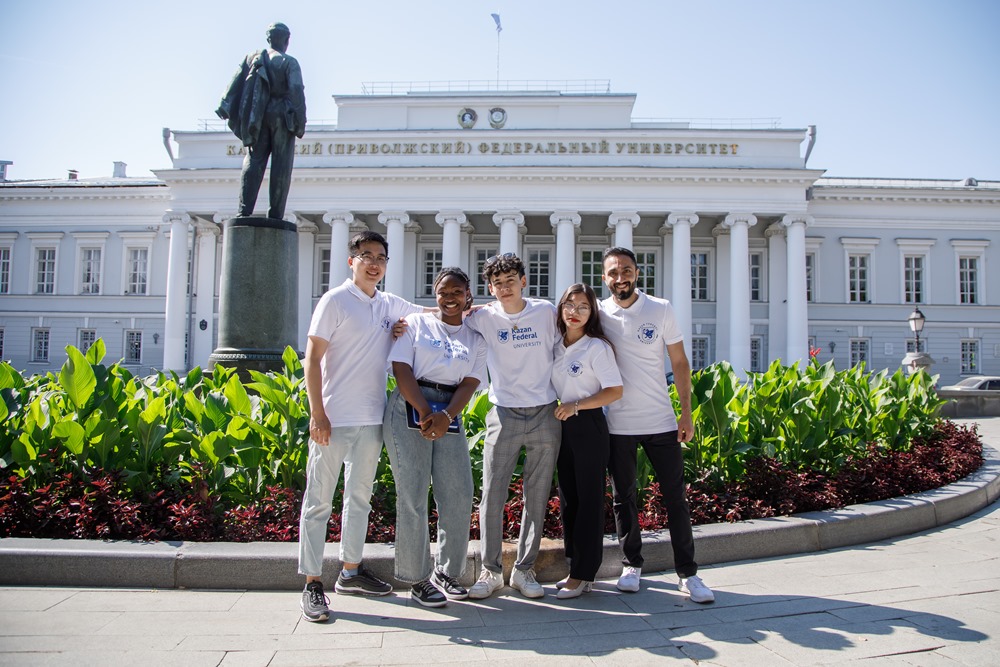
KFU's 11,000+ international students from 101 countries create a genuinely global campus. The university has 11 sports and cultural facilities, 10 museums (including the Museum of History of Kazan University, Zavoisky Lab-Museum, Botanical Museum, Zoological Museum, and Anatomical Museum), and 29 international academic and research centres. Indian students celebrate Diwali, Holi, and other festivals within KFU's active multicultural events calendar. Annual cricket tournaments and cultural events specifically for Indian students reflect the size and vitality of the Indian community at KFU.
Russian Language — Your Most Important Investment
Structured Russian language training from Year 1. Russian is essential for clinical years from Year 4 — all hospital environments operate in Russian. Students who invest from Day 1 engage most fully in clinical rotations. Kazan's multilingual character (Russian and Tatar both official; large English-speaking international community) creates natural daily Russian language acquisition opportunities.
Climate — Kazan Seasons
- Winter (November–March): −10°C to −20°C — cold with significant snowfall; proper warm clothing is non-negotiable
- Spring (April–May): 5°C to 15°C — Kazan revives rapidly; the Volga and Kazanka rivers are spectacular as ice breaks
- Summer (June–August): 18°C to 28°C — warm, beautiful Kazan summers; Volga waterfront and city events at their best
- Autumn (September–October): 5°C to 15°C — mild, colourful; the academic year begins in very pleasant conditions
- Universiade Village and all KFU buildings are centrally heated — full indoor comfort throughout winter
- Kazan winters are cold but characteristic of central Russia; Indian students adapt well with appropriate clothing
Who Should Choose KFU?
✓ KFU is the right choice if:
- You want to study at Russia's second oldest, QS-322-ranked university — an institution whose scientific heritage includes non-Euclidean geometry, organic chemistry, and electron spin resonance / MRI foundation
- You prioritise FMGE / NExT pass rates — KFU's 68.42% (2024) is among the best recorded for any NMC-approved Russian university; direct proof of academic and clinical preparation quality
- You value world-class simulation training — the Medical Simulation Centre (Hospital model, Dental Phantom, Medical Engineering Centre) is unique in Russia and directly contributes to clinical competency
- You want a QS 5+ Stars university — the only Russian university with this rating — confirming exceptional standards across teaching, research, internationalisation, and facilities
- Your budget supports RUB 6,52,500 per year (~₹7,83,000) for all 6 years — total RUB 39,15,000 (~₹47 Lakh); fixed, transparent, outstanding value for a world-ranked institution
- You are comfortable with the self-cooking model — Kazan's Indian food infrastructure and established Indian student community make this very manageable
- You understand KFU's ~10% acceptance rate and are applying early (April/May) with MBBSDirect.com's guidance on the entrance examination
- You are committed to Russian language investment — essential for clinical years at any Russian university
✗ Consider alternatives if:
- You cannot meet KFU's entrance examination requirement alongside NEET — MBBSDirect.com can advise on alternatives
- You require a university mess / catering service — KFU operates on a self-cooking model
- You are not willing to invest in Russian language learning — clinical years at any Russian university require it
- Seats are already full — apply early; MBBSDirect.com advises on alternatives or next-year planning if needed
Pre-Departure Checklist — Before You Fly to KFU, Kazan
Document / Administrative
- NEET scorecard (original + 3 copies)
- Official KFU offer / invitation letter (original)
- Student visa stamped in passport
- Year 1 fee payment receipt (RUB 6,52,500)
- Class 10 & 12 certificates (attested/apostilled originals)
- Passport validity: minimum 1.5 years from travel date
- Medical fitness certificate (from registered doctor)
- Police clearance certificate
- Medical insurance confirmation document
Practical / Personal
- Warm winter clothing (jacket, thermals, boots, gloves — Kazan winters are cold)
- Indian medicines and personal health supplies (3–6 months)
- Debit card with international ATM access + some USD/EUR for arrival
- Indian grocery staples and cooking essentials for first few weeks
- KFU Indian student WhatsApp group joined (via MBBSDirect.com)
- Russian language basics app downloaded and practised
- Flight booked to Kazan International Airport (direct or via Moscow)
- Emergency contact list (family + KFU + Indian Embassy Moscow)
- University registration documents printed and organised
The Bottom Line — Is KFU Right for You?
Kazan Federal University is not simply a Russian medical university. It is Russia's second oldest university — founded in 1804, ranked 322nd globally by QS, the birthplace of non-Euclidean geometry, organic chemistry, and electron spin resonance, and the only Russian university to hold 5+ Stars in QS Stars. Its MBBS programme through the IFMB, with a world-class Medical Simulation Centre unique in Russia, has produced a 68.42% FMGE pass rate — among the highest of any NMC-approved Russian university.
The 220-year scientific heritage matters — KFU's culture of intellectual rigour was built by scientists who invented new geometry and discovered the molecular basis of life. The 68.42% FMGE pass rate matters — it is the clearest available evidence of medical preparation quality. The Medical Simulation Centre matters — simulation-based clinical training prepares students for competency examinations in a way that purely hospital-based training alone does not. The Universiade Village hostel matters — purpose-built to international standards, RUB 20,000 per year. And the total of approximately ₹47 Lakh over 6 years for all of this — for Russia's QS-322-ranked second oldest university — matters enormously. It is one of the strongest value propositions in MBBS abroad anywhere in the world.
If you would like to apply to KFU or want to discuss whether it is the right fit for your specific situation, the team at MBBSDirect.com is here for an honest conversation. We will tell you if KFU is right for you — and if it is not, we will tell you that too.
www.mbbsdirect.com — Your trusted guide to MBBS abroad — honest advice, direct admissions, no hidden charges.