Student Helpline! +91 9717172071
  Apply Here



Far Eastern Federal University (FEFU)
School of Medicine — Russia's Pacific Gateway to Asia
An Overview of University
| University Type : | Federal Research University — one of Russia's Federal Universities by Presidential Decree |
| Founded : | 1899 — as the Oriental Institute; the FIRST classical university in Eastern Siberia and the Russian Far East; 125+ years |
| Unique Distinction : | Only NMC-approved MBBS university in Russia on the Sea of Japan; Russia's Pacific gateway to Asia; APEC 2012 campus |
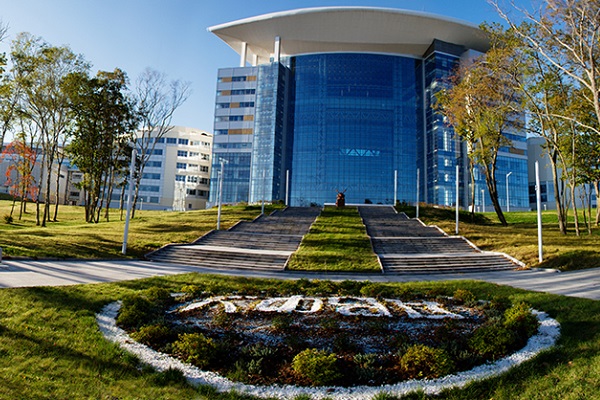
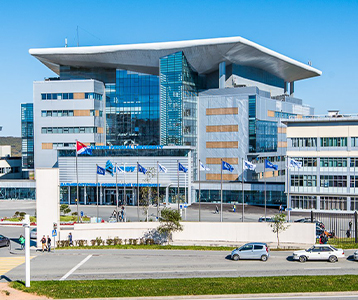
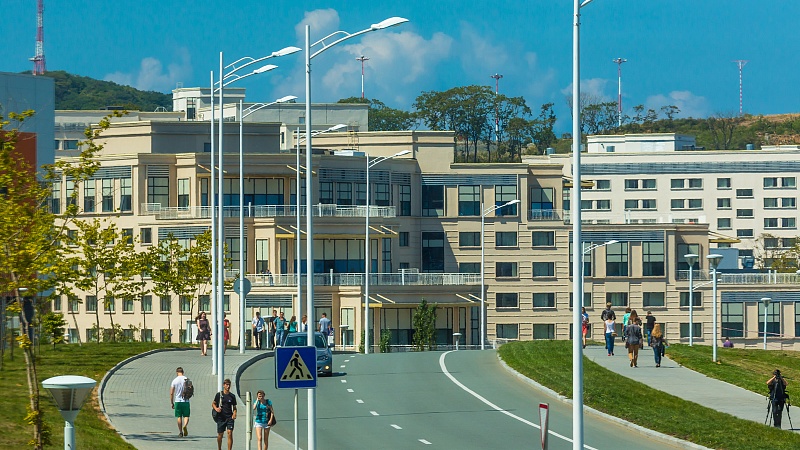
| Campus : | Russky Island — purpose-built for 2012 APEC Summit; permanent home of Eastern Economic Forum; connected by Russky Bridge (world's longest cable-stayed bridge at construction) |
| Geographic Position : | 45 km from China; 134 km from North Korea; closer to Tokyo, Seoul & Beijing than to Moscow |
| International Flights : | Direct to Tokyo, Seoul, Beijing, Shanghai, Vietnam, Philippines — Asia-Pacific connectivity unique in Russia |
| Medium of Course : | English (core curriculum for international students) + Russian (clinical practice) |
| NMC Recognition : | Yes — NMC, WHO & GMC (UK) recognised; WDOMS listed; FMGE / NExT eligible |
| FEFU Medical Centre : | High-tech diagnostic, treatment & rehabilitation centre; 200+ specialised clinical staff; Neurology, Neurosurgery, Reconstructive Surgery, Urology & more |
| International Faculty : | 160 international faculty — one of the highest ratios of any Russian MBBS university |
| Faculty Strength : | 291 Professors; 894 Associate Professors; 293 Doctors of Science; 934 Candidates of Science |
| Students : | 41,000 total; international students from 40+ countries |
| Annual Tuition Fee : | RUB 4,95,000 per year (fixed all 6 years — no annual escalation) |
| Hostel Fee : | RUB 40,000 per year — two-room suites for 3–4 students with kitchen; Russky Island campus; Sea of Japan |
| Other Expenses/Year : | RUB 19,000 — one of the lowest other-expenses figures of any NMC-approved Russian MBBS university |
| Total Per Year : | RUB 5,54,000 = approx. ₹6,64,800/year (at RUB 1 = ₹1.20) |
| Total 6-Year Cost : | RUB 33,24,000 = approx. ₹39,88,800 (~₹40 Lakh) at RUB 1 = ₹1.20 |
| Scholarships : | Yes — merit-based scholarships available for international students |
| Academic Session : | Starts September each year |
MBBS for Indian Students — 2026 Complete Guide
Why Far Eastern Federal University Stands Apart for Indian MBBS Students
Russia has over 40 NMC-approved medical universities admitting Indian students every year. Most are located in Russia's western cities — Moscow, Saint Petersburg, Kazan, Volgograd, Yaroslavl. But one — Far Eastern Federal University — is located at the opposite end of the country, on the shores of the Sea of Japan, in Vladivostok: Russia's Pacific gateway, the 'Ruler of the East,' the closest major Russian city to Japan, South Korea, and China. FEFU is the only NMC-approved MBBS university in Russia whose campus directly faces the Asia-Pacific.
FEFU was founded in 1899 as the Oriental Institute — the first classical higher educational institution in Eastern Siberia and the Russian Far East. In 2012, Vladivostok hosted the APEC Summit — the Asia-Pacific Economic Cooperation conference attended by world leaders — and FEFU's purpose-built Russky Island campus was constructed specifically for this event. That campus, connected to Vladivostok by the Russky Bridge (the world's longest cable-stayed bridge at the time of construction), is where FEFU's 41,000 students now study. It is also the permanent annual venue of the Eastern Economic Forum — Russia's premier international economic event in the Asia-Pacific, bringing heads of state from Russia, Japan, South Korea, and China to this campus every year.
For Indian students: a total 6-year cost of RUB 33,24,000 (~₹40 Lakh at RUB 1 = ₹1.20), on a purpose-built APEC Summit campus on the Sea of Japan, with 160 international faculty, NMC and GMC (UK) recognition, direct international flight connections to Japan, South Korea, and China, and an experience of Russia that is genuinely unlike any other MBBS destination in the country.
FEFU at a Glance — Key Facts
| Factor | Details |
|---|---|
| University Full Name | Far Eastern Federal University (FEFU) — School of Medicine |
| Location | Russky Island, Vladivostok, Russia — on the Sea of Japan; Russia's gateway to Asia-Pacific |
| Founded | 1899 — as the Oriental Institute; the FIRST classical university in Eastern Siberia and the Russian Far East; 125+ years |
| Federal Status | Granted Federal University status 2009–2010; campus purpose-built for 2012 APEC Summit on Russky Island |
| Unique Distinction | Only NMC-approved MBBS university in Russia on the Sea of Japan; permanent home of Eastern Economic Forum; 45 km from China |
| Campus | Russky Island — built for 2012 APEC Summit; world leaders' conference venue; connected by Russky Bridge (world's longest cable-stayed bridge at construction) |
| International Flights | Direct to Tokyo (Japan), Seoul (South Korea), Beijing/Shanghai (China), Vietnam, Philippines — Asia-Pacific connectivity unique in Russia |
| Degree Awarded | Doctor of General Medicine (equivalent to MBBS) |
| Course Duration | 6 years (pre-clinical + clinical + internship) |
| Medium of Instruction | English (core curriculum for international students) + Russian (clinical practice) |
| NMC Recognition | Yes — NMC, WHO & GMC (UK) recognised; WDOMS listed; FMGE / NExT eligible |
| FEFU Medical Centre | High-tech diagnostic, treatment & rehabilitation centre; 200+ specialised clinical staff; neurology, neurosurgery, reconstructive surgery, urology and more |
| International Faculty | 160 international faculty — one of the highest ratios of any Russian MBBS university |
| Faculty Strength | 291 Professors; 894 Associate Professors; 293 Doctors of Science; 934 Candidates of Science |
| Students | 41,000 total; international students from 40+ countries |
| Annual Tuition Fee | RUB 4,95,000 per year (fixed all 6 years — no annual escalation) |
| Hostel Fee | RUB 40,000 per year — two-room suites for 3–4 students with kitchen equipment; Russky Island campus; Sea of Japan setting |
| Other Expenses | RUB 19,000 per year — one of the lowest other-expenses figures of any NMC-approved Russian MBBS university |
| Total Per Year | RUB 5,54,000 = approx. ₹6,64,800/year (at RUB 1 = ₹1.20) |
| Total 6-Year Cost | RUB 33,24,000 = approx. ₹39,88,800 (~₹40 Lakh) at RUB 1 = ₹1.20 |
| Scholarships | Yes — merit-based scholarships available for international students |
| Academic Session | Starts September each year |
125 Years at the Crossroads of East and West — The FEFU Story
The institutional history of Far Eastern Federal University begins on July 9, 1899, when the Oriental Institute was established in Vladivostok by decree — the first classical higher educational institution in Eastern Siberia and the Russian Far East. The name is telling: the Oriental Institute was founded precisely because Vladivostok was Russia's interface with the Orient — with China, Japan, Korea, and the broader Pacific world. From its founding, this institution was defined by its position at the meeting point of Russian and Asian civilisations, and that defining character has shaped every chapter of its 125-year history.
In 1920, the Oriental Institute merged with other educational institutions to form the State Far Eastern University. In 2009–2010, by Presidential Decree, the institution was transformed into Far Eastern Federal University — a strategic federal designation reflecting Vladivostok's renewed national importance as Russia's pivot to Asia. This was followed by one of the most significant university campus construction projects in Russian history: for the 2012 APEC Summit, Russia built a complete new campus on Russky Island, connected to Vladivostok by the Russky Bridge — the world's longest cable-stayed bridge at the time of its construction. This campus, after hosting the APEC Summit attended by the leaders of 21 economies, became FEFU's permanent home and the annual venue for the Eastern Economic Forum — Russia's most important international event in the Asia-Pacific.
The Vladivostok Advantage — Russia's Gateway to the Asia-Pacific World
Vladivostok is unlike any other university city in Russia. Its very name means 'Ruler of the East' — and the city has lived up to that name for 165 years as Russia's primary Pacific port, naval base, and gateway to Asia. Located at the extreme southeastern tip of Russia, Vladivostok is just 45 kilometres from the China-Russia border. Japan is across the Sea of Japan. South Korea is a short flight away. The city is closer to Tokyo, Seoul, and Beijing than to Moscow — a geographical reality that defines its character, its culture, and its opportunities.
Vladivostok International Airport provides direct international flights to Japan (Tokyo), South Korea (Seoul), China (multiple cities), Philippines, and Vietnam. The city has 18 foreign consulates — an extraordinary diplomatic presence for a city of 600,000 — and holds Free Port status as a special economic zone. The Primorsky Stage of the Mariinsky Theatre — one of Russia's most prestigious cultural institutions — is established in Vladivostok, with planned branches of the Hermitage Museum, Russian Museum, and Tretyakov Gallery. Anton Chekhov, who visited in 1890, called it 'Europe bursting with Asia's flavours' — and that description remains true today.
- Only NMC-approved MBBS university in Russia on the Sea of Japan — direct flights to Tokyo, Seoul, Beijing; Asia-Pacific connectivity no other Russian MBBS city offers
- APEC Summit campus — purpose-built for 2012 APEC attended by leaders of 21 economies; permanent Eastern Economic Forum venue; annual gathering of Asian heads of state on this campus
- Russky Bridge — world's longest cable-stayed bridge at construction (2012) connects the Russky Island campus to Vladivostok; iconic landmark visible from campus
- 18 foreign consulates in Vladivostok — extraordinary diplomatic presence; international character permeates daily life in a city of 600,000
- Free Port of Vladivostok — special economic zone attracting Japanese, Korean, and Chinese business investment
- Mariinsky Theatre Primorsky Stage — world-class opera and ballet in Vladivostok; Hermitage and Russian Museum branches planned
- 45 km from China; 134 km from North Korea — geopolitical crossroads; Trans-Siberian Railway eastern terminus
- Sea of Japan coastal setting — marine environment; cherry blossoms in spring; unique Pacific seasons unlike any inland Russian university city
Clinical Training at FEFU — Medical Centre & Vladivostok Hospital Network
FEFU's clinical training is anchored by the Far Eastern Federal University Medical Centre — a high-technology diagnostic, treatment, and rehabilitation facility staffed by over 200 highly specialised clinical professionals whose expertise extends beyond Vladivostok; FEFU Medical Centre clinicians have been invited to other parts of Russia and to other countries for their expertise. Beyond the Medical Centre, students rotate through Vladivostok's affiliated hospital network — a city of 600,000 that serves as the medical capital of the entire Russian Far East, drawing patients from an enormous and diverse geographic region and from nearby Asian countries.
FEFU's 160 international faculty members — one of the highest international faculty ratios of any Russian MBBS university — bring global perspectives to clinical teaching. The Asia-Pacific patient base in Vladivostok creates a clinical case diversity that reflects the unique character of the city: conditions, patient demographics, and case profiles that reflect the intersection of Russian and Asian populations in ways that no inland Russian university city can replicate.
- FEFU Medical Centre — high-tech diagnostic, treatment and rehabilitation centre; 200+ specialised clinical staff; internationally recognised expertise
- Specialties: Neurology, Neurosurgery, Traumatology & Orthopaedics, Endo-prosthetic Replacement, Reconstructive Surgery, ENT, Urology, Therapy, Rehabilitation
- Vladivostok hospital network — city of 600,000 serving the entire Russian Far East; Asia-Pacific patient base enhances clinical diversity
- 160 international faculty — globally diverse teaching perspectives; one of Russia's highest international faculty ratios for an MBBS university
- 291 Professors; 894 Associate Professors; 293 Doctors of Science; 934 Candidates of Science — exceptional depth of qualified academic staff
- Clinical exposure begins Year 3 — students enter hospital environments while still building para-clinical knowledge
- OSCE-style practical examinations in Year 6 — aligned with FMGE / NExT clinical competency requirements
Course Structure & Curriculum at FEFU — Year by Year
FEFU's General Medicine programme follows the 6-year structured curriculum aligned with NMC requirements for international recognition. The English-medium programme for international students is delivered in full English — all lectures, textbooks, and examinations. The curriculum is designed to prepare students for FMGE / NExT in India and international licensing examinations globally. The Asia-Pacific clinical environment of Vladivostok adds a dimension of clinical diversity — in terms of patient demographics, case profiles, and international medical perspectives — that is unique to FEFU among Russian MBBS universities.
| Year | Phase | Subjects / Focus Areas |
|---|---|---|
| Year 1 | Pre-Clinical | Anatomy, Histology, Biochemistry, Biophysics, Latin, Russian Language (Beginner) — Modern laboratory facilities on APEC-standard campus from Day 1 |
| Year 2 | Pre-Clinical | Physiology, Microbiology, Pathological Anatomy, Russian Language (Intermediate) — Research centre exposure |
| Year 3 | Para-Clinical | Pathophysiology, Pharmacology, Propedeutics of Internal Medicine, Russian Language (Clinical) — Clinical exposure begins |
| Year 4 | Clinical | Internal Medicine, Surgery, Paediatrics, Neurology, Psychiatry — Rotations at FEFU Medical Centre and affiliated Vladivostok hospitals |
| Year 5 | Clinical | Obstetrics & Gynaecology, ENT, Ophthalmology, Infectious Diseases, Oncology, Dermatology — Asia-Pacific clinical environment |
| Year 6 | Internship | All-department rotations, OSCE Exams, Final State Examinations, Clinical Internship across FEFU's hospital network |
Pre-Clinical Years (1–2) — Foundation Building on Russia's Pacific Frontier
The first two years establish the foundational sciences — Anatomy, Physiology, Biochemistry, Histology, and Microbiology — on a purpose-built campus whose research infrastructure reflects the priorities of a federal research university at the frontier of Russia's engagement with Asia. FEFU's laboratories and facilities were built to APEC Summit standards. The 160 international faculty bring a diversity of academic perspectives to pre-clinical teaching that is unusual among Russian MBBS programmes. Russian language training begins from Year 1 — essential for the clinical engagement that develops from Year 3.
Para-Clinical Year (3) — FMGE-Critical Year with Early Clinical Exposure
Year 3 is strategically the most important year for FMGE / NExT preparation. Pathology, Pharmacology, and Propedeutics of Internal Medicine carry the heaviest examination weightage in the licensing exam. At FEFU, these subjects are taught by faculty who combine Russian medical science traditions with international academic perspectives — a consequence of the university's 160 international faculty members and its deep engagement with Asian academic institutions. Clinical exposure also begins in Year 3 at FEFU — introducing students to the hospital environment while they are still building their para-clinical knowledge base.
Clinical Years (4–6) — FEFU Medical Centre and Vladivostok Hospital Network
From Year 4, students move into FEFU's Medical Centre and affiliated Vladivostok hospital network for structured clinical rotations. Year 5 covers the remaining clinical disciplines within a city that serves as the medical hub for the entire Russian Far East. Year 6 is the comprehensive internship year — all-department rotations, OSCE examinations, and the final state examination. Students who invested in Russian from Year 1 engage most fully — communicating with patients drawn from Vladivostok's uniquely diverse Asia-Pacific population and interacting with clinicians whose expertise is nationally and internationally recognised.
Complete Fee Structure — Year by Year (in Russian Rubles)
FEFU's fee structure is transparent and fully defined. Three components — tuition, hostel, and other expenses — are fixed and consistent across all 6 years. Annual total: RUB 5,54,000 — identical every year. At RUB 1 = ₹1.20: Annual = ₹6,64,800; Total 6 years = ₹39,88,800 (~₹40 Lakh).
| Year | Tuition (RUB) | Hostel (RUB) | Other Exp. (RUB) | Total/Year (RUB) |
|---|---|---|---|---|
| Year 1 | 4,95,000 | 40,000 | 19,000 | 5,54,000 |
| Year 2 | 4,95,000 | 40,000 | 19,000 | 5,54,000 |
| Year 3 | 4,95,000 | 40,000 | 19,000 | 5,54,000 |
| Year 4 | 4,95,000 | 40,000 | 19,000 | 5,54,000 |
| Year 5 | 4,95,000 | 40,000 | 19,000 | 5,54,000 |
| Year 6 | 4,95,000 | 40,000 | 19,000 | 5,54,000 |
| TOTAL | 29,70,000 | 2,40,000 | 1,14,000 | 33,24,000 RUB |
INR Equivalent (at RUB 1 = ₹1.20): Annual cost = ₹6,64,800 | Total 6-Year cost = ₹39,88,800 (~₹40 Lakh)
What the Fee Includes
- Tuition fees — RUB 4,95,000 per year, fixed and consistent across all 6 years; no annual escalation
- Russky Island campus hostel — RUB 40,000 per year; two-room suites for 3–4 students, fully equipped with kitchen facilities; Sea of Japan setting
- Self-cooking kitchen facilities within each suite — students prepare their own meals; Indian food available near campus
- Campus amenities: gym, fitness centre, dance classes, athletics, ATM, shopping centre, banking facility, medical centre, internal campus transit
- Medical and health insurance — mandatory for all international students (included in other expenses)
- Visa renewal / extension charges — required annually; included in other expenses
- Miscellaneous administrative charges — included in the RUB 19,000 annual other expenses (one of the lowest in Russia)
Self-Cooking Suite Model — Food in Asia-Pacific Russia's Most Diverse Food City
FEFU's two-room suites are equipped with kitchen facilities — students cook their own meals within their suites. Indian food is available near the university and in Vladivostok. The city's unique Asia-Pacific character — with significant Asian communities and markets from China, Korea, and Japan — means that Asian food markets, restaurants, and food suppliers are more abundant and diverse in Vladivostok than in any other Russian university city. Indian spices, cooking staples, and familiar ingredients are accessible from the university area and city markets.
FEFU vs Other NMC-Approved Russian Universities — Honest Comparison
| Factor | Far Eastern Federal University | Typical NMC-Approved Russian University |
|---|---|---|
| Founded | 1899 — FIRST classical university in Eastern Siberia and Russian Far East; 125+ years | Varies; many post-1990 institutions |
| Geographic Position | Vladivostok — Sea of Japan; 45 km from China; direct flights to Tokyo, Seoul, Beijing | Inland Russian cities; no Asia-Pacific connectivity |
| Campus | Russky Island — purpose-built for 2012 APEC Summit; permanent Eastern Economic Forum venue; world-class infrastructure | Standard university campuses; no comparable international event pedigree |
| NMC Recognition | NMC, WHO & GMC (UK) — enables PLAB (UK) pathway | Varies; GMC recognition uncommon |
| International Faculty | 160 international faculty — one of the highest ratios of any Russian MBBS university | Typically few or no international faculty |
| Asia-Pacific Exposure | Direct flights to Japan, South Korea, China; 40+ country student community; Eastern Economic Forum campus | No comparable Asia-Pacific exposure |
| Annual Tuition | RUB 4,95,000/year — fixed all 6 years; highly competitive for a federal research university | RUB 2,50,000–12,50,000 (wide range) |
| Other Expenses | RUB 19,000/year — one of the lowest other-expenses figures of any NMC-approved Russian university | Typically RUB 35,000–50,000/year |
| Hostel | Two-room suites with kitchen; Russky Island campus; Sea of Japan; RUB 40,000/year | Standard dormitories; no comparable campus setting |
| Total 6-Year Cost | RUB 33,24,000 (~₹40 Lakh) — exceptional value for a federal university on an APEC-level campus | RUB 18,00,000–82,80,000 (varies) |
Eligibility & Admission Process for FEFU
Eligibility Criteria
- Cleared NEET (mandatory under NMC rules — no exceptions for any foreign medical university)
- Class 12 with Physics, Chemistry, and Biology — minimum 50% aggregate in PCB (40% for SC/ST/OBC)
- Minimum age 17 years on or before 31st December of the year of admission
- Valid Indian passport
Step-by-Step Admission Process
- NEET Qualification: Confirm your NEET scorecard. No application can proceed without a valid NEET qualification.
- Application Submission: Submit Class 10 and 12 marksheets, NEET scorecard, and passport copy to FEFU's admissions office via MBBSDirect.com.
- University Review & Invitation Letter: FEFU reviews the application and issues an official invitation letter on university letterhead — required for the Russian student visa.
- First-Year Fee Payment: Pay Year 1 fees (RUB 5,54,000 total) to FEFU's official account and retain all payment receipts.
- Student Visa Application: Apply at the Russian Embassy or through VFS in India with the invitation letter, academic documents, medical certificate (including HIV-negative report), and passport. Processing typically takes 3–6 weeks.
- Travel & Arrival: Fly to Vladivostok International Airport — direct international connections to Asian cities; domestic connections through Moscow. The Russky Island campus is accessible from the airport. Classes begin in September.
Documents Required
- Class 10 Marksheet & Certificate (attested / apostilled)
- Class 12 Marksheet & Certificate (attested / apostilled)
- NEET Score Card (original + copies)
- Valid Indian Passport (minimum 1.5 years validity from travel date)
- 10 Passport-size photographs
- Birth Certificate (attested)
- Medical Fitness Certificate including HIV-negative report
- Police Clearance Certificate
- Migration Certificate (from Class 12 board)
Life at FEFU — Vladivostok, Russky Island, Food & Student Community
Location — Russky Island, Vladivostok
FEFU's campus is located on Russky Island — a scenic island in Vladivostok's bay, connected to the city by the Russky Bridge. The island setting, with the Sea of Japan on one side and the city of Vladivostok across the bridge, creates a campus environment unlike any other in Russia. The campus was designed to host world leaders at the 2012 APEC Summit and has since been maintained and developed as a world-class university campus. Students live and study in buildings designed for an international diplomatic gathering — modern, well-equipped, and set against one of Russia's most dramatic coastal landscapes. The Eastern Economic Forum is held on this campus every year, bringing Asian heads of state and business leaders to the Russky Island buildings annually.
Hostel — Two-Room Suites on the Sea of Japan
FEFU's student accommodation consists of two-room suites for 3–4 students — a significantly more spacious and well-equipped arrangement than typical Russian university dormitories. Each suite is fully equipped with kitchen equipment, enabling students to prepare their own meals. Hostel facilities include gym, fitness centre, dance classes, competitive athletics, internal campus transit, ATM, shopping centre, banking facility, and a hotel complex. The annual hostel fee of RUB 40,000 for this level of accommodation on a purpose-built APEC-standard campus represents exceptional value.
Food — Self-Cooking in Asia-Pacific Russia's Most Diverse Food City
FEFU's suite accommodation includes kitchen equipment within each suite — students cook their own meals rather than in shared hostel kitchens. Indian food is available near the university and throughout Vladivostok. The city's unique character as Russia's Pacific gateway — with significant communities of Asian students, tourists, and residents — means Asian food markets, restaurants, and food suppliers are more abundant and diverse in Vladivostok than in any other Russian university city. Indian spices, cooking staples, and familiar ingredients are available, and the established Indian student community at FEFU provides guidance to new arrivals.
Student Life — International Community at the Eastern Economic Forum Campus
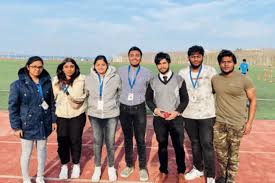
Student life at FEFU is shaped by the extraordinary character of its campus and city. The Eastern Economic Forum brings presidents, prime ministers, and business leaders from Russia, Japan, South Korea, China, and other nations to the Russky Island campus annually. FEFU's 41,000 students from 40+ countries create a genuinely multicultural community. Indian culture is celebrated through festivals, cultural evenings, and community events on campus. The Primorsky Stage of the Mariinsky Theatre — world-class opera and ballet — is established in Vladivostok, making elite Russian cultural institutions accessible for FEFU students.
Russian Language — Essential for Clinical Years
FEFU provides structured Russian language training from Year 1. Russian is essential for clinical years — Vladivostok's hospitals, patients, and clinical staff communicate in Russian. Students who invest in Russian from Year 1 engage most fully in clinical rotations. A note specific to FEFU: Vladivostok's city life has a bilingual Asian influence — with Chinese and Korean signage, businesses, and communities throughout the city — making the language environment more internationally textured than typical Russian university cities.
Climate — Vladivostok Pacific Seasons
- Winter (December–February): −10°C to −20°C — cold winters moderated by the sea; similar to other Russian university cities; proper warm clothing essential
- Spring (April–May): 5°C to 15°C — the Sea of Japan moderates temperature; coastal landscape comes alive; cherry blossoms visible nearby
- Summer (June–August): 18°C to 25°C — warm, humid Pacific summers; the Sea of Japan coast and beaches are accessible; outdoor activities abundant
- Autumn (September–October): 10°C to 20°C — mild, sunny, and beautiful; September and October are Vladivostok's finest months; the academic year begins in comfortable conditions
- FEFU's suite accommodation and university buildings are centrally heated — indoor comfort maintained through winter
- Vladivostok's coastal Pacific maritime influence moderates temperature extremes compared to Siberian cities
Who Should Choose FEFU?
✓ FEFU is the right choice if:
- You want to study at the only NMC-approved MBBS university in Russia on the Sea of Japan — with direct international flights to Japan, South Korea, and China from the university city
- You value the extraordinary campus setting of Russia's APEC 2012 Summit venue — Russky Island campus on the world's longest cable-stayed bridge; permanent home of the Eastern Economic Forum
- You want genuine Asia-Pacific international exposure — Eastern Economic Forum on your campus; 40+ country student community; 160 international faculty; 18 foreign consulates in the city
- You want a federal research university MBBS at a highly competitive total cost — approximately ₹40 Lakh over 6 years at RUB 1 = ₹1.20
- You are drawn to Vladivostok's unique character — 'the Ruler of the East'; Europe bursting with Asia's flavours; the gateway where Russian and Asian civilisations meet
- Your budget supports RUB 5,54,000 per year (~₹6,64,800/year) for all 6 years — total RUB 33,24,000 (~₹40 Lakh); fully transparent; fixed for all 6 years
- You appreciate GMC (UK) recognition enabling PLAB pathway — in addition to NMC and WHO
- You are willing to invest seriously in Russian language learning — essential for clinical years at any Russian university
✗ Consider alternatives if:
- You require a university closer to Moscow or in western Russia — FEFU is approximately 6,400 km east of Moscow; travel to Indian Embassy in Moscow requires a domestic flight
- You require a university mess / catering service — FEFU operates a self-cooking suite model
- You are not willing to invest in Russian language learning — clinical years at any Russian university require it
- Seats are already full for the upcoming intake — in which case MBBSDirect.com can advise on alternatives or next-year planning
Pre-Departure Checklist — Before You Fly to FEFU, Vladivostok
Document / Administrative
- NEET scorecard (original + 3 copies)
- Official FEFU offer / invitation letter (original)
- Student visa stamped in passport
- Year 1 fee payment receipt (RUB 5,54,000)
- Class 10 & 12 certificates (attested/apostilled originals)
- Passport validity: minimum 1.5 years from travel date
- Medical fitness certificate including HIV-negative report
- Police clearance certificate
- Medical insurance confirmation document
Practical / Personal
- Warm winter clothing (jacket, thermals, boots, gloves — Vladivostok winters are cold)
- Indian medicines and personal health supplies (3–6 months)
- Debit card with international ATM access + some USD for arrival
- Indian grocery staples and cooking essentials for first few weeks
- FEFU Indian student WhatsApp group joined (via MBBSDirect.com)
- Russian language basics app downloaded and practised
- Flight booked to Vladivostok International Airport (direct or via Seoul/Tokyo/Moscow)
- Emergency contact list (family + FEFU + Indian Embassy Moscow / Vladivostok Consulate)
- University registration documents printed and organised
The Bottom Line — Is FEFU Right for You?
Far Eastern Federal University is not simply another Russian MBBS university on a list. It is the oldest university in the Russian Far East — founded in 1899 as the Oriental Institute at Russia's Pacific frontier. Its campus was purpose-built for world leaders at the 2012 APEC Summit and is now the permanent venue of the Eastern Economic Forum. It sits on the Sea of Japan, 45 kilometres from China, and a short flight from Japan and South Korea. Its city — Vladivostok, 'the Ruler of the East' — has direct international flights to Tokyo, Seoul, Beijing, and other Asian cities. Anton Chekhov, who visited in 1890, called it 'Europe bursting with Asia's flavours' — and that description remains true today.
The 125-year heritage matters — FEFU was founded as the Oriental Institute specifically to be Russia's interface with the Asian world, and that foundational purpose has shaped everything about the institution. The APEC campus matters — studying on a purpose-built international summit campus, where the Eastern Economic Forum brings Asian leaders annually, is an experience unavailable at any other MBBS institution in Russia. The Asia-Pacific connectivity matters — direct flights to Japan, South Korea, and China give FEFU students international exposure that no inland Russian university can replicate. The 160 international faculty matters — global perspectives in clinical teaching that conventional Russian medical universities cannot match. And the cost matters — approximately ₹40 Lakh over 6 years for all of this, at one of the most extraordinary campus settings in global higher education.
If you would like to apply to FEFU or want to discuss whether it is the right fit for your specific situation, the team at MBBSDirect.com is here for an honest conversation. We will tell you if FEFU is right for you — and if it is not, we will tell you that too.
www.mbbsdirect.com — Your trusted guide to MBBS abroad — honest advice, direct admissions, no hidden charges.